
Fission
Exploring Our Content
Check out our Energy Spotlight on nuclear fission and our Energy Spotlight on small modular reactors!
Fast Facts About
Fission
Principal Energy Use: Electricity
Form of Energy: Nuclear
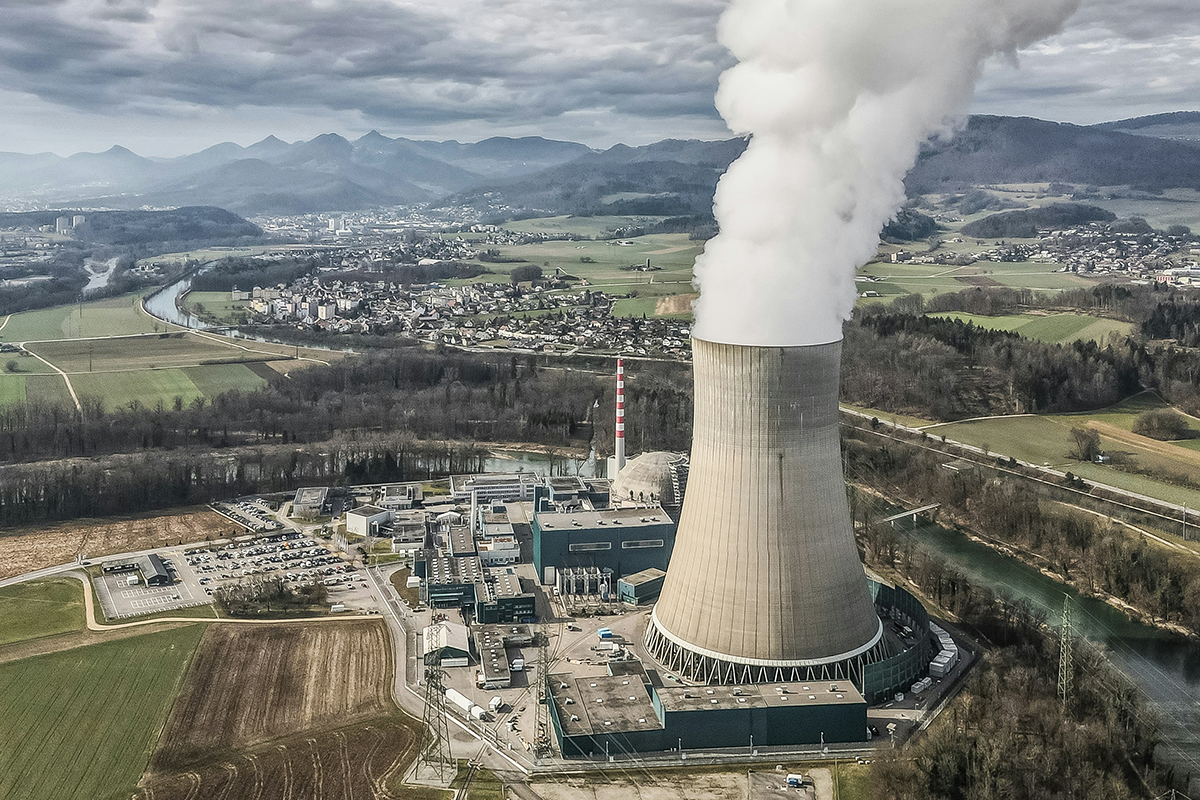
Nuclear fission is the process of splitting a large atom into two smaller atoms and releasing a LOT of heat, making it an extremely energy dense resource. That heat is used to boil water, make steam, turn a turbine and generator, and produce electricity. Most nuclear power plants today are fueled by enriched uranium 235 to produce non-renewable, carbon-free, 24/7 electricity. The byproducts of nuclear fission are highly radioactive and must be secured away from people for hundreds of thousands of years. There are currently no proven long-term solutions for storage of this radioactive waste.
Nuclear power plants have been operating commercially since the 1950s and tend to be large-scale (1-2 GW). The risk of accidents is low, but the consequences of a nuclear power plant accident have the potential to be extremely severe. Due to the complexity of containing the nuclear reaction and the need for redundant safety systems, capital and operating costs tend to be high and there are long lead times for planning and construction. New technologies known as small modular reactors (SMRs) are being developed in the hopes of offering cheaper and safer alternatives to traditional fission reactors.
The roots of nuclear fission power come from defense. The commercial nuclear industry in the U.S. was born from research on the atomic bomb in the 1940s. In the U.S., nuclear-related activities account for ~70% of the U.S. Department of Energy’s budget.
Today, the U.S. has far more nuclear reactors than any other country, most of which began construction in the ‘60s and ‘70s, resulting in an aging fleet. Other regions like Asia and the Middle East are experiencing significant growth in their nuclear energy sector, with China expected to surpass the U.S. in nuclear power generation capacity by 2030.
Significance
Energy Mix
5% of world 🌎
(#5 resource)
9% of U.S. 🇺🇸
(#4 resource)
Electricity Generation
9% of world 🌎
(#4 resource)
18% of U.S. 🇺🇸
(#2 resource)
Number of Nuclear Reactors*
World 439 🌎
U.S. 94 🇺🇸
France 57 🇫🇷
China 58 (+32 under construction) 🇨🇳
Change in Global Nuclear Electricity Generation
Increase:
⬆<1%
(2019-2024)
*Many nuclear power plants have multiple reactors
Uranium
Energy Density of Uranium*
33,000x more energy dense than oil
43,000x more energy dense than coal
37,000,000x more energy dense than natural gas
*energy densities by volume
Fissile vs Fertile
Fissile (e.g. U-235)
Capable of capturing a slow neutron, splitting apart, and releasing lots of energy and more neutrons, causing a chain reaction
Fertile (e.g. U-238)
Capable of becoming fissile, but takes a two-step process. It captures a neutron and goes through some radioactive decay to become fissile
Uranium Enrichment*
Natural uranium
0.7% U-235
99.3% U-238
Power plant grade
Enriched to 3-5% U-235
Weapons grade
Enriched to >90% U-235
*Natural uranium is enriched to have a higher proportion of U-235, a fissile isotope
Uranium Sourcing
Uranium mines 90%
Reprocessing*/stockpiles** 10%
Leading Producer
Kazakhstan 43% 🇰🇿
of the world’s uranium production from mines
Some countries (e.g., the U.S.) don't allow spent nuclear fuel reprocessing due to concerns about proliferation
Uranium Processing
Mined uranium converted to UF6 (gaseous at low temp)
↓
UF6 separated into U-235 and U-238 via centrifuge
↓
UF6 recombined to 3-5% U-235
↓
UF6 → UO2 powder → fuel pellets
Largest Enrichment Capacity
Russia 43% 🇷🇺
27,000 tSWU/yr***
China 18% 🇨🇳
11,430-11,930 tSWU/yr
Other significant players
France, U.S., Netherlands, UK, Germany
*Reprocessing means extracting fissile material from spent nuclear fuel to be recycled back into nuclear fuel.
**During periods of low prices, utilities may choose to stockpile uranium by purchasing more than they need, to use when prices rise.
***Tonnes of separative work units per year, a measure of the effort required to separate isotopes of uranium during enrichment
World
Most Electricity Generation
U.S. 29% 🇺🇸
of global nuclear electricity
Highest Penetration
France 68% 🇫🇷
Slovakia 62% 🇸🇰
of country’s electricity generation comes from nuclear
Average Age of Reactors
World 31 years 🌎
U.S. 42 years 🇺🇸
France 37 years 🇫🇷
China 11 years 🇨🇳
Share of New Global Nuclear Capacity Additions
China 38% 🇨🇳
UAE 14% 🇦🇪
South Korea 11% 🇰🇷
(2019-2024)
U.S.
Most Electricity Generation
Illinois 13%
of U.S. nuclear electricity
Highest Penetration
New Hampshire 64%
South Carolina 59%
Illinois 55%
Tennessee 51%
of state's electricity comes from nuclear
Capacity Factor*
92% in the U.S.
the highest of any energy resource used for electricity generation
*Capacity factor is a measure of a power plant's utilization over a given period of time (usually a year); calculated as the ratio between the amount of energy produced and the theoretical total maximum energy production
Nuclear Installations are Retiring
19 U.S. reactors retired in the last 30 years
Number of U.S. reactors peaked at 112 in 1990
Average age is 42 years
New Nuclear is Expensive and Takes a Long Time to Build
Only 4 U.S. reactors added in the last 30 years
The two most recent reactors took 11 years and cost more than $30 billion (originally expected to cost $14 billion)
Existing Nuclear is Not Cost Competitive with Other Clean Energy Resources
Near-firm* wind
$14-21/MWh
Near-firm solar
$17-24/MWh
Existing nuclear
$34-49/MWh
*with 4 hours of battery storage
Most Significant Nuclear Power Plant Accidents
1979 | Three Mile Island | U.S.
- 0 deaths/injuries
What Happened?
- Human error and faulty valves and sensors led to loss of coolant incident
- 70% meltdown of reactor core released a large amount of radiation within the containment building, but total radiation release to the atmosphere was small
Impact on Nuclear Industry
- Federal requirements were made more stringent, leading to higher costs and longer construction times
- Public opposition worsened
- Construction of new nuclear power plants in the U.S. stopped
1986 | Chernobyl | Soviet Union (now Ukraine)
- Est. 8,000-475,000 deaths expected
- Site still radioactive, including soils, plants, and animals in the area
What Happened?
- Caused by poor design (graphite instead of water as a moderator), lack of safety features, poor containment, and inadequately trained workers
- Explosion blew the top off the containment building, started a huge fire, and released large amounts of radiation to the atmosphere
- 20 people were killed immediately
- ~8,000 deaths have occurred since the accident
- Impact on mortality was likely worsened due to poor and delayed governmental response
- Total estimates of expected cancer deaths range from 20,000 to 475,000
Impact on Nuclear Industry
- Greater emergency planning, preparedness, and management for nuclear accidents in many nations
- Development of international nuclear safety systems
- Brought to light how nuclear accidents in one nation could have widespread effects
- The Chernobyl reactors were Soviet-designed graphite moderated reactors. Today, only Russia (10), China (1), and the UK (8) have graphite moderated reactors
- First containment building was hastily completed in October 1986, but was not built to last. A new containment building was completed in 2017. Future efforts will prioritize the removal of the fuel-containing material from the site
2011 | Fukushima Dai-ichi | Japan
- Est. 0-100 deaths
What Happened?
- A 45-foot tsunami hit the Fukushima Dai-ichi Nuclear Power Plant, flooding the entire facility
- The flooding swamped the diesel pumps that supplied water to the reactors, causing all of them to fail at the same time and effectively eliminating the safety systems for the nuclear reactors
- 4 of the 6 reactors exploded
- The explosions breached containment and released radioactive material into the atmosphere and ocean that was detected as far away as California
Impact on Nuclear Industry
- Japan shut down all 48 of its operable reactors. Today, only 14 reactors have been restarted, due to a lengthy review process implemented since 2011
- Other countries reconsidered the role of nuclear power in their energy mix. Notably, following Fukushima, Germany announced plans to shut down all of its reactors due to increased fear towards nuclear energy. Today, Germany has no operating nuclear reactors
- Greater safety measures have been implemented globally, particularly the development of more independent safety systems and strengthened protections against natural disasters. These measures have increased the costs of operating nuclear power plants
Nuclear Waste
Half Lives* of Main Radioactive Nuclear Waste Isotopes
Strontium-90: 29 years
Cesium-137: 30 years
Plutonium-239: 24,000 years**
Amount of Global Nuclear Waste
400,000 metric tons
(about the same weight as the Empire State Building)
11,000 metric tons
generated annually
Methods for Nuclear Waste Storage
- Temporary: pools (~10 years); dry casks (<100 years)
- Reprocessing the fuel (reduces overall amount of nuclear waste)
- Burying the waste in a geologically safe location***
No proven method to store for 200,000+ years
*Half life is the time taken for the radioactivity of an isotope to be reduced by half
**Plutonium has the potential to be weaponized
***Not yet proven, still in research phase. Finland is expected to open its first geologic storage site in 2025/2026.
Small Modular Reactors (SMRs)
What are they?
Smaller scale (300 MW or less) nuclear reactors that could be produced off site and transported to the desired operational site for installation. There are only two operational SMRs worldwide, one in China and one in Russia. SMRs are still in the research and development stage and are not yet contributing significantly to electricity generation.
Potential benefits
- Could be mass produced in a factory, reducing costs and building times
- Some theoretical designs use nuclear waste or natural uranium, potentially reducing costs
- Additional modules can be added to match increasing energy demand
- Some designs may include passive safety features
- Suitable for more locations because they are smaller, particularly locations closer to electricity demand
- Some SMRs have very high-temperature outputs, making them a potential source of decarbonized industrial heat
Key concerns
- More complicated nuclear security concerns
- More waste generated per MWh of electricity
- More places with on-site nuclear waste
- NIMBY* concerns
Progress (+ investment)
While SMRs are still in the research and development stage, there are 80+ startups in 19 different countries dedicated to SMR production. In the U.S., SMR production is experiencing many of the same challenges as traditional nuclear–slow regulatory approval, supply chain constraints, and increased costs. Only one startup in the U.S. has regulatory approval. With the anticipated AI boom and growth in electricity demand, large tech companies like Amazon and Google have started committing to buying SMR electricity when it becomes available.
*NIMBY - Not In My Backyard
Drivers
- Zero-carbon
- No air pollution
- High capacity factor (92% in the U.S.)
- Extremely energy dense fuel
- Facilities require relatively low land use per MWh produced
- Uranium is an abundant resource
- Investment and growing interest in small modular reactors
Barriers
- Low-probability, high consequence accidents
- Produces radioactive waste that must be safely stored for hundreds of thousands of years
- Risk of nuclear proliferation and the spread of nuclear weapons capabilities to more countries, with geopolitical consequences
- Large baseload power plants that are not flexible for integration of renewables or load following
- Extremely expensive to build and insure relative to other sources of electricity
- Takes a long time to plan, permit, and build (~10 years just for building)
- U.S. nuclear power plants are old and require upgrades and new licensing
- Decommissioning of nuclear power plants can take 50+ years and is expensive
- NIMBY issues; community opposition to siting nuclear power plants and waste repositories
- Operations are water intensive
- Uranium mines can contaminate water
Climate Impact:
Low

- Zero greenhouse emissions when operating
Environmental Impact:
Low to Medium

- Radioactive waste is toxic for hundreds of thousands of years
- Risk of radiation leaks from nuclear meltdowns or terrorism
- Nuclear proliferation raises the risk of nuclear weapons use
- Significant environmental impact if atomic weapons or dirty bombs are detonated
- Large amounts of water used for cooling, potential thermal pollution of waterways
Our 10-Minute Take On
Fission
If you're short on time, start by watching this video of key highlights from our Nuclear Fission lecture.

Presented by: Diana Gragg, PhD; Core Lecturer, Civil and Environmental Engineering, Stanford University; Explore Energy Managing Director, Precourt Institute for Energy
Recorded: May 30, 2025
Duration: 11 minutes
If you liked this video, watch other 10-Minute Takes here!
Before You Watch Our Lecture on
Fission
We assign videos and readings to our Stanford students as pre-work for each lecture to help contextualize the lecture content. We strongly encourage you to review the Essential videos and readings below before watching our lecture on Nuclear Fission. Include selections from the Optional and Useful list based on your interests and available time.
Essential
- Why It’s So Hard To Build Nuclear Power Plants In The U.S. CNBC. September 3, 2024. (12 min)
An overview of the complex task of replacing aging nuclear reactors in the U.S. - How China raced ahead of the U.S. on nuclear power. The New York Times. October 22, 2025. (5 pages)
Examines how China rapidly expanded nuclear power through standardized designs, streamlined construction, and strong state support, surpassing U.S. efforts in next-generation nuclear technology. - Nuclear Waste Is Reusable. Why Aren’t We Doing It?. DW Planet A. August 2, 2024. (15 min)
A look at a French nuclear fuel company, ORANO, that recycles nuclear fuel on a commercial scale. - Why people want to put small nuclear reactors everywhere. DW Planet A. April 12, 2024. (13 min)
The pros and cons of small modular reactors (SMRs) and a look at why more haven't been built. - Spent Fuel Storage at Diablo Canyon Power Plant. PG&E. October 1, 2011. (11 min)
Shows the process of taking used fuel from spent fuel pools located inside the Diablo Canyon Power Plant's fuel handling building and transporting the used fuel to the on-site dry storage facility. - 88,000 Tons of Radioactive Waste - And Nowhere to Put It. Verge Science. August 28, 2018. (8 min)
A visit to San Onofre, a retired beachside nuclear power plant near San Diego, California, where nuclear waste is stored on-site.
Optional and Useful
- The Uncertain Future of Nuclear Power. Real Engineering. July 22, 2023. (20 min)
Can any of the new nuclear energy technologies under development solve nuclear energy's most pressing problems? - U.S. Approves First Small Nuclear Reactor Design. Science Friday. February 3, 2023. (17 min)
A discussion of the first small-modular nuclear reactor design approved by U.S. Nuclear Regulatory Commission and what the future of nuclear energy might hold. - Is Nuclear Power Good or Bad?. The Good Stuff. January 14, 2016. (14 min)
Describes how nuclear power works and weighs the pros and cons of nuclear power. - Uranium. NEED.org. 2025. (4 pages)
An excellent introductory overview of uranium and nuclear energy. - 3 Things to Know About Spent Nuclear Fuel Dry Cask Storage. U.S. Department of Energy. February 20, 2024. (1 min)
Shows how spent nuclear fuel is stored in the U.S. - Michigan Nuclear Plant Aims to be First Even to Reopen in U.S. Canary Media. March 28. 2024. (1 page)
Describes the unprecedented plan to restart a shuttered nuclear plant in the U.S. - Small Modular Reactors. Are They Now Unavoidable?. Just Have a Think. July 12, 2020. (16 min)
Considers the pros and cons of small modular reactors. - Small Modular Nuclear Reactors. The Verdict. Just Have a Think. February 25, 2024. (14 min)
A look at whether or not small modular reactors pass the 'sniff test' in the real world. - Google Turns to Nuclear Energy for AI Electricity Demand. CBS News. October 15, 2024. (5 min)
A news report on Google's announced deal with Kairos Power to supply its data centers with electricity from small modular reactors. - AWS CEO on Amazon's $500 Million Small Modular Reactors Investment. CNBC Television. October 16, 2024. (3 min)
A discussion of Amazon's agreement with Dominion Energy to explore the development of a small modular nuclear reactor. - Exclusive: New Nuclear Startup Aims Big. Axios. July 18, 2024. (1 page)
A startup with ambitious plans to spur the construction of new nuclear power plants in the U.S. - Nuclear Reactor Restarts in Japan Have Reduced LNG Imports for Electricity Generation. EIA Today in Energy. February 8, 2024. (1 page)
Describes the situation for nuclear reactors in Japan after the Fukushima accident and how nuclear continues to reduce Japan's reliance on LNG imports. - The Eyes of Nye - Nuclear Energy. ThinkForYourself. October 21, 2014. (25 min)
Bill Nye looks into the problem of nuclear waste and whether or not science and society have a solution. - How Nuclear Energy Works. ENECEducation. December 30, 2009. (5 min)
A detailed overview of how a nuclear power plant works. - How Is Uranium Mining Conducted in the United States?. NEI. July 11, 2012. (5 min)
Describes how uranium is mined to provide fuel for U.S. nuclear energy facilities and where the uranium comes from. - Where Our Uranium Comes From. EIA. July 7, 2022. (1 page)
A basic overview of where the uranium used by U.S. nuclear power plants comes from. - In 2019, 9 of the 10 Highest-Generating US Power Plants Were Nuclear Plants. EIA. September 25, 2020. (1 page)
Identifies the top 10 U.S. power plants by electricity generation in 2019. Nine of them were nuclear plants. - How Two Cutting Edge US Nuclear Projects Bankrupted Westinghouse. Reuters. May 2, 2017. (3 pages)
Describes challenges the nuclear power industry faces in the United States related to the planning and building of nuclear power facilities, with a spotlight on two nuclear projects that bankrupted Westinghouse in 2017.
Our Lecture on
Fission
This is our Stanford University Understand Energy course lecture on nuclear fission. We strongly encourage you to watch the full lecture to understand nuclear fission as an energy system and to be able to put this complex topic into context. For a complete learning experience, we also encourage you to watch / read the Essential videos and readings we assign to our students before watching the lecture.
Presented by: Diana Gragg, PhD; Core Lecturer, Civil and Environmental Engineering, Stanford University; Explore Energy Managing Director, Precourt Institute for Energy
Recorded on: April 30, 2025 Duration: 67 minutes

Additional Resources About
Fission
Stanford University
- Stanford Journal of International Relations (Spring 2010) The French Connection: Comparing French and American Civilian Nuclear Energy Programs (a historical perspective)
- Civil and Environmental Engineering Department
- Mark Jacobson - Review/comparison of renewables vs nuclear
- Jack Baker - Reliability of nuclear plants and waste repositories
- Management Science and Engineering Department
- Siegfried Hecker - Nuclear weapons policy and international security
Fast Facts Sources
- US Department of Energy Budget for Nuclear-Related Activities (FY2025 Enacted): US Department of Energy. Department of Energy FY2026 Budget in Brief Congressional Justification, p. 8-9. May 30, 2025.
- Energy Mix (World 2024): Energy Institute. Statistical Review of World Energy, 2024 Regional Overview. June 26, 2025.
- Energy Mix (US 2024): US Energy Information Administration (EIA). Monthly Energy Review, Energy Overview Table 1.3. May 27, 2025.
- Electricity Mix (World 2024): Energy Institute. Statistical Review of World Energy, Electricity Generation by Fuel - TWh data table. June 26, 2025.
- Electricity Mix (US 2024): US Energy Information Administration (EIA). Monthly Energy Review, Electricity Table 7.2a. May 27, 2025.
- Number of Nuclear Reactors (May 2025): World Nuclear Association. World Nuclear Power Reactors & Uranium Requirements. June 18, 2025.
- Change in World Nuclear Energy Generation (2018-2024): Energy Institute. Statistical Review of World Energy, Nuclear Generation - TWh data table. June 26, 2025.
- Energy Density of Uranium: Taylor & Francis Group. Layton, Bradley E., Drexel University. A Comparison of Energy Densities of Prevalent Energy Sources in Units of Joules per Cubic Meter; Energy Education. Energy Density. 2024.
- Uranium Enrichment: Center for Arms Control and Non-Proliferation. Fact Sheet: Uranium Enrichment: For Peace or For Weapons. August 26, 2021.
- Uranium Sourcing: World Nuclear Association. Uranium Markets. August 23, 2024; World Nuclear Association. Processing of Used Nuclear Fuel. August 23, 2024.
- Most Uranium Production (World 2022): World Nuclear Association. World Uranium Mining Production. May 16, 2025.
- Largest Enrichment Plants (World 2024): International Panel on Fissile Materials. Facilities: Enrichment facilities. April 28, 2025.
- Most Nuclear Electricity Generation (World 2024): Statistical Review of World Energy, Nuclear Generation - TWh data table. June 26, 2025.
- Highest Nuclear Power Penetration (World 2024): Ember. Electricity Generation.
- Average Age of Reactors (US April 2024): US Energy Information Administration (EIA). Frequently Asked Questions (FAQs): How Old Are US Nuclear Power Plants, and When Was the Newest One Built?.
- Average Age of Reactors (France May 2024): World Nuclear Association. Nuclear Power in France. February 4, 2025.
- Average Age of Reactors (China 2024): World Nuclear Association. Reactor Database.
- Share of New Global Nuclear Capacity Additions (World 2019-2024): World Nuclear Association. Reactor Database.
- Most Nuclear Electricity Generation (US 2024): US Energy Information Administration (EIA). Electric Power Monthly, Table 1.9.B. February 2025.
- Highest Nuclear Power Penetration (US April 2024): US Energy Information Administration (EIA). US States: State Profiles and Energy Estimates. July 2024.
- Capacity Factor: US Department of Energy, Office of Nuclear Energy. What is Generation Capacity?. March 30, 2025.
- US Nuclear Reactor Retirements and Additions (1995-2025): World Nuclear Association. Reactor Database.
- Peak Number of Operating Reactors (US): US Energy Information Administration (EIA). Nuclear Explained. August 24, 2023.
- Timing and Cost of Two Most Recent US Reactor Additions: US Energy Information Administration (EIA). Today in Energy: Plant Vogtle Unit 4 Begins Commercial Operation. May 1, 2024.
- Wind, Solar, and Nuclear Energy Cost Estimates: NextEra Energy. May Investor Presentation, Estimated Costs of Generation Resources Late-2020s. March 14, 2024.
- Three Mile Island Nuclear Accident: US Nuclear Regulatory Commission. Backgrounder on the Three Mile Island Accident. March 28, 2024.
- Chernobyl Nuclear Accident: World Nuclear Association. Chernobyl Accident 1986. February 17, 2025; World Nuclear Association. Nuclear Power Reactors. June 6, 2025
- Fukushima Nuclear Accident: International Atomic Energy Agency (IAEA). Nuclear Power 10 Years After Fukushima: The Long Road Back. March 11, 2021; International Atomic Energy Agency (IAEA). Ensuring the Safety of Nuclear Installations: Lessons Learned from the Fukushima Daiichi Accident. March 2021; World Nuclear Association. Reactor Database.
- Nuclear Waste Half Lives: US Nuclear Regulatory Commission. Background on Radioactive Waste. January 26, 2024.
- Amount of Global Nuclear Waste: International Atomic Energy Agency (IAEA). New IAEA Report Presents Global Overview of Radioactive Waste and Spent Fuel Management. January 21, 2022.
- Small Modular Reactors (SMRs): Nuclear Energy Agency. Small Modular Reactor Dashboard: Second Edition. Figure 3. Siting progress by country. March 13, 2024; The New York Times. Hungry for Energy, Amazon, Google and Microsoft Turn to Nuclear Power. October 16, 2024; Stanford University, Doerr School of Sustainability. Small modular reactors produce high levels of nuclear waste. May 30, 2022.
More details available on request.
Back to Fast Facts