
Energy Storage
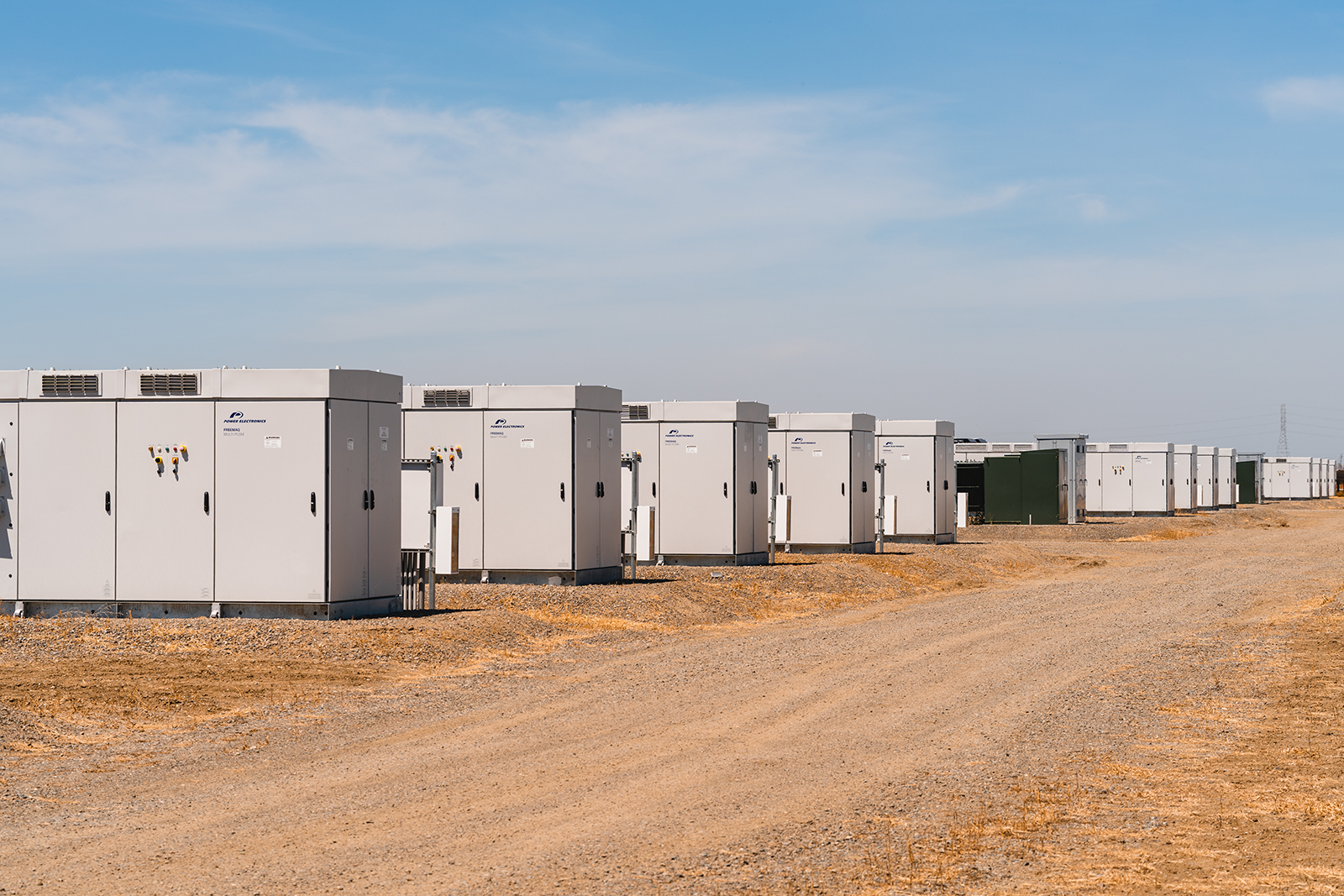
Fast Facts About
Energy Storage
Energy storage allows energy to be saved for use at a later time. It helps maintain the balance between energy supply and demand, which can vary hourly, seasonally, and by location. Energy can be stored in various forms, including:
- Chemical (e.g., coal, biomass, hydrogen)
- Potential (e.g., hydropower)
- Electrochemical (e.g., batteries)
- Thermal (e.g., molten salt, hot bricks)
- Mechanical (e.g., flywheels, compressed air storage, pumped hydro)
When people talk about energy storage, they typically mean storing energy for our power grids. Energy storage decouples when supply is created from when demand occurs, facilitating the integration of intermittent renewable energy sources like wind and solar.
Energy storage technologies also provide ancillary services that help keep the power grid stable and reliable, such as:
- Frequency control: Ensuring the grid’s frequency stays within a safe range to prevent brownouts and blackouts
- Capacity services: Providing backup power when demand is especially high (e.g., during a multi-day heatwave)
- Ramping services: Quickly ramping up or down to match demand (e.g., in the evening, storage can immediately supply electricity to compensate for the lack of solar power)
Depending on market conditions, energy storage systems can also participate in energy arbitrage — storing energy when prices are low and selling when prices are high (e.g., storing electricity during the day in California when electricity prices are at their lowest due to an abundance of solar energy and selling it in the evening when the sun sets and demand peaks).
The main energy storage technologies used to support the grid are pumped storage hydropower (pumped hydro) and batteries. Pumped hydro is only growing modestly, while battery storage, mainly lithium-ion batteries, is rapidly expanding for many reasons:
- Batteries are modular, installable anywhere
- Batteries aren’t constrained by geography, unlike pumped hydro
- Batteries can ramp up quickly to support demand, making them essential for supporting renewable integration and grid flexibility
- Batteries have become economic, and prices continue to drop as battery manufacturing scales for EVs and consumer electronics
Energy storage projects are rated on power capacity (e.g., MW) and energy capacity (e.g., MWh). The duration of the energy storage project is determined by the stored energy divided by the power supplied.
$$Duration\hspace{5px}(hours) = {Energy\hspace{9px}Capacity\hspace{7px}(MWh)\over Power\hspace{8px}Capacity\hspace{7px}(MW)}$$
For example, a battery might have 100 MW of power capacity and 400 MWh of energy capacity, meaning it can deliver 100 MW continuously for 4 hours. Energy storage is often described by its duration (e.g., 4-hour battery storage) because that lets grid operators know how long a device can run at its maximum output before it’s empty.
See our The Grid: Electricity Transmission, Industry, and Markets page for more information about the grid and energy markets.
Significance
Energy Storage Installed Capacity
World 496 GW / ~8,000-9,000 GWh 🌎
U.S. 68 GW / 359 GWh 🇺🇸
The world figure for power capacity also includes behind-the-meter grid storage.
Share of Global Energy Storage Power Capacity by Type
Lithium-ion Batteries
56% of installed power capacity
Pumped Hydro Systems
43% of installed power capacity
Other
1% of installed power capacity
Change in Global Energy Storage Installed Power Capacity
Increase:
160%
(2020-2025)
Most of the growth since 2020 has come from lithium-ion batteries, which are growing fast.
Why Do We Need Energy Storage Now?
Resilience against weather-related outages
Increase in electricity demand with electrification of buildings and transportation and growth in AI and data centers
Renewables growth on the grid increases the need for flexibility to balance supply with demand
Faster ramp up times than peaker plants
Energy Storage Technologies
Battery energy storage overtook pumped hydro for energy storage power capacity (GW) – the amount of power available at any given time. However, pumped hydro has higher energy capacity (GWh) globally.
Distributed vs. Centralized Storage
Distributed Storage: Located on the consumer side of the meter (“behind-the-meter”), often in combination with consumer-side energy production like rooftop solar panels
Centralized Storage: Located on the production side of the meter (“front-of-meter”), often in combination with utility scale renewables
Grid-Connected vs. Standalone Storage
Grid-Connected Storage: Connected to the main electrical grid and provides grid services
Standalone Storage: Not connected to the main electrical grid, often providing rural or remote energy storage needs
Both distributed and centralized storage can be grid-connected or standalone. However, centralized storage is almost always grid-connected.
For more information about the grid, visit The Grid: Electricity Transmission, Industry, and Markets page.
Global Supply and Demand of Battery Storage
Lithium-Ion Battery Materials and Supply
Cobalt
Democratic Republic of the Congo 69% 🇨🇩
of global cobalt production
Only ~5% of DRC cobalt mines are owned by DRC companies. The rest are owned primarily by China (47%) and Europe (47%). Refining cobalt is also dominated by China (60%) and Europe (25%).
Graphite
China 75% 🇨🇳
of global graphite production
Lithium
Australia 32% 🇦🇺
Chile 22% 🇨🇱
China 21% 🇨🇳
of global lithium production
Lithium refining is dominated by China (~60%).
Mineral Resourcing Concerns
- Human rights challenges including child labor, slavery, and unsafe working conditions
- Environmental degradation such as water, land, and air pollution, heavy metal leakage, habitat loss, deforestation
- Human health consequences including lung and cardiovascular problems, birth defects
- Economic injustice as resource-rich countries like the DRC (which supplies 69% of global cobalt) see little economic benefit from that production
- Geopolitical risks from China's dominance of the supply chain (80% of battery manufacturing, 60% ownership share)
See our Energy, the Environment, and Justice page for more information.
Front-of-Meter Energy Storage
74% of world 🌎
76% of U.S. 🇺🇸
front-of-meter energy storage
Countries with the highest shares of their total energy storage in front of meter:
Philippines 99%
Saudi Arabia 97%
Ireland 94%
China 93%
Taiwan 92%
Behind-the-Meter* Energy Storage
26% of world 🌎
24% of U.S. 🇺🇸
behind-the-meter energy storage
Countries with the highest shares of their total energy storage behind the meter:
Austria 89%
Spain 86%
Germany 82%
South Africa 82%
Japan 80%
*Behind-the-meter data also includes off-grid capacity.
Battery Growth and Pricing
Global Battery Storage Annual Additions
⬆2205% increase
(2020-2025)
2020: 5.2 GW added
2025: 120 GW added
Battery Prices Are Dropping Due to Lower Mineral and Manufacturing Costs*
⬇77% decrease
in average global battery price (2015-2025)
*Battery prices vary by region, cheapest in China
Cost Range (LCOS) for 4-Hour Storage in Different Scenarios (US$/MWh)
Utility-Scale Standalone (100 MW)
$210 - $292
Residential Standalone (0.006 MW)
$547 - $860
Utility-scale storage is much cheaper than residential scale.
Energy Storage Has Many Potential Applications and Roles
Generation
- Address supply disruptions
- Compensate for variability of renewable resources
- Provide peaking capacity
Transmission
- Defer transmission upgrades
- Relieve transmission congestion
- Provide grid services
Distribution
- Defer distribution upgrades
- Provide backup power
- Support microgrids
- Reduce excess demand charges (e.g., time-of-use charges)
Drivers
All energy storage:
- Increases reliability of the electricity grid
- Facilitates integration of intermittent renewables like solar and wind
- Quick ramping times
- Transmission costs for energy can vary by location and over time, and energy storage can alleviate the price differential
- Policies provide tax credits for standalone energy storage
- Repurposed EV batteries provide cheaper options for stationary storage
Batteries:
- No emissions
- Modular
- Can be used anywhere
- Allow for deferral of transmission and distribution upgrades
- Cost declines as battery manufacturing scales for EVs and consumer electronics
- Peak demand price reductions for commercial and industrial electricity customers
Barriers
All energy storage:
- Potential for high social and environmental costs (e.g., mining impacts, ecosystem disruptions, human rights violations)
- Challenging economics for long-duration storage
- High upfront capital costs
Batteries:
- Nascent battery recycling infrastructure
- Supply of key materials is concentrated in a few countries, making the supply chain vulnerable to disruptions. Tariffs and trade policies further affect access to critical materials (e.g., graphite)
Our 10-Minute Take On
Energy Storage
If you're short on time, start by watching this video of key highlights from our lecture on Energy Storage.

Presented by: Diana Gragg, PhD; Core Lecturer, Civil and Environmental Engineering, Stanford University; Explore Energy Managing Director, Precourt Institute for Energy
Recorded: May 23, 2025
Duration: 13 minutes
If you liked this video, watch the other 10-Minute Takes here!
Before You Watch Our Lecture on
Energy Storage
We assign videos and readings to our Stanford students as pre-work for each lecture to help contextualize the lecture content. We strongly encourage you to review the Essential readings and videos before watching our lecture on Energy Storage. Include selections from the Optional and Useful list based on your interests and available time.
Essential
- How Used EV Batteries Are Being Turned Into Data Centers To Power AI. CNBC. August 3, 2025. (13 min)
Explores how Tesla co-founder JB Straubel is giving EV batteries a second life to power the AI era. - The Future Of Energy Storage Beyond Lithium Ion. CNBC. March 13, 2020. (14 min)
Explores new alternatives to lithium-ion batteries as researchers seek cheaper ways to store renewable energy. - Grid-Scale Battery Storage Is Quietly Revolutionizing the Energy System. Wired. April 26, 2025. (5 pages)
Examines how grid-scale battery storage is reshaping electricity systems and enabling more renewable power.
Optional and Useful
- New EV batteries are making electric cars cheaper and safer. The Washington Post. February 19, 2025. (2 pages)
Explains how lithium-ion phosphate batteries could make EVs cheaper, safer, and longer-lasting in the U.S. despite trade barriers. - Why we don’t need to worry too much about the latest grid battery fire. Canary Media. January 27, 2025. (4 pages)
Explains how improved safety standards and new battery designs are preventing incidents like the Moss Landing fire. - Energy Storage 101 -- Storage Technologies (first 40 min). Energy Storage Association / EPRI. March 7, 2019. (40 min)
Provides an overview of energy storage and the attributes and differentiators for various storage technologies. - Why Tesla Is Building City-Sized Batteries. Verge Science. August 14, 2018. (6 min)
JB Straubel, Tesla co-founder, talks about why giant batteries are crucial to the future of power grids everywhere. - How to Fix Clean Energy's Storage Problem. Vox. April 27, 2023. (5 min)
Learn more about how we might be able to store solar and wind energy to facilitate the transition away from fossil fuels. - How the Next Batteries Will Change the World. Bloomberg QuickTake. March 10, 2021. (11 min)
Describes how the next batteries will enable huge breakthroughs in the battle against global warming.
Our Lecture on
Energy Storage
This is our Stanford University Understand Energy course lecture on energy storage. We strongly encourage you to watch the full lecture to understand why energy storage plays a critical role in the clean energy transition and to be able to put this complex topic into context. For a complete learning experience, we also encourage you to watch / read the Essential videos and readings we assign to our students before watching the lecture.
Presented by: Diana Gragg, PhD; Core Lecturer, Civil and Environmental Engineering, Stanford University; Explore Energy Managing Director, Precourt Institute for Energy
Recorded on: April 29, 2026 Duration: 41 minutes
Additional Resources About
Energy Storage
Government and International Organizations
- International Energy Agency (IEA) Grid-Scale Storage
- US Energy Information Administration (EIA) Energy Storage for Electricity Generation
- US Energy Information Administration (EIA) Today in Energy Storage, Storage Capacity
- US Geological Survey (USGS) Energy Storage
- US Environmental Protection Agency (EPA) Electricity Storage
- US Department of Energy (DOE) Energy Storage
- US Department of Energy (DOE) Global Energy Storage Database
- US Geological Survey (USGS) Geologic Energy Storage Publication
Fast Facts Sources
- Energy Storage Installed Power Capacity (World 2025): China Energy Storage Alliance (CNESA). White Paper. 2026.
- Energy Storage Installed Energy Capacity (World 2020): International Energy Agency (IEA). Hydropower Special Market Report. 2021.
- Energy Storage Installed Capacity (U.S. 2025): BCSE. Sustainable Energy in America 2026 Factbook. 2026.
- Share of Global Energy Storage Power Capacity by Type (2025): China Energy Storage Alliance (CNESA). White Paper. 2026.
- Change in Global Energy Storage Installed Power Capacity (2020-2025): China Energy Storage Alliance (CNESA). White Papers. 2021, 2026.
- Cumulative Installed Capacity of Energy Storage (2018-2025): China Energy Storage Alliance (CNESA). White Papers. 2019, 2020, 2021, 2022, 2023. 2024. 2025. 2026.
- Electrochemical Storage Capacity by Type (2025): China Energy Storage Alliance (CNESA). White Paper. 2026.
- Lithium-Ion Battery Materials and Supply (2025): Energy Institute. Statistical Review of World Energy. 2026; Greitemeier et al. China's hold on the lithium-ion battery supply chain: Prospects for competitive growth and sovereign control. 2025.
- Lithium-Ion Battery Manufacturing Capacity by Country (2023): Statista. Leading Countries by Battery Manufacturing Capacity Worldwide in 2023. 2024.
- Battery Storage Additions by Region (World 2025): Energy Institute. Statistical Review of World Energy. 2026.
- Global Battery Storage Annual Additions (2020-2025): Energy Institute. Statistical Review of World Energy. 2026.
- Battery Pricing (2025): BloombergNEF. Lithium-Ion Battery Pack Prices Fall to $108 Per Kilowatt-Hour, Despite Rising Metal Prices. 2025.
- Cost Range for Storage in Different Scenarios: Lazard. Levelized Cost of Energy. 2026; Lazard. Levelized Cost of Energy. 2025.
- Repurposed EV Batteries: Xu et al. Electric vehicle batteries alone could satisfy short-term grid storage demand by as early as 2030. 2023.
More details available on request.
Back to Fast Facts