
Global Energy Access

Fast Facts About
Global Energy Access
Access to sustainable modern energy services is fundamental for economic growth and human development. It is one of the Sustainable Development Goals laid out in 2015 by the United Nations (SDG 7). Access considers two dimensions:
- Electricity: Access advances education, health, productivity, security, comfort, and entertainment. It also facilitates higher-value economic opportunities.
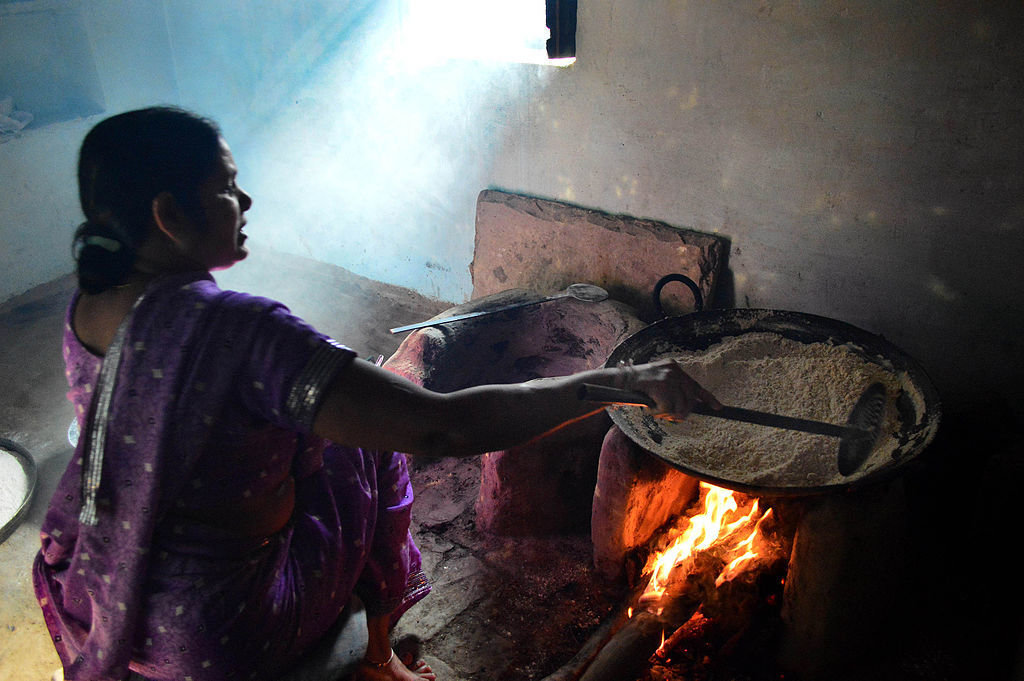
- Clean cooking fuels: Access reduces mortality and improves quality of life, especially for women and children, by dramatically reducing health impacts from indoor air pollution, decreasing safety risks associated with fuelwood collection, and freeing time for education and income-generating activities.
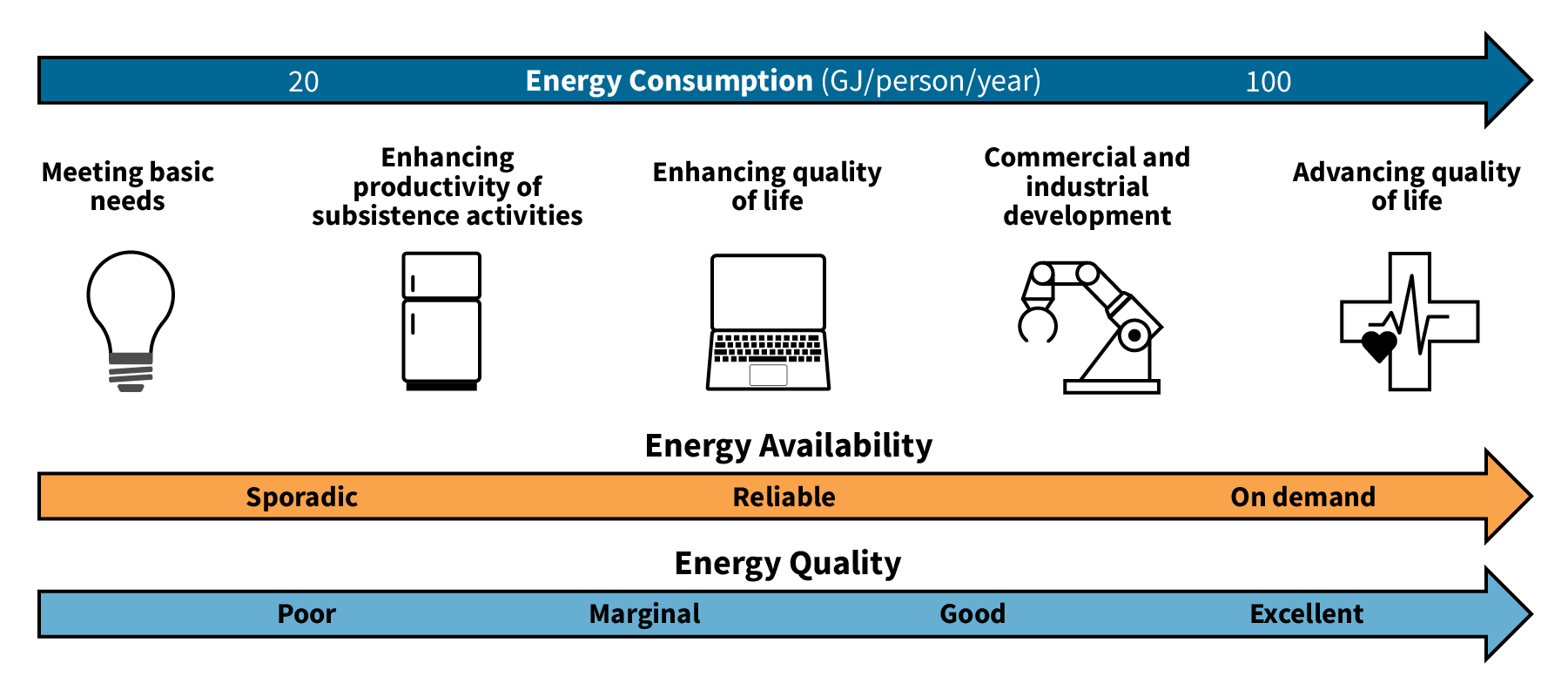
Energy access and consumption are highly related to the Human Development Index (HDI), a composite statistic that takes into account life expectancy, education, and health to measure a country’s well-being. A country’s fuel mix is also related to its level of development: Less developed countries use a higher share of traditional biomass, while more developed countries use more electricity. Read more about traditional biomass on our Biomass page.
A significant portion of the world population still lacks access to reliable electricity and clean cooking fuels, creating a challenge for equity in development opportunities.
Benefits of Energy Consumption
Electricity
The World Bank has defined different tiers of electricity access*, as shown below. To pass the basic threshold of 'having access to electricity,' a household only has to meet the criteria of Tier 1.
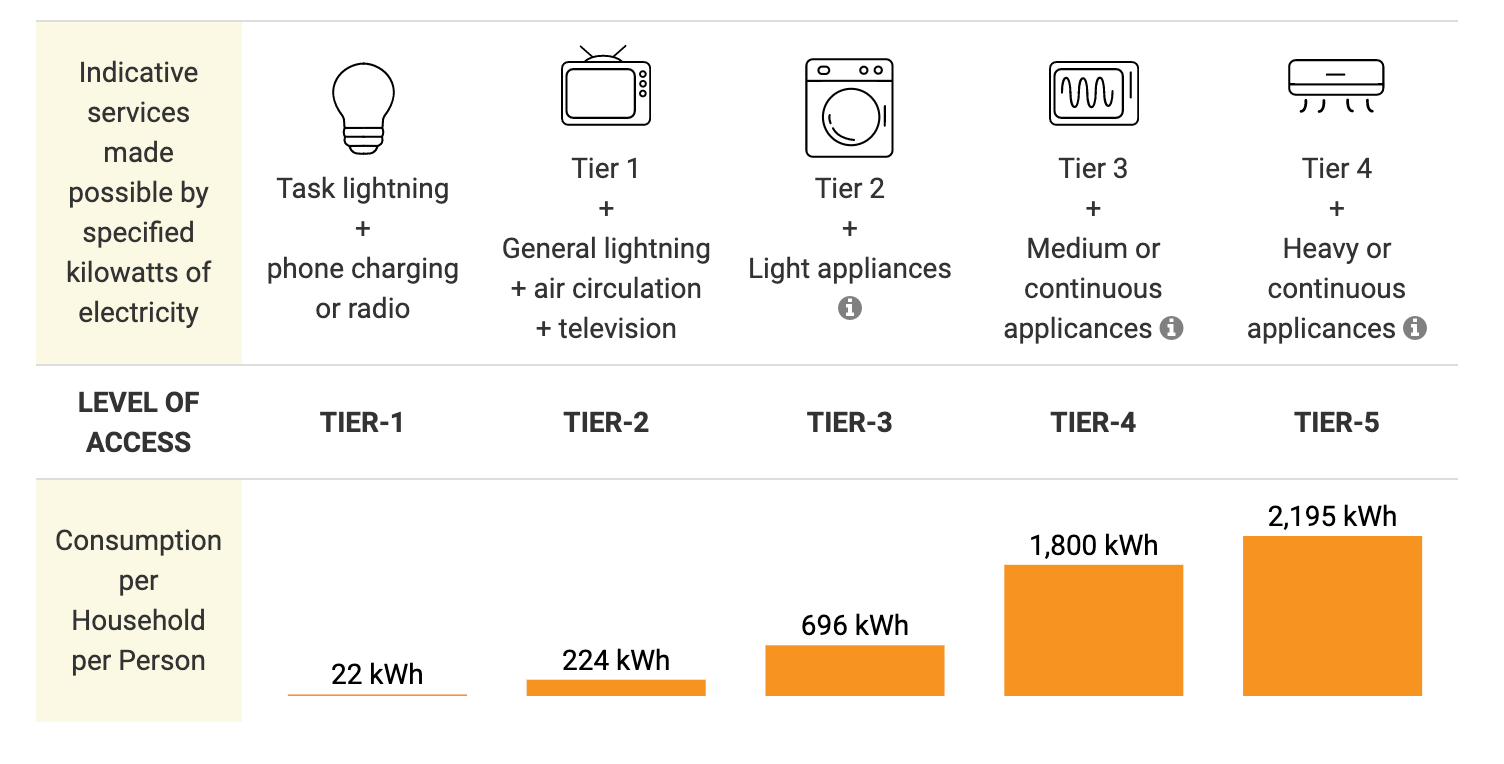
*Access is distinct from reliability, which measures how often electricity is available when needed. Read more about grid reliability on our The Grid: Electricity Transmission, Industry, and Markets page
Share of Global Population
Without Access
8% (666 million people)
lack access to electricity, of which 84% are in rural areas
Change in Global Access
(2018-2023)
⬆ 8% (526 million additional people)
gained access to electricity, of which 16% were in rural areas
Achieving Universal Electricity Access by 2030
Ensuring universal access to affordable, reliable and modern energy services by 2030 (Target 7.1 of the SDG 7) entails:
- Connecting 1/3 of those without electricity to the centralized power grid. It is the least-cost option per kWh for the largest share of those gaining access.
- Providing access through decentralized solutions for households in rural areas (2/3 of the unconnected population). For rural communities far from existing grids with relatively high population densities, mini-grids* are the best cost-effective solution, while off-grid** solutions tend to be most cost effective for rural areas with low population densities.
- Increasing the role of renewables (mainly solar PV) in providing electricity access, both through the grid and through decentralized solutions.
*Mini-grid: localized electric grid that can operate independently or in conjunction with the main grid and can use local renewable energy sources or conventional sources
**Off-grid: operates independently of the main electrical grid. Electricity is generated locally and stored to ensure continuous power supply
Clean Cooking Fuels
Clean cooking fuels and technologies are those that attain the air quality levels recommended by the World Health Organization (WHO) with respect to fine particulate matter (PM2.5) and carbon monoxide (CO). Clean cooking fuels generally include gas and electricity, while dirty cooking fuels include kerosene, biomass (e.g., wood, peat, animal waste, crop residue), charcoal, and coal.
Share of Global Population
Without Access
26% (2.1 billion people)
lack access to clean cooking fuels, of which 68% are in rural areas
Change in Global Access
(2018-2023)
⬆ 15% (779 million additional people)
gained access to clean cooking fuels, of which 45% were in rural areas
Achieving Universal Clean Cooking Fuel Access by 2030
Replacing dirty cooking fuels with clean cooking facilities for everyone by 2030 (Target 7.1 of the SDG 7) entails:
- Using liquified propane gas (LPG) as the most common solution to clean cooking access. In the last decade, 70% of those who gained access did so through LPG.
- Providing electric cook stoves in urban areas with well-developed electricity networks.
- Promoting the use of improved cookstoves (ICS) in rural areas without fuel and electricity infrastructure as a short-term solution to deliver health benefits and time savings while electricity or LPG networks are developed. Improved stoves incorporate features such as better insulation, more efficient combustion chambers, and proper ventilation systems.
- Ensuring women are engaged in clean cooking initiatives, from design to distribution. When women lead or participate in local clean energy enterprises, communities benefit from higher uptake, greater affordability, and more culturally appropriate cooking solutions.
Drivers
- Important for modern quality of life, reduced indoor air pollution, and human health
- Economic growth, particularly in urban and peri-urban areas
- Improved education and economic activity that results from increased electricity access
- Distributed electricity solutions facilitate access in more remote areas
- Reduction in the collection of fuelwood frees up time for women and children and decreases their exposure to physical risks
Barriers
- Poverty and high vulnerability to income shocks
Electricity:
- Development and expansion of electrical grid infrastructure is capital intensive and expensive
- Lack of stable demand and consumer base
Clean cooking fuels:
- New clean fuel systems can change food taste and preparation methods
- Traditional stoves have other benefits such as heating, protection from insects, and fuel flexibility
- Solutions not always designed with community input and aligned with cultural traditions
- Difficulties with adoption of and adherence to new cooking systems
- Limited inclusion of local and gendered perspectives in policy approaches
Climate Impact:
Low

- Dirty cooking fuels emit greenhouse gases
- Cooking sector emissions account for about 3% of global greenhouse gas emissions
Environmental Impact:
Low to Medium

- Unsustainable harvesting of fuelwood contributes to deforestation
- Household air pollution from burning solid fuels was linked to an estimated 2.9 million deaths in 2021, including 329,000 among children under the age of 5
Our 10-Minute Take On
Global Energy Access
If you're short on time, start by watching this video of key highlights from our lecture on Global Energy Access.

Presented by: Diana Gragg, PhD; Core Lecturer, Civil and Environmental Engineering, Stanford University; Explore Energy Managing Director, Precourt Institute for Energy
Recorded: October 17, 2025
Duration: 12 minutes
If you liked this video, watch the other 10-Minute Takes here!
Curated Videos and Readings on
Global Energy Access
We assign videos and readings to our Stanford students as pre-work for each lecture to help contextualize the lecture content. We strongly encourage you to review the videos and readings below before watching our lecture on Energy Access and Energy Use in Development.
Essential
- The Magic Washing Machine | Hans Rosling. TED. March 21, 2011. (11 min)
Makes the case that the washing machine was the greatest invention of the industrial revolution. - Energy for Human Development (Executive Summary). The Breakthrough Institute. November 16, 2016. (5 pages)
Considers the relationships between energy systems, economic growth, human development, environmental protection, and climate change. - More Than a Light Bulb. Center for Global Development. April 12, 2016. (1 min)
Provides a brief and compelling argument for a new standard of energy access that would signify meaningful transformation in households and national economies. - Don’t gaslight Africa: We need genuinely clean cooking solutions. African Arguments. May 14, 2024. (1 page)
Describes the health, economic, and representation challenges of traditional cooking fuels in Africa and argues for prioritizing renewable, decentralized clean-cooking solutions over gas. - Climate Change Has Worsened Global Economic Inequality. Stanford Earth Matters. April 22, 2019. (4 pages)
A new Stanford University study shows global warming has increased economic inequality since the 1960s. - The Paradox of Sustainability: A Critique of the Modern World's Approach to Sustainable Development. Gita Wirjawan, Stanford Freeman Spogli Institute (FSI). March 14, 2024. (1 page)
Analyzes the paradox of sustainability that stems from the high expectations placed upon developed and developing nations' environmental and economic progress.
Optional
- Africa to be $2.5 Trillion Short of Climate Finance By 2030, UN says. Reuters. March 4, 2024. (1 page)
Describes the consequences of the low level of global investments in clean energy in Africa. - Why We Need a More Ambitious Global Energy Target. Cipher. February 26, 2024. (2 pages)
Argues that the world needs an updated way to track progress toward universal energy access in order to achieve success. - ‘Electricity is Fundamental to Quality of Life’: The Man Bringing Off-Grid, Pay-As-You-Go Power to Africa. The Guardian. January 2, 2024. (2 pages)
An interview with British entrepreneur, Mansoor Hamayun, whose clean energy company Bboxx offers pay-as-you-go power to people across Africa.
Our Lecture on
Global Energy Access
This is our Stanford University Understand Energy course lecture on energy for the developing world. We strongly encourage you to watch the full lecture to understand the significant roles that energy access and energy use play in human and economic development and to be able to put this complex topic into context. For a complete learning experience, we also encourage you to watch / read the videos and readings we assign to our students before watching the lecture.

Presented by: Dena K. Montague, PhD; Environmental Justice Lecturer, Earth Systems Program, Stanford University
Recorded on: May 29, 2025 Duration: 55 minutes
Table of Contents
(Clicking on a timestamp will take you to YouTube.)
00:00 Introduction
01:32 Building a Sustainable Energy System
08:07 Energy Justice
13:07 The Benefits of Energy Use
21:47 Energy Histories
25:11 Fossil Fuel Free Energy Justice
33:56 Energy Access Case Study: Ghana
38:11 Solar PV Options for Electricity Access
39:07 Energy Innovation from Below
47:12 Decentralized Electricity Access
48:55 Using Renewable Energy to Increase Agricultural Productivity
51:45 Access to Clean Cooking Fuels
53:41 Global Investment for Universal Electricity Access
Additional Resources About
Global Energy Access
Government and International Organizations
- International Energy Agency (IEA) SDG7 Data and Projections
- United Nations Development Programme (UNDP) Human Development Reports
- United Nations Sustainable Development Goals Affordable and Clean Energy
Fast Facts Sources
- Sustainable Development Goals (World): United Nations (UN). Goal 7: Ensure access to affordable, reliable, sustainable and modern energy for all. 2023.
- Human Development Index (World): United Nations Development Program (UNDP). Human Development Index. 2023.
- Tiers of Electricity Access: Our World in Data. Definition: Access to Electricity. 2021.
- Share of Global Population Without Access to Electricity (World 2023): International Energy Agency (IEA). Tracking SDG7: The Energy Progress Report. 2025.
- Share of Global Rural Population Without Access to Electricity (World 2023): International Energy Agency (IEA). Tracking SDG7: The Energy Progress Report. 2025.
- Change in Global Access to Electricity (World 2018-2023): International Energy Agency (IEA). Tracking SDG7: The Energy Progress Report, Downloads. 2025.
- Access to Electricity by Region (World 2023): International Energy Agency (IEA). Tracking SDG7: The Energy Progress Report, Downloads. 2025; World Bank. Population, total. 2025.
- Achieving Universal Electricity Access by 2030 (World): International Energy Agency (IEA). Energy Access Outlook 2017. 2017.
- Share of Global Population Without Access to Clean Cooking Fuels (World 2023): International Energy Agency (IEA). Tracking SDG7: The Energy Progress Report, Downloads. 2025.
- Share of Global Rural Population Without Access to Clean Cooking Fuels (World 2023): International Energy Agency (IEA). Tracking SDG7: The Energy Progress Report. 2025.
- Change in Global Access to Clean Cooking Fuels (World 2018-2023): World Health Organization. Database: Cooking fuels and technologies (by specific fuel category). 2025.
- Access to Clean Cooking Fuels by Region (World 2023): World Health Organization (WHO). Database: Cooking fuels and technologies (by specific fuel category). 2025.
- Achieving Universal Clean Cooking Fuels Access by 2030 (World): International Energy Agency (IEA). A Vision for Clean Cooking Access for All. 2023; International Energy Agency (IEA). Tracking SDG7: The Energy Progress Report. 2025.
- GHG Emissions From Lack of Access (World 2020): International Energy Agency (IEA). A Vision for Clean Cooking Access for All. 2023.
- Impacts on Health of Indoor Air Pollution (World 2021): International Energy Agency (IEA). Tracking SDG7: The Energy Progress Report. 2025.
- Cooking Sector Emissions (2020): United Nations. Achieving Universal Access and Net-Zero Emissions by 2050: A Global Roadmap for Just and Inclusive Clean Cooking Transition. 2023.
More details available on request.
Back to Fast Facts