
Solar Energy
Exploring Our Content
Check out our Energy Spotlight on solar energy!
Fast Facts About
Solar Energy
Principal Energy Uses: Daylight, Electricity, Heat
Forms of Energy: Thermal, Radiant
Solar energy is radiant energy from the sun—a fully renewable energy resource. We use the solar resource to provide daylight, electricity, and heat in four ways (in order of prevalence):
- Indirect: Our primary use of the sun’s energy is for free light and warmth (not counted in the data below but important for energy efficiency)
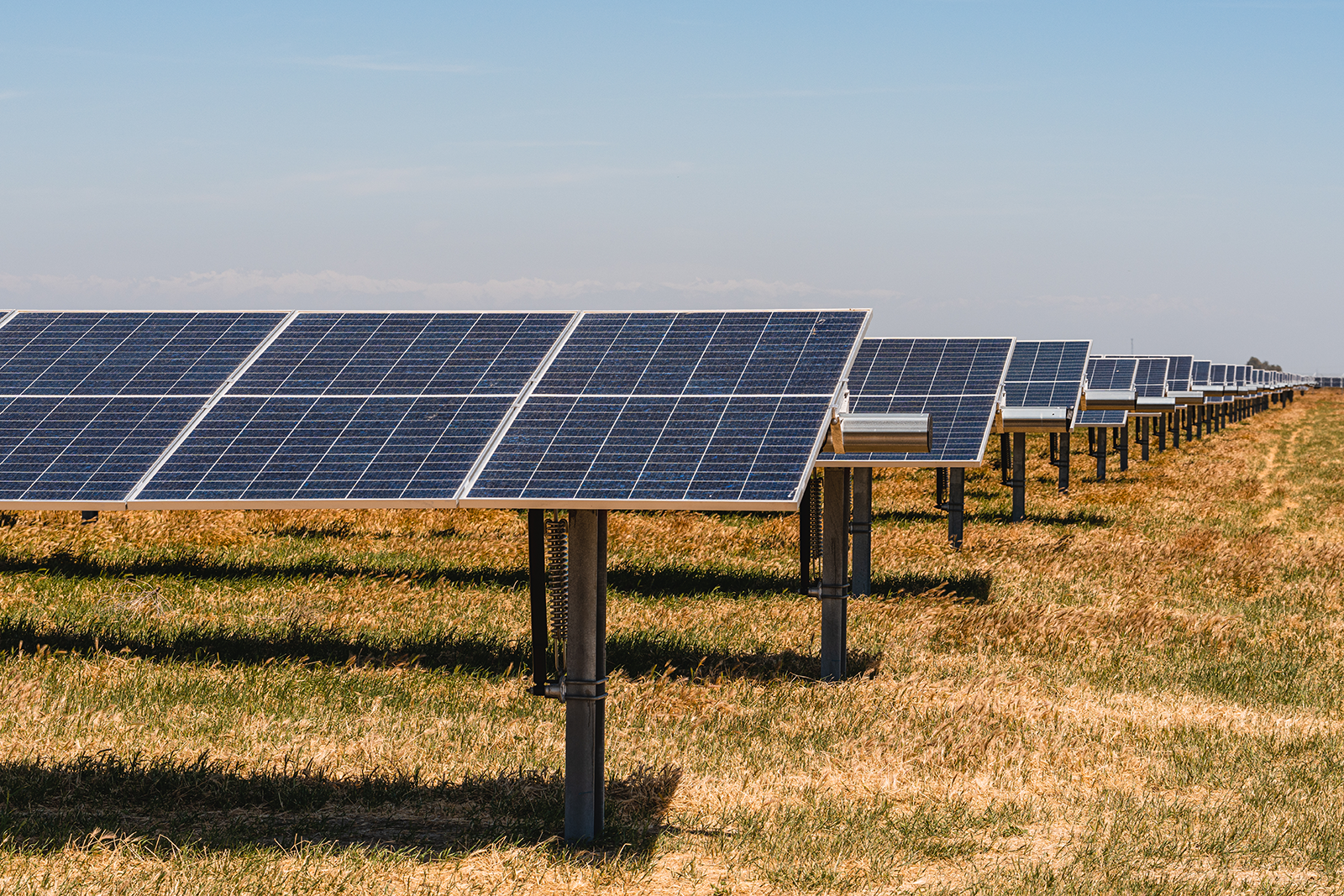
- Solar photovoltaics (PV): Converting photons (light) directly into electricity through photovoltaics (PV), also known as solar panels
- Direct (solar thermal heat): Using the sun to heat water and buildings (hot water, warm pools, space heating/cooling)
- Solar thermal power / concentrating solar power (CSP): Concentrating sunlight to produce high-temperature heat to generate electricity
Solar PV is the fastest-growing electricity resource in the world. It is fully renewable with few environmental impacts, and the cheapest source of electricity in many countries.
Significance
Energy Mix
2% of world 🌎
(#7 resource)
1% of U.S. 🇺🇸
(#7 resource)
Electricity Generation
9% of world 🌎
(#6 resource)
7% of U.S. 🇺🇸
(#6 resource)
Global Solar Use
Solar PV 84%
Solar thermal heat 15%
CSP 1%
Global Solar PV
Most Installed Capacity
China 47% 🇨🇳
of global installed capacity
Most Generation
China 42% 🇨🇳
of global solar electricity
Highest Penetration
North Macedonia 28% 🇲🇰
Hungary 27% 🇭🇺
of country’s electricity comes from solar
Change in Global Solar PV Electricity Generation
Increase:
⬆ 229%
(2020-2025)
U.S. Solar PV
Most Installed Capacity
California 20%
of U.S. installed solar PV capacity
Most Generation
California 23%
of U.S. solar PV electricity
Highest Penetration
Nevada 27%
of state's electricity comes from solar PV
Global Solar Thermal Heat
Most Installed Capacity
China 72% 🇨🇳
of global installed capacity
(U.S. has 3%)
China’s main use is for heating buildings and water. Chinese solar thermal companies are increasingly shifting their focus from residential to district heating and industrial applications. The main use in the U.S. is for heating swimming pools.
Change in Global Solar Thermal Heat Capacity
Increase:
⬆ 14%
(2019-2024)
Global Solar Thermal Power (CSP)
Most Installed Capacity
Spain 32% 🇪🇸
of global installed capacity
(U.S. has 21%, 66% of which is in California)
Change in Global CSP Capacity
Increase:
⬆ 16%
(2019-2024)
Costs of U.S. Solar PV
Costs increase as size of installation falls:
- Utility scale: largest scale, unsubsidized LCOE* = $38 - $78
- Community, commercial, industrial: medium scale, unsubsidized LCOE = $81 - $217
- Rooftop solar / residential: smallest scale, unsubsidized LCOE = $177 - $282
*LCOE (levelized cost of energy) - allows for the comparison of different electricity generating technologies
Compare costs with subsidies and for other resources on the Introduction to Renewable Energy Fast Facts
Costs of solar PV have fallen over time:
Drivers
- Abundant, nondepletable source of energy
- Low climate and environmental impact
- Provides energy access and independence, including in rural communities far from existing grids
- Utility scale solar PV: very low LCOE relative to fossil fuels and nuclear, competitive with onshore wind
- Continued PV productivity gains
- Declining energy storage costs support grid integration
- No fuel price volatility/risk (fuel is free and isn’t subject to supply disruptions)
- Relatively short implementation timeframe from project start to electricity generation
- Modular: easy to add additional capacity
- Financial incentives
- Renewable energy/climate targets
- Rooftop solar PV: no transmission needed, no additional land use
- Solar thermal heat: low-cost option for heating buildings, certain industrial processes
- Daylighting: increased retail sales, free high quality lighting, improved human well-being
Barriers
- Grid integration challenges due to intermittency and duck curve*
- Inconsistent/decreasing incentives
- NIMBY/BANANA** concerns
- Supply chain for solar panels (e.g., U.S. economic sanctions against panels manufactured in China, the largest solar PV manufacturer in the world)
- Rooftop solar PV: higher LCOE than utility scale, requires building ownership
- Solar thermal heat: hard to reach high enough temperatures for certain industrial processes
*Non-solar power plants are forced to ramp up quickly when the sun goes down because solar electricity drops and net demand peaks
**NIMBY - not in my backyard; BANANA - build absolutely nothing anywhere near anything
Climate Impact: Low

- Zero operating emissions
Environmental Impact: Low
- No air pollution
- Little / no water use
- Land use and habitat impact can be significant
Our 10-Minute Take On
Solar Energy
If you're short on time, start by watching this video of key highlights from our lecture on Solar Energy.

Presented by: Diana Gragg, PhD; Core Lecturer, Civil and Environmental Engineering, Stanford University; Explore Energy Managing Director, Precourt Institute for Energy
Recorded: July 25, 2025
Duration: 13 minutes
If you liked this video, watch the other 10-Minute Takes here!
Before You Watch Our Lecture on
Solar Energy
We assign videos and readings to our Stanford students as pre-work for each lecture to help contextualize the lecture content. We strongly encourage you to review the Essential videos and readings below before watching our lecture on Solar Energy. Include selections from the Optional and Useful list based on your interests and available time.
Essential
- Intro to the 4 Ways We Harness the Solar Resource + Deep Dive on Solar Thermal Heat. Stanford Understand Energy. October 2022. (13 min)
An overview of the primary ways we harness the solar resource and provides a more in-depth look at the direct use of solar thermal heat. - Solar Thermal Electricity / Concentrating Solar Power. Stanford Understand Energy. August 1, 2025. (20 min)
A more in-depth look at solar thermal electricity, also known as concentrating solar power. - How Do Solar Panels Work?. Richard Komp. TEDEd. January 5, 2016. (5 min)
Examines how solar panels convert solar energy to electrical energy. - California Now Requires Solar Panels on All New Homes. That’s Not Necessarily a Good Thing. Vox. January 2, 2020. (5 pages)
Reviews the pros and cons of California's requirement that new houses must be built with solar panels.
Optional and Useful
- Solar Farm Virtual Tour. MidAmerican Energy. August 15, 2013. (6 min)
A brief history of solar energy and an overview of constructing and operating a solar farm. - Solar. NEED.org. 2025. (4 pages)
An excellent overview of the solar resource.
Our Lecture on
Solar Energy
This is our Stanford University Understand Energy course lecture on solar energy. We strongly encourage you to watch the full lecture to understand solar as an energy system and to be able to put this complex topic into context. For a complete learning experience, we also encourage you to watch / read the Essential videos and readings we assign to our students before watching the lecture.

Presented by: Kirsten Stasio, Adjunct Lecturer, Civil and Environmental Engineering, Stanford University; CEO, Nevada Clean Energy Fund (NCEF)
Recorded on: October 29, 2025 Duration: 34 minutes

Additional Resources About
Solar Energy
Stanford University
- Stanford Solar Car Project
- Bent Research Group
- Materials Science & Engineering Department
- Mark Brongersma - Photovoltaics
- Yi Cui - Batteries and fuel cells, electric grid, grid scale storage, photovoltaics
- Reinhold Dauskardt - Batteries and fuel cells, photovoltaics, solar thermal
- TomKat Center for Sustainability
- Stacy Bent - Photovoltaics, batteries and fuel cells
- Gabelle Laboratory for Advanced Materials (GLAM)
- StorageX Initiative
Fast Facts Sources
- Energy Mix (World 2025): Energy Institute. Statistical Review of World Energy. 2026.
- Energy Mix (U.S. 2025): U.S. Energy Information Administration (EIA). Total Energy: Energy Overview, Table 1.3. 2026.
- Electricity Mix (World 2025): Energy Institute. Statistical Review of World Energy. 2026.
- Electricity Mix (U.S. 2025): U.S. Energy Information Administration (EIA). Total Energy: Electricity, Table 7.2a. 2026.
- Solar Uses (World 2024): International Energy Agency Solar Heating & Cooling Programme (IEA SHC). Solar Heat Worldwide. 2025.
- Most Installed PV Capacity (World 2024): REN21. Global Status Report. 2025.
- Most PV Generation (World 2025): Energy Institute. Statistical Review of World Energy. 2026.
- Highest PV Penetration (World 2025): Energy Institute. Statistical Review of World Energy. 2026.
- Change in PV Generation (World 2020-2025): Energy Institute. Statistical Review of World Energy. 2026.
- Most Installed PV Capacity (U.S. 2025): Solar Energy Industries Association (SEIA). Solar State-By-State Map. 2025.
- Most PV Generation (U.S. 2025): U.S. Energy Information Administration (EIA). Electricity Data Browser. 2026.
- Highest PV Penetration (U.S. 2024): U.S. Energy Information Administration (EIA). Electric Power Annual. 2025.
- Most Installed Solar Thermal Heat Capacity (World 2024): REN21. Global Status Report. 2025; REN21. Global Status Report. 2024.
- Most Installed Solar Thermal Heat Capacity (U.S. 2023): REN21. Global Status Report. 2024.
- Change in Solar Thermal Heat Capacity (World 2019-2024): REN21. Global Status Report. 2020; REN21. Global Status Report. 2025.
- Most Installed CSP Capacity (World 2024): REN21. Global Status Report. 2025.
- Most Installed CSP Capacity (U.S. 2022): National Laboratory of the Rockies. Concentrating Solar Power Projects. 2022; REN21. Global Status Report. 2025.
- Change in CSP Capacity (World 2019-2024): REN21. Global Status Report. 2020; REN21. Global Status Report. 2025.
- Costs of U.S. Solar PV Installations by Size (2024, 2025): Lazard. Levelized Cost of Energy. 2025; Lazard. Levelized Cost of Energy (LCOE). 2024.
- Costs of U.S. Solar PV Over Time (2009-2025): Lazard. Levelized Cost of Energy. 2025.
More details available on request.
Back to Fast Facts