
Geothermal Energy
Exploring Our Content
Check out our Energy Spotlight on geothermal energy!
Fast Facts About
Geothermal Energy
Principal Energy Uses: Heat, Electricity
Form of Energy: Thermal
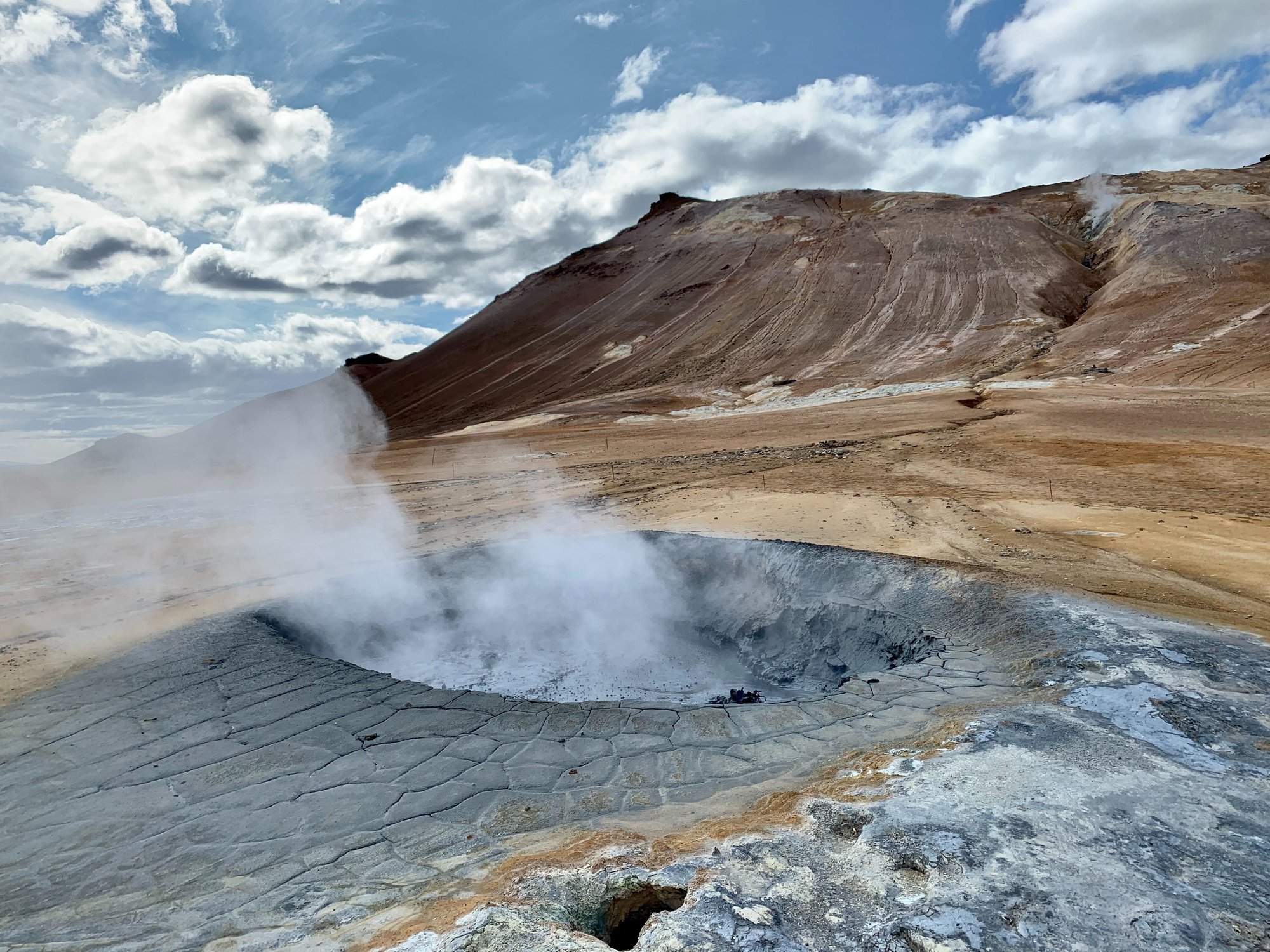
Geothermal energy makes use of abundant natural heat deep below the Earth’s surface. Geothermal resources are accessible where the Earth’s crust is thin or faulted or near volcanic activity, which often occurs near tectonic plate boundaries.
Geothermal has two main uses:
- Direct Use Heat: High-temperature water or steam is used to provide heat for buildings, agriculture, aquaculture, industrial processes, and recreation (e.g., hot springs)
- Electricity: High-temperature water or steam is used to run a steam cycle power plant and generate electricity
There are three things needed in a traditional geothermal resource—permeability, heat, and water. Finding these conditions requires significant up-front capital expenditures. The exploration begins with geophysical assessments, but actual drilling and testing must be done to ensure that these conditions are present. These similarities with oil and gas exploration create opportunities to transfer knowledge, technology, and jobs from the fossil fuel industry to geothermal.
Geothermal power plants are a source of 24/7 renewable electricity, unlike wind and solar which are variable and dependent on weather conditions. Geothermal energy has traditionally been limited to places with suitable geology and the natural existence of water or steam in the reservoir, but new technologies like Enhanced Geothermal Systems (EGS) are making geothermal resources available and easier to find in more locations.
Although the Earth’s heat is non-depletable, we categorize the geothermal resource as semi-renewable because the use of geothermal energy must be carefully managed in each location to prevent water or steam depletion.
Note: Ground source heat pumps, an energy efficiency measure, are often referred to as geothermal heat pumps, but they do not use the geothermal resource. Learn how heat pumps work.
Significance
Energy Mix
<1% of world 🌎
<1% of U.S. 🇺🇸
Electricity Generation
<1% of world 🌎
<1% of U.S. 🇺🇸
Global Uses
Direct use heat: 71%
Electricity: 29%
Changes in Global Demand
Direct Use Heat
Increase:
⬆109%
(2019-2024)
Electricity
Increase:
⬆4%
(2019-2024)
Direct Heat (World)
Largest User of Direct Heat
China 69% 🇨🇳
of global geothermal direct heat use
Direct Heat Uses
Swimming and Bathing: 44%
Space Heating: 39%
Greenhouse Heating: 9%
Industrial Applications: 4%
Other: 4%
Highest Direct Heat Penetration
Iceland 90% 🇮🇸
of country’s heating demand is met by geothermal
Electricity (World)
Most Geothermal Electricity Capacity
U.S. 18% 🇺🇸
Indonesia 17% 🇮🇩
of global geothermal electricity capacity
Most Geothermal Electricity Generation
U.S. 17% 🇺🇸
Indonesia 17% 🇮🇩
of global geothermal electricity generation
Highest Geothermal Electricity Penetration
Kenya 46% 🇰🇪
of country’s electricity comes from geothermal
Electricity (U.S.)
Most Geothermal Electricity Generation
California 69%
of U.S. geothermal electricity generation
Highest Geothermal Electricity Penetration
Nevada 9%
of state’s electricity comes from geothermal
Expansion of Geothermal Resources and Technological Improvements
Almost all new geothermal plant additions in the U.S. since 2000 have been binary cycle, which require lower temperature geothermal reservoirs (allowing geothermal to be used in more locations) and emit no greenhouse gases or air pollution. Binary cycle plants are also being deployed around the world.
Enhanced Geothermal Systems
Enhanced Geothermal Systems (EGS) are being explored and developed:
- The combination of heat, permeability, and naturally occurring water exists in limited locations
- EGS expands the geographic availability of the geothermal resource by creating permeability and/or adding water in locations where those don’t occur naturally
Co-Location
Geothermal projects have promising co-location opportunities with energy-intensive systems that have location flexibility such as:
- Direct Air Capture (carbon removal)
- Data centers
Lithium extraction is another opportunity for co-location. Geothermal brines often contain dissolved lithium, and geothermal power generation could be integrated with extraction.
Costs of U.S. Geothermal
Unsubsidized LCOE*: $67 - $111/MWh
Subsidized LCOE: $46 - $95/MWh
Geothermal is subsidized in the Inflation Reduction Act and other policies.
*LCOE (levelized cost of energy) - allows for the comparison of different electricity generating technologies
Compare costs with subsidies and for other resources on the Introduction to Renewable Energy Fast Facts
Unlike wind and solar which have been getting increasingly cheaper, geothermal’s costs have remained relatively steady over the last 10 years.
Geothermal is starting to adopt technological advances from the oil and gas industry. Costs are expected to decline in the coming years as advancements continue.
Geothermal power plants tend to have high upfront costs due to exploration, drilling, and power plant infrastructure but relatively high capacity factor and low operating and maintenance costs per MWh.
Drivers
- Abundant resource: heat from the Earth
- Baseload source of energy: can run day and night regardless of weather
- High capacity factor compared to other renewable energy systems (80-90% for new geothermal plants, 66% for all geothermal plants)
- Relatively low climate and environmental impacts
- Technology and practices can be leveraged from oil and gas industry, such as drilling methods
- New EGS technologies are expanding places where geothermal can be used
Barriers
- Tapping a subsurface resource is inherently risky and very capital intensive
- Site-specific resource (conventional methods require the presence of heat, permeable rock, and water)
- Potential siting challenges, such as NIMBY/BANANA* or insufficient electricity transmission infrastructure
- Resource must be managed to be sustainable: geothermal reservoirs naturally recharge, but can be depleted if over-exploited
- Potential seismicity risk for EGS projects
- Some air emissions possible, including H2S
- Some systems (such as EGS) may require additional water supply
*NIMBY - not in my backyard; BANANA - build absolutely nothing anywhere near anything
Climate Impact: Low

- Small amounts of CO2 can be released in some geothermal processes
- New binary systems have zero GHG emissions
Environmental Impact: Low
- Small amounts of air pollution (primarily H2S) can be released in some geothermal processes
- Some EGS projects can pose a low risk of seismicity and require additional water supply
- Can have land and habitat impacts
Our 10-Minute Take On
Geothermal Energy
If you're short on time, start by watching this video of key highlights from our lecture on Geothermal Energy.

Presented by: Diana Gragg, PhD; Core Lecturer, Civil and Environmental Engineering, Stanford University; Explore Energy Managing Director, Precourt Institute for Energy
Recorded: August 8, 2025
Duration: 14 minutes
If you liked this video, watch the other 10-Minute Takes here!
Before You Watch Our Lecture on
Geothermal Energy
We assign videos and readings to our Stanford students as pre-work for each lecture to help contextualize the lecture content. We strongly encourage you to review the Essential readings and videos before our lecture on Geothermal Energy. Include selections from the Optional and Useful list based on your interests and available time.
Essential
- Why We're Betting on Enhanced Geothermal Electricity. Google. November 28, 2023. (1 min)
Overview of Google's commercial geothermal project with Fervo Energy to help power their operations in Nevada. - This Overlooked Energy Source Could Supply 50% Of Electricity. CNBC. May 6, 2021. (16 min)
A look into the factors causing increasing interest in geothermal energy by both new company startups as well as established traditional oil and gas industry giants. - Geothermal Energy Is Renewable and Powerful. Why Is Most of It Untapped?. DW Planet A. December 18, 2020. (10 min)
An introduction into how geothermal energy can be harnessed for power generation and a look into some of the factors preventing wide-scale adoption. - Batteries Are Dirty. Geothermal Power Can Help. Vox. November 21, 2022. (8 min)
Demand for nickel to make lithium-ion batteries creates environmental and health hazards where it is mined, particularly in Indonesia, an area where there is tremendous geothermal energy potential and subsequently potential for cleaner lithium-ion battery production. - Why Geothermal Energy Is Being Viewed as a Viable Alternative to Fossil Fuels. PBS NewsHour. March 25, 2022. (5 min)
An overview of recent advances in geothermal energy power production innovations and the external factors influencing them.
Optional and Useful
- The Big Business of Drilling Into the Earth. Bloomberg. April 3, 2025. (24 min)
Shows how new drilling and fracking techniques are helping geothermal emerge from underdog status and expand its potential. - Is the Future of Energy...Pouring Water on Hot Rocks in the Ground?. Vox. September 13, 2023. (5 pages)
Explains "enhanced geothermal" and the challenges ahead for geothermal. - Global Status Report, Renewables in Energy Supply, Geothermal Power and Heat. REN21. 2025. (4 pages)
Annual source for current geothermal energy market and industry trends, installed capacity, and direct use information. - Geothermal. NEED.org. 2024. (4 pages)
An excellent overview of geothermal. - Puna Geothermal Venture. KHON2 News. October 5, 2021. (5 min)
A look into how geothermal energy fits into the State of Hawaii's clean energy goals. - Why Geothermal Could Be the Energy Breakthrough Everyone Agrees On. Bloomberg Television. May 3, 2026. (11 min)
Explains how geothermal systems and enhanced geothermal systems work and can be a clean baseload power source to meet growing electricity demand. - Nearly Half of U.S. Geothermal Power Capacity Came Online in the 1980s. EIA Today in Energy. November 20, 2019. (1 page)
A brief overview showing geothermal capacity additions over time, as well as comparative capacity factors non-fossil fuel utility scale electricity generators. - History of the Geysers. Calpine Corporation. January 28, 2013. (8 min)
History and overview of The Geysers, the first commercial geothermal electric generation unit in the Western Hemisphere. - Drilling Surprise Opens Door to Magma-Powered Electricity. ARSTechnica. January 29, 2014. (2 pages)
An introduction into the concept of magma-enhanced geothermal systems. - Geothermal Energy in the 21st Century: Unconventional EGS Resources. Forge Utah. January 6, 2021. (33 min)
An exploration of unconventional Enhanced Geothermal Systems technologies and their potential for electricity generation.
Our Lecture on
Geothermal Energy
This is our Stanford University Understand Energy course lecture on geothermal energy. We strongly encourage you to watch the full lecture to understand geothermal as an energy system and to be able to put this complex topic into context. For a complete learning experience, we also encourage you to watch / read the Essential videos and readings we assign to our students before watching the lecture.

Presented by: Dawn Owens, Adjunct Lecturer, Civil and Environmental Engineering, Stanford University; Head of Development and Commercial Markets, Fervo Energy
Recorded on: October 23, 2024 Duration: 64 minutes

Additional Resources About
Geothermal Energy
Stanford University
- Stanford Geothermal Program
- Roland Horne - Geothermal energy
- Earth & Planetary Sciences Department
- Dennis Bird - Geothermal energy
- Aeronautics and Astronautics Department
- Debbie Senesky - Geothermal energy
Industry Organizations
Fast Facts Sources
- Energy Mix (World 2025): Energy Institute. Statistical Review of World Energy. 2026.
- Energy Mix (U.S. 2025): U.S. Energy Information Administration (EIA). Monthly Energy Review, Table 1.3. 2026.
- Electricity Mix (World 2025): Energy Institute. Statistical Review of World Energy. 2026.
- Electricity Mix (U.S. 2025): U.S. Energy Information Administration (EIA). Monthly Energy Review, Table 7.2a. 2026.
- Global Uses (2024): REN21. Renewables Global Status Report. 2025.
- Changes in Global Demand (2019-2024): REN21. Renewables 2019 Global Status Report. 2019; REN21. Renewables Global Status Report. 2025.
- Largest User of Direct Heat (World 2024): REN21. Renewables Global Status Report. 2025.
- Direct Heat Uses (World 2019): REN21. Renewables 2022 Global Status Report. 2022.
- Highest Direct Heat Penetration (World 2024): International Renewable Energy Agency (IRENA). Geothermal. 2025.
- Most Geothermal Electricity Capacity (World 2024): REN21. Renewables Global Status Report. 2025.
- Most Geothermal Electricity Generation (World 2022): REN21. Renewables Global Status Report. 2023; REN21. Renewables Global Status Report. 2024.
- Highest Geothermal Electricity Penetration (World 2024): Planete Energies. Kenya: How Geothermal Energy is Transforming the Country's Energy Mix. 2026.
- Most Geothermal Electricity Generation (U.S. 2025): U.S. Energy Information Administration (EIA). Geothermal Explained: State Rankings for Geothermal Electricity Generation. 2026.
- Highest Geothermal Electricity Penetration (U.S. 2025): U.S. Energy Information Administration (EIA). Geothermal Explained: State Rankings for Geothermal Electricity Generation. 2026.
- U.S. Geothermal Capacity by Plant Technology: National Laboratory of the Rockies (NLR). 2025 U.S. Geothermal Market Report. 2026.
- Costs of Geothermal (U.S. 2026): Lazard. Levelized Cost of Energy Analysis–Version 19.0. 2026.
- Geothermal Capacity Factor (U.S. 2024, 2025): National Laboratory of the Rockies (NLR). 2024 Electricity ATB Technologies and Data Overview. 2026; U.S. Energy Information Administration (EIA). Electric Power Monthly, Table 6.07.B. 2026.
More details available on request.
Back to Fast Facts