
Natural Gas
Exploring Our Content
Quizzes (Natural Gas, Liquefied Natural Gas)
Check out our Energy Spotlights on natural gas and liquefied natural gas!
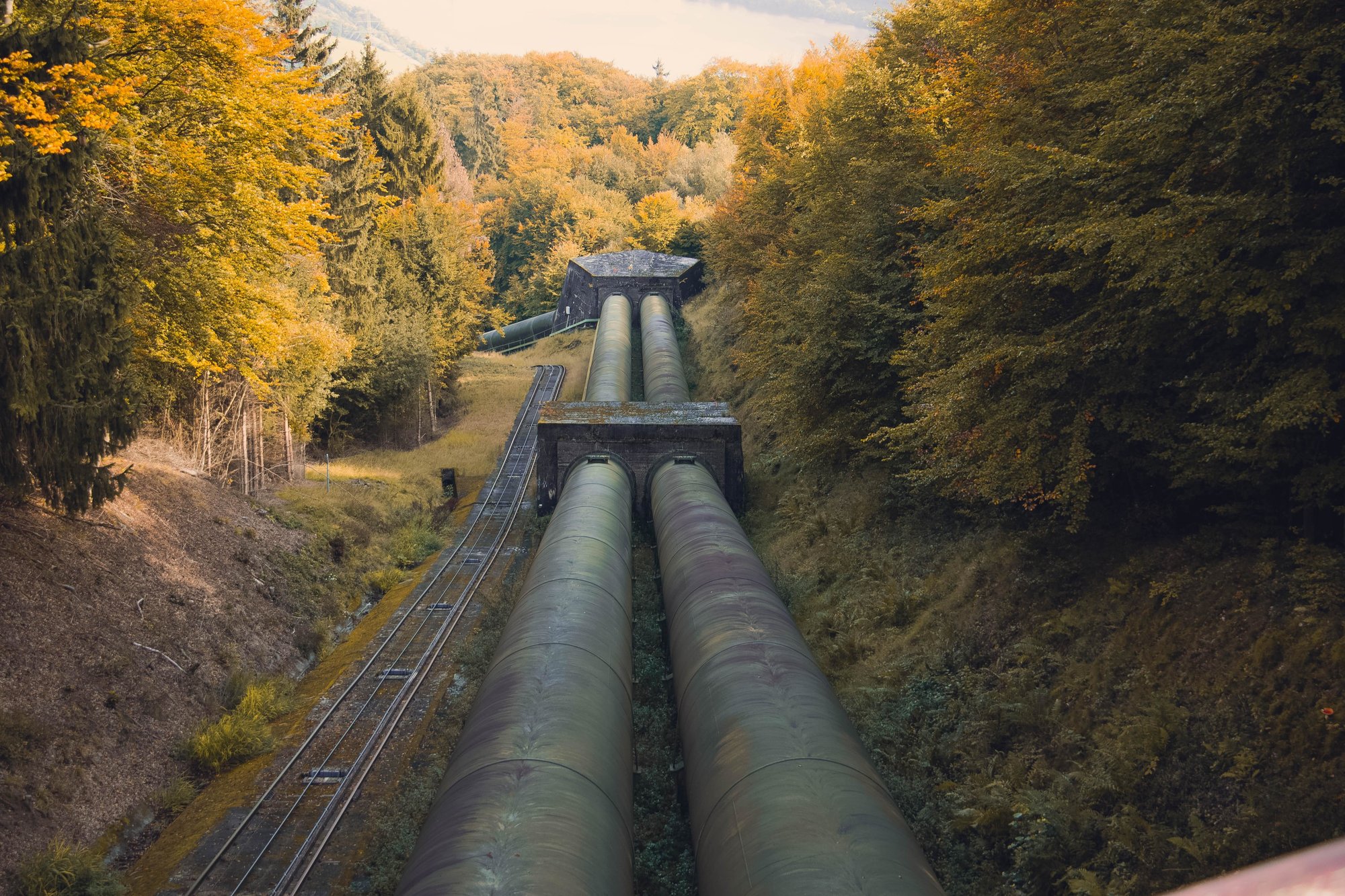
Fast Facts About
Natural Gas
Principal Energy Uses: Electricity, Heat
Form of Energy: Chemical
Natural gas (NG) is the most versatile and fastest-growing fossil fuel—used in all areas of the economy (industrial, residential, commercial, and transportation). It is a depletable, non-renewable resource composed primarily of methane gas (CH4), with smaller amounts of natural gas liquids, carbon dioxide (CO2), and water vapor. While natural gas is the cleanest-burning fossil fuel, it still produces CO2 when combusted. And because natural gas is primarily methane, it is itself a very potent greenhouse gas when it is emitted to the atmosphere uncombusted.
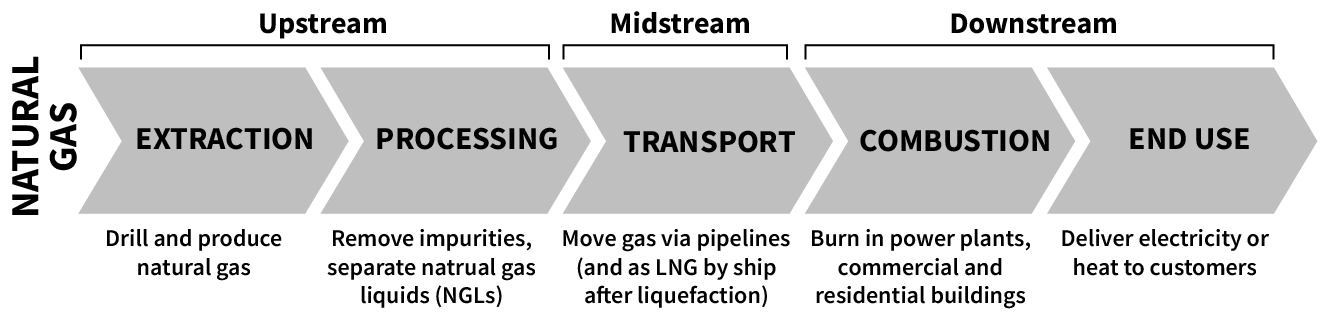
Methane can escape or leak into the atmosphere during the production, processing, storage, transmission, distribution, and use of natural gas, and during the production, refinement, transportation, and storage of crude oil. Methane leakage poses a significant challenge for the natural gas energy system and for climate change. Much of this leakage can be avoided with good policy and oversight. Recent advances in satellites, flyovers, drones, and sensors are allowing better accountability and information.
Note: The data in these Fast Facts are for commercial natural gas. Landfill natural gas and biogas (methane from biological sources) are addressed on the Biomass page.
Significance
Energy Mix
25% of world 🌎 (#3 resource)
36% of U.S. 🇺🇸 (#2 resource)
Electricity Generation
22% of world 🌎 (#2 resource)
43% of U.S. 🇺🇸 (#1 resource)
Global NG Uses
Electricity: 40%
Heat (industrial): 25%*
Heat (buildings): 21%**
Oil and Natural Gas Production: 10%
Transportation: 4%***
Change in Global Consumption
Increase:
⬆ 6%
(2019-2024)
*Includes chemical feedstock application (fertilizer, methanol)
**For example, space and water heating, cooking
***Mostly natural gas used in pipelines to move natural gas
GHG Emissions
22% of world 🌎
38% of U.S. 🇺🇸
energy GHG emissions are from natural gas
(includes methane leakage)
Energy GHG emissions are ~75% of global GHG emissions.
The Challenge of Natural Gas (Methane) Leakage
Global Warming Potential of Methane
80x more potent than CO2 over 20 years
27-30x over 100 years
Methane only lasts about 12 years in the atmosphere but is very potent.
Methane Leakage from Natural Gas and Petroleum Systems
4%
of US GHG emissions
% of Natural Gas that is Leaked
The EPA cites US leakage at ~1.5% (could be higher). In key production regions (Permian) it may be as high as 9%.
Recent studies have shown that as little as 0.2% to 3% leakage puts natural gas on par with coal for climate change impact.
Controlling methane leakage is key for reducing GHG emissions. It is also beneficial to the oil and gas industry, because it increases their supply of natural gas to sell.
World
Largest Proved Reserves
Russia 20% 🇷🇺
of global proved reserves
Largest Producer
U.S. 25% 🇺🇸
of global production
Largest Consumer
U.S. 22% 🇺🇸
of global consumption
U.S.
Largest Proved Reserves
Texas 30%
of U.S. proved reserves
Largest Producer
Texas 27%
of U.S. production
Largest Consumer
Texas 15%
of U.S. consumption
Global Trade
Amount Traded
21%
of global production
53% as LNG*, 47% by pipeline
Largest Exporter
U.S. 23% 🇺🇸
of global exports
Largest LNG* Exporters
U.S. 21% 🇺🇸, Australia 20% 🇦🇺, Qatar 20% 🇶🇦
Largest Importer
Europe 27%
of global imports
Largest LNG* Importers
Europe 25%, China 19% 🇨🇳, Japan 16% 🇯🇵
*LNG (liquified natural gas) – natural gas that has been cooled down to liquid form for ease and safety of storage and transport
Drivers
- Abundant and growing availability: ongoing innovation in extraction drives down costs and increases available resources
- Versatile: many uses, including many forms of heat (for buildings and industrial processes) and electricity generation
- Feasible to transport via pipeline or LNG tankers
- Relatively low private costs compared to other fossil fuels (but note that social and environmental costs are not factored into the price)
- Flexible/dispatchable for electricity generation: easy to ramp up and down based on needs of the electricity grid; critical for scaling renewables
- Potential “blue bridge to green future:" it's the lowest carbon fossil fuel and supports renewable energy integration
- No solid waste; lower SO2 and NOX than coal
- Methane and CO2 monitoring solutions and reduction technologies emerging rapidly
Barriers
- Methane is a highly potent greenhouse gas; venting, leaking, and flaring need to be addressed or the future of natural gas is problematic
- Resource not evenly distributed around the world, raising concerns around geopolitics of supply and demand, energy security
- Lower energy density requires transportation infrastructure; pipeline and LNG gasification siting can be controversial
- Natural gas infrastructure requires reclamation and remediation at end of life
Climate Impact: Medium to High

- Lower CO2 emissions intensity than coal or oil when combusted
- Methane leakage contributes to global warming, as methane is a potent greenhouse gas
Environmental Impact: Medium

- Ecosystem disturbance from exploratory wells, road construction, seismic techniques of exploration during prospecting
- Potential for significant land impacts, habitat destruction, and water contamination during extraction and transportation (pipelines)
- Potential thermal pollution of waterways from power plant cooling
- Low air pollution from combustion (virtually no sulfur emissions)
Our 10-Minute Take On
Natural Gas
If you're short on time, start by watching this video of key highlights from our lecture on Natural Gas.

Presented by: Diana Gragg, PhD; Core Lecturer, Civil and Environmental Engineering, Stanford University; Explore Energy Managing Director, Precourt Institute for Energy
Recorded: June 13, 2025
Duration: 10 minutes
If you liked this video, watch the other 10-Minute Takes here!
Curated Videos and Readings on
Natural Gas
We assign videos and readings to our Stanford students as pre-work for each lecture to help contextualize the lecture content. We strongly encourage you to review the Essential videos and readings before watching our lecture on Natural Gas. Include selections from the Optional and Useful list based on your interests and available time.
Essential
- Natural Gas 101. Student Energy. June 30, 2015. (3 min)
An overview of how natural gas is formed, drilled, transported, stored, and used. - Why is Natural Gas a Bridge Fuel for Energy Transition?. Commodity Wealth Investor. September 14, 2025. (3 min)
An overview of how natural gas can support the transition from fossil fuels toward a low carbon future. - Liquefied Natural Gas (LNG) 101. Student Energy. May 21, 2015. (2 min)
The basics of how natural gas can be liquified for storage and transport. - Methane: The Other Important Greenhouse Gas. Environmental Defense Fund. March 2, 2014. (2 min)
A video building awareness that methane emissions significantly damage the atmosphere, but that there are actions that can be taken to reduce leaks of this greenhouse gas. - Ilissa Ocko: The Fastest Way to Slow Climate Change Now. TED Countdown. January 15, 2022. (10 min)
A look at ways to contain methane emissions, presenting opportunity to immediately reduce the rate of climate change. - This Climate Gas is Scarier Than CO2. DW Planet A. March 25, 2022. (14 min)
Methane emission detection in the natural gas supply chain. - Is the U.S. Becoming the EU's New Russia for Gas?. DW News. July 9, 2025. (3 min)
Highlights European need for natural gas and its shifting import sources as dependence on Russia has declined. - Monitoring Methane from Space. European Space Agency. November 13, 2023. (3 min)
A look at the increasingly important role satellites have in reducing greenhouse gas emissions through detection of large methane hotspots. - Methane Emissions from US Oil and Gas Operations Cost the Nation $10 Billion per Year. Stanford News. March 13, 2024.
A highlight of Stanford-led research that shows methane emissions from a large share of US oil and gas facilities are larger than previous estimates. - The Logistics of Natural Gas. Wendover Productions. January 30. 2025. (19 min)
A thorough overview of the logistics and economics associated with natural gas production, storage, and transport.
Optional and Useful
- Where Our Natural Gas Comes From. EIA. October 3, 2022. (1 page)
An introduction to natural gas production and consumption in the United States, with focus on reports of current statistical activity. - The Business of Natural Gas. Southern Gas Association. April 22, 2013. (4 min)
An overview of the commercial industry and fiscal aspects of natural gas exploration, drilling, production, treatment, shipping, and commercial consumption.
Our Lecture on
Natural Gas
This is our Stanford University Understand Energy course lecture on natural gas. We strongly encourage you to watch the full lecture to understand natural gas as an energy system and to be able to put this complex topic into context. For a complete learning experience, we also encourage you to watch / read the Essential videos and readings we assign to our students before watching the lecture.

Presented by: Jane Woodward, Adjunct Professor, Civil and Environmental Engineering, Stanford University; Founder and Managing Partner, WovenEarth Ventures; Founding Partner, MAP Energy
Recorded on: October 3, 2025 Duration: 67 minutes
Table of Contents
(Clicking on a timestamp will take you to YouTube.)
00:00 Introduction
06:04 Significance and history of natural gas
29:34 What is natural gas?
31:02 Where is the natural gas?
36:13 How does the natural gas system work?
54:28 How does natural gas impact the environment?
1:02:41 What are the economics of natural gas?
1:04:22 Where are things going in the future?
Test Your Knowledge

Natural Gas Quiz
Printable PDF: Questions, Answer Key
Liquefied Natural Gas Quiz
Printable PDF: Questions, Answer Key
Frequently Asked Questions About
Natural Gas
Natural gas is composed primarily of methane gas (CH₄), with smaller amounts of natural gas liquids, carbon dioxide (CO₂), and water vapor.
Natural gas is a hydrocarbon formed from deeply-buried, dead organic material subject to high temperature and pressure for hundreds of millions of years.
Natural gas is the most versatile fossil fuel—used in all areas of the economy (industrial, residential, commercial, and transportation) for electricity generation, industrial heat and feedstock, heat in buildings (e.g., space and water heating, cooking), powering oil and natural gas production, and operating compressors in pipelines to transport natural gas.
While natural gas is the cleanest-burning fossil fuel, it still produces CO₂ when combusted. And because natural gas is primarily methane, it is itself a very potent greenhouse gas when it is emitted to the atmosphere uncombusted. Methane can escape or leak into the atmosphere during the production, processing, storage, transmission, distribution, and use of natural gas.
Natural gas extraction and pipelines can also disrupt natural habitats and pose risks to nearby human communities.
Advantages of natural gas include:
- Its abundance and versatility
- Relatively low private costs compared to other fossil fuels (but social and environmental costs are not factored into the price)
- Its flexibility for electricity generation: easy to ramp up and down based on the need of the electricity grid (critical for scaling renewables)
- No solid waste from combustion and lower SO₂ and NOx than coal
Disadvantages of natural gas include:
- Methane is a highly potent greenhouse gas; venting, leaking, and flaring need to be addressed
- It’s not evenly distributed around the globe, raising geopolitical and energy security concerns
- Its lower energy density requires transportation infrastructure; pipeline and LNG gasification siting can be controversial
- Natural gas infrastructure requires reclamation and remediation at end of life
Additional Resources About
Natural Gas
Stanford University
- Natural Gas Initiative
- Energy Modeling Forum - See Projects section for natural gas market analyses
- Civil and Environmental Engineering Department
- Mark Jacobson - Solutions to climate change and impacts of fossil fuels
- Environment Assessment and Optimization Group
- Adam Brandt - Unconventional oil & gas, natural gas
- Earth System Science Department
- Rob Jackson - Hydraulic fracturing and drinking water quality; map natural gas leaks; unconventional oil & gas, natural gas
- Geophysics Department
- Mark Zoback (Emeritus) - Reservoir geomechanics: tight shale tight oil and gas production, unconventional oil & gas, natural gas
- Economics Department
- Frank Wolak - Energy markets, energy and behavior
- Program on Energy and Sustainable Development Spogli Institute
- Mark Thurber - Geopolitics of gas, energy markets
Fast Facts Sources
- Energy Mix (World 2024): Energy Institute. Statistical Review of World Energy. 2025.
- Energy Mix (U.S. 2023): U.S. Energy Information Agency (EIA). Total Energy: Energy Overview, Table 1.3. March 2025.
- Electricity Mix (World 2024): Energy Institute. Statistical Review of World Energy. 2025.
- Electricity Mix (U.S. 2024): U.S. Energy Information Agency (EIA). Total Energy: Electricity, Table 7.2a. March 2025.
- Global Natural Gas Uses (World 2019): International Energy Agency (IEA). Natural gas total final consumption by sector, 1971-2019. 2021.
- Change in Global Consumption (2019-2024): Energy Institute. Statistical Review of World Energy. 2025.
- GHG Emissions From Natural Gas (World 2022): International Energy Agency (IEA). Greenhouse Gas Emissions from Energy Data Explorer. October 22, 2025; International Energy Agency (IEA). Emissions from Oil and Natural Gas Operations in Net Zero Transitions. May 2023; International Energy Agency (IEA). CO2 Emissions in 2022. March 2, 2023.
- GHG Emissions From Natural Gas (World 2022): International Energy Agency (IEA). Greenhouse Gas Emissions from Energy Data Explorer: Fugitive Emissions, Total GHG Emissions from Energy per Product. 2024. August 2, 2024.
- GHG Emissions From Natural Gas (U.S. 2023): International Energy Agency (IEA). Greenhouse Gas Emissions from Energy Data Explorer: Fugitive Emissions, Total GHG Emissions from Energy per Product. 2024. August 2, 2024.
- Sources of Methane Emissions (U.S. 2022): U.S. Environmental Protection Agency (EPA). Methane Emissions by Source. 2024.
- Global Warming Potential of Methane (World 2023): U.S. Environmental Protection Agency (EPA). Understanding Global Warming Potentials. 2024.
- Methane Emissions and Leakage (U.S. 2019): U.S. Energy Information Administration (EIA). Natural Gas and the Environment. 2022.
- Percent of Natural Gas Leaked (U.S. 2018): Public Broadcasting System (PBS). The US Natural Gas Industry is Leaking Way More Methane Than Originally Thought. 2018;
- (U.S. 2022): Stanford University. Stanford-Led Study: Methane Leaks Are Far Worse Than Estimates, At Least in New Mexico, But There’s Hope. 2022.
- Leakage Climate Impact (World 2022):
- Environmental Science & Technology. Chen et al, Quantifying Regional Methane Emissions in the New Mexico Permian Basin with a Comprehensive Aerial Survey. 2022.
- Proceedings of the National Academy of Sciences (PNAS). Xiao et al., Observation-derived 2010-2019 trends in methane emissions and intensities from US oil and gas fields tied to activity metrics. 2022.
- Rocky Mountain Institute (RMI). Coal vs. Natural Gas. 2023.
- Environmental Research Letters. Gordon et al., Evaluating net life-cycle greenhouse gas emissions intensities from gas and coal at varying methane leakage rates. 2023.
- Largest Proved Reserves (World 2020): Energy Institute. Statistical Review of World Energy. 2025.
- Largest Producer (World 2024): Energy Institute. Statistical Review of World Energy. 2025.
- Largest Consumer (World 2024): Energy Institute. Statistical Review of World Energy. 2025.
- Largest Proved Reserves (U.S. 2022): U.S. Energy Information Administration (EIA). US Crude Oil and Natural Gas Proved Reserves, Year-end 2021. 2023
- Largest Producer (U.S. 2023): U.S. Energy Information Administration (EIA). Which states consume and produce the most natural gas? and US Natural Gas Gross Withdrawals and Production. 2024.
- Largest Consumer (U.S. 2023): U.S. Energy Information Administration (EIA). Which states consume and produce the most natural gas? and Natural Gas Consumption by End Use. 2024.
- Global Trade (World 2024): Energy Institute. Statistical Review of World Energy. 2025.
- Largest Exporter (World 2024): Energy Institute. Statistical Review of World Energy. 2025.
- Largest Importer (World 2024): Energy Institute. Statistical Review of World Energy. 2025.
More details available on request.
Back to Fast Facts