
Understand Food Wastage

Happy November! This edition of Stanford University’s Understand Energy Learning Hub Energy Spotlight explores energy and food wastage. If you like what you see, please share widely and encourage others to subscribe. You can also check out all of our past issues!
What you need to know
Significance: The global food system accounts for about 30% of the world’s energy use and at least 15% of fossil fuel use. Nearly 40% of food produced is never eaten, while an estimated 735 million people go hungry. When we waste food, we waste all of its embedded energy too, as well as the water, land, labor, materials, and capital used to produce it. Additionally, wasted food releases methane, a potent greenhouse gas (GHG), as it decomposes. Food wastage generates about 10% of global GHG emissions, an amount roughly equivalent to the total GHG emissions of European Union countries and Russia combined.
If food wastage were a country, it would be the third-largest GHG emitter
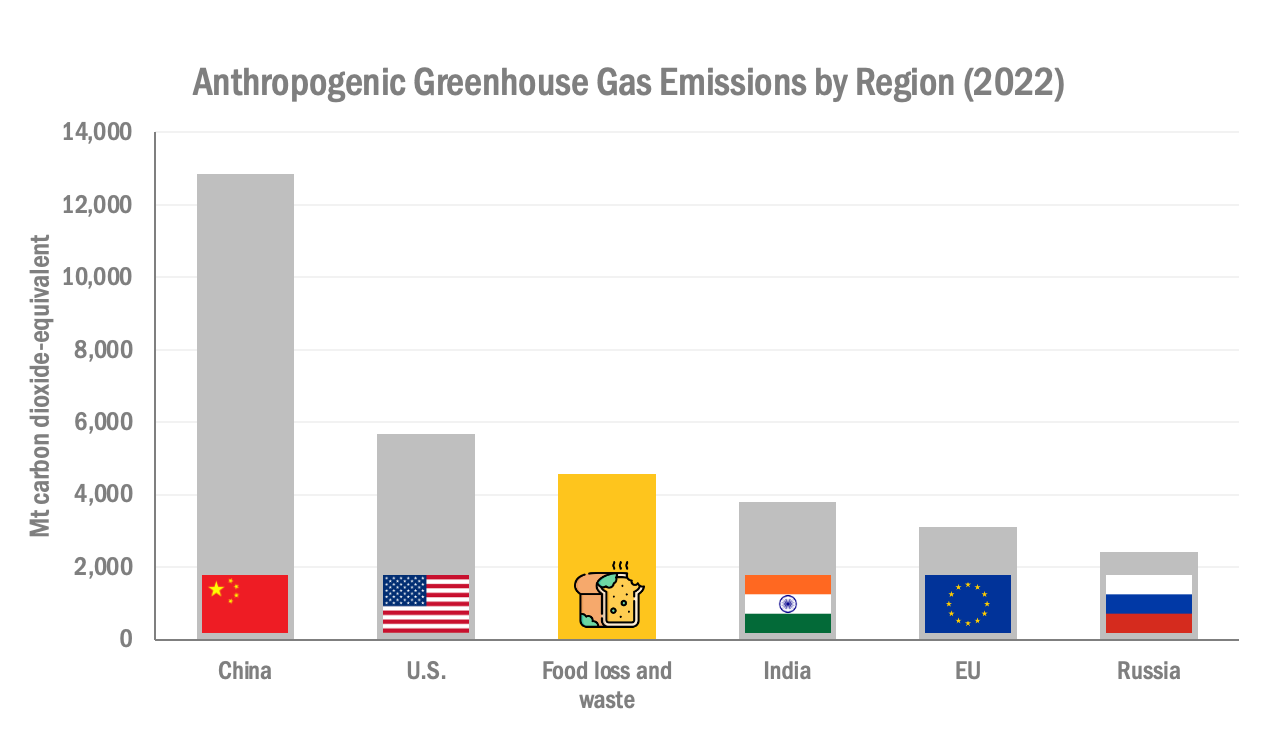
Data source: Climate Watch (updated image from: WRI, 2019; FAO).
What is food wastage? Food wastage encompasses both food loss and food waste:
- Food loss happens before edible food reaches consumers, during harvest, post-harvest handling, storage, processing, and transportation. Food loss is most severe in low- and middle-income regions where energy access and infrastructure are limited or nonexistent. For example, in places without reliable roads or cold storage, extreme weather like heat and heavy rain can cause delays getting to market, leading to food deterioration and often forcing farmers to discard their produce.
- Food waste occurs when edible food is discarded at the retail and consumer levels, such as in grocery stores, restaurants, and homes. Food waste is a bigger problem in middle- and high-income regions where food tends to be abundant, affordable, and easily replaced. For example, Americans waste about 316 million pounds of food every Thanksgiving ($550 million worth of groceries), including turkey meat equivalent to 8.2 million whole turkeys. Watch this 3-minute video on food waste in the United States.
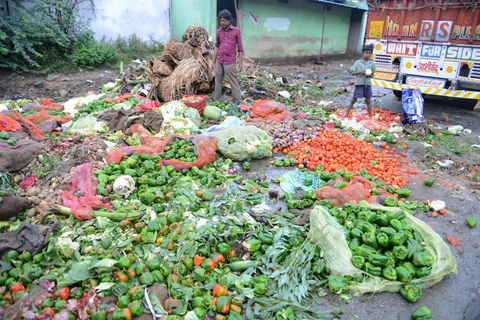
Energy use in the food system
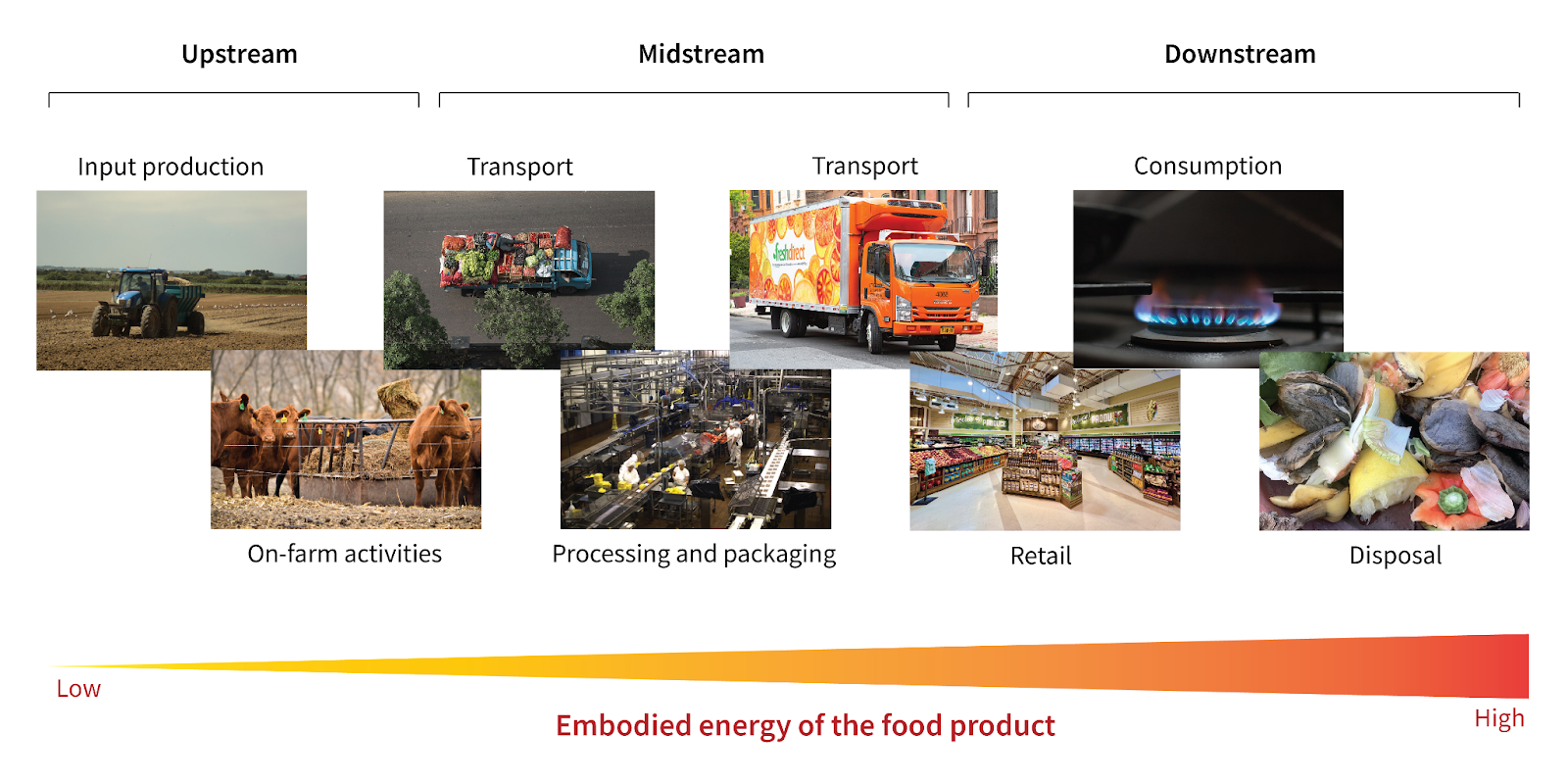
Where is energy used? The three stages of the food system are upstream (e.g., irrigation, fertilizer, farm operations), midstream (e.g., transportation, storage, processing), and downstream (e.g., retail, consumption). Globally, the two biggest energy-using stages are midstream (42%) and downstream (38%), though this varies by region. The embodied energy in food products increases as they move from upstream to downstream.
Food system stages
Some foods require more energy to produce than others. Animal products like beef, lamb, and dairy are among the most energy-demanding foods. Animal feed production consumes large amounts of fertilizer, fuel, and electricity. Meat and dairy also require energy for processing, as well as temperature control throughout distribution. Plant-based foods typically require less energy to produce and emit fewer GHGs, as shown in the chart below.
GHG emissions across the supply chain for different foods
(kilograms of CO₂e per kilogram of food)
“Losses” are GHG emissions that occur when the food is lost or wasted after production. Data source: Joseph Poore and Thomas Nemecek (2018). Our World in Data.
Land-use change and farming account for the largest share of GHG emissions for most foods, followed by animal feed production and processing. Land-use change occurs when land is used for a different purpose (e.g., rainforest land converted to grasslands for beef production). While not an energy use, land-use change for the food system is a significant contributor to GHG emissions and climate change.
Energy use in the food system is increasing to meet growing and changing food demand. As the global population continues to grow and incomes rise, global food demand is expected to increase between 35% and 56% by 2050. The food system’s energy consumption grew by more than 20% between 2000 and 2018 due in part to increasing mechanization, globalized supply chains, and growing demand for meat, dairy, and ultra-processed foods. For example, from 2000-2022, global per capita meat consumption increased by 21%.
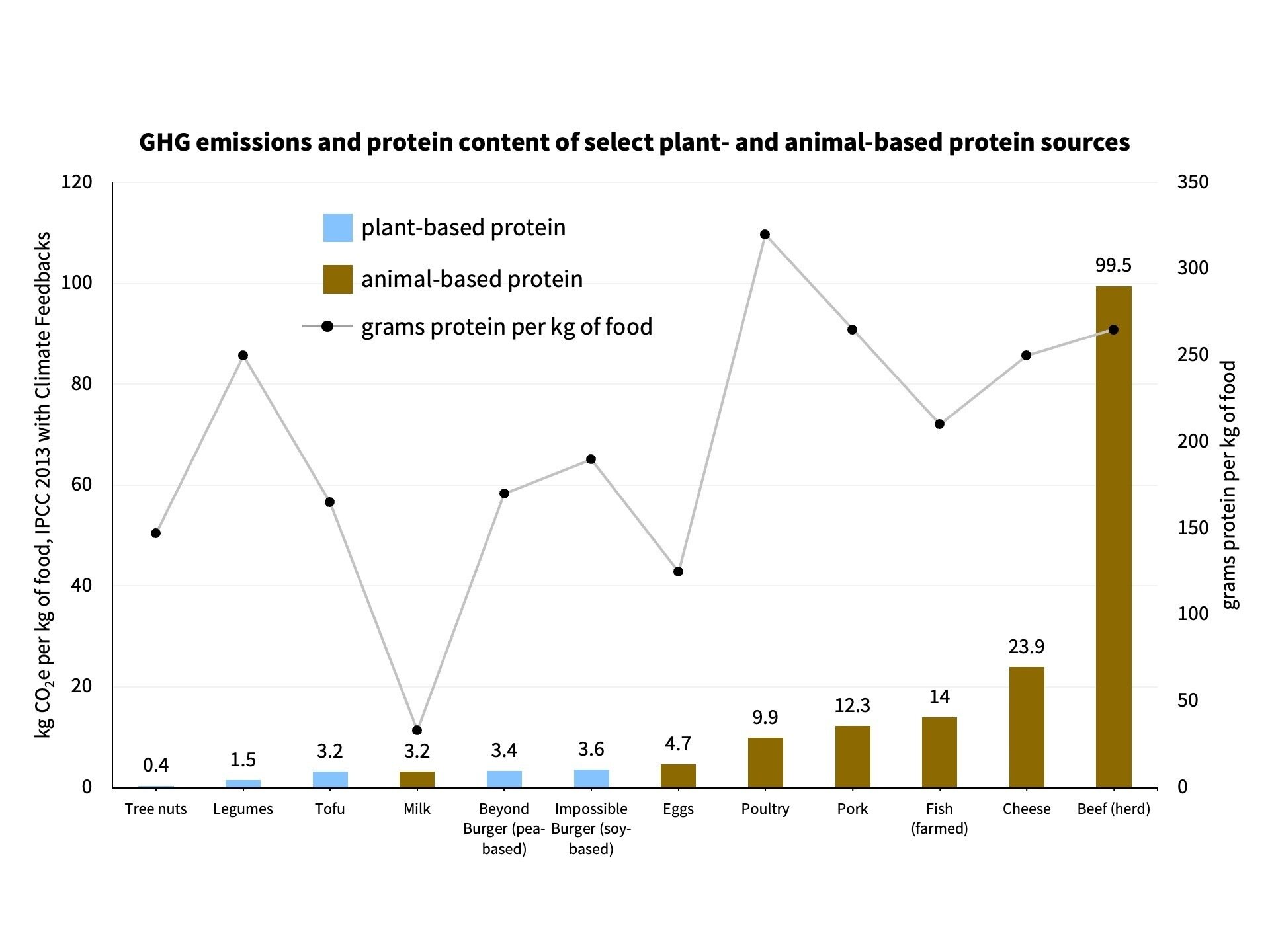
How do protein sources stack up?
Different protein sources have different lifecycle GHGs and protein content. For example, plant-based “meats” (e.g., Impossible Burger, Beyond Burger) emit far fewer GHGs than animal meats because raising animals for food is extremely GHG-intensive.
Food wastage = food loss + food waste
Downstream food waste (edible food discarded at the retail and consumer levels) wastes the most energy because the food has embodied energy from all stages in the food system. In high-income regions, where food is typically more plentiful and affordable, 40% of food wastage occurs downstream. By contrast, less than 20% of food wastage occurs downstream in low- and middle-income regions. Consumers in Europe and North America waste more than 10 times the amount of food per person (95-115 kg/year) than those in Sub-Saharan Africa and South/Southeast Asia (6-11 kg/year).
Per capita food waste and losses (kg/yr) by region
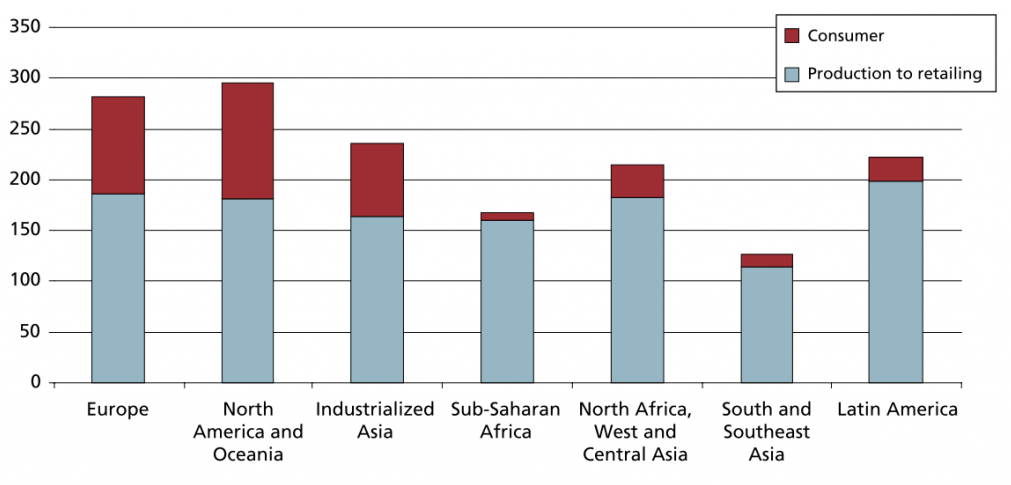
Climate change is driving more upstream and midstream food loss. Rising temperatures, drought, and flooding are lowering crop yields, degrading soils, and harming livestock, particularly in regions lacking adequate infrastructure and resources for resilience (e.g., irrigation, pest and disease control, refrigeration). A 2025 study found that more frequent hot weather and droughts have already reduced global yields of major grains like wheat, barley, and maize by as much as 13%. This creates a positive climate feedback loop: The food system generates GHG emissions that fuel climate change, which increases food loss and results in the need for additional food production, releasing more GHGs.
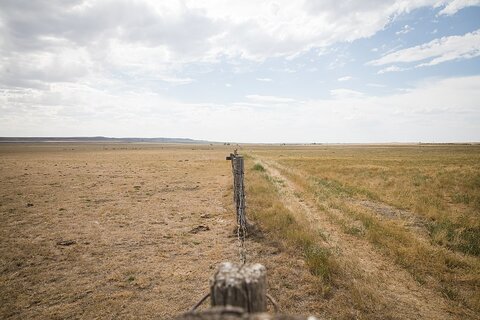
Climate change is degrading plant health and vitality through increased drought, extreme rainfall, and warmer winters, leading to overgrazing and further plant degradation.
Lack of access to affordable and reliable modern energy is a major cause of food loss in low- and middle-income regions. Poor infrastructure also contributes to food loss in these regions. In Sub-Saharan Africa, for example, an estimated 37% of food loss happens in the "first mile" between harvesting and processing due to inadequate cold storage and infrastructure. Food losses result in lost nutrition, wasted energy, and diminished income in regions that can least afford it. Low-income countries rely on agriculture for 30% of their gross domestic product, compared with just 3.5% globally.
Cold chain’s important role in the food system
Thirteen percent of all food produced globally is lost due to inadequate refrigeration, enough to feed nearly a billion people. If developing countries were able to use the same level of refrigeration equipment as that used in developed economies, they could eliminate an estimated 25% of their total food wastage.
Cold chain is a temperature-controlled supply chain that maintains the quality and safety of perishable products.
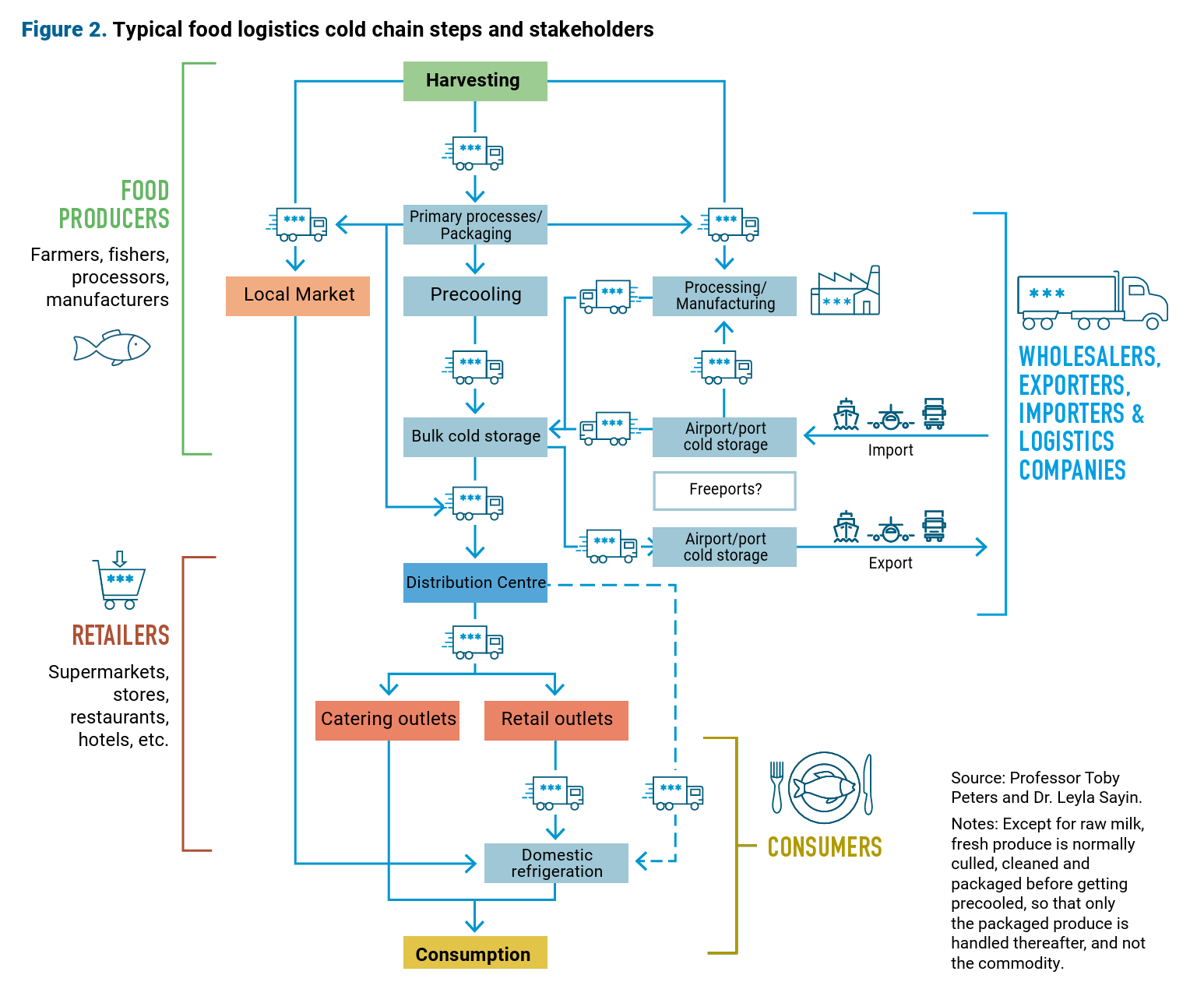
The primary challenge in implementing a cold chain is lack of access to affordable and reliable energy, particularly in rural parts of low- and middle-income countries. Expanding grid connections to rural areas is time consuming and expensive. As an alternative, numerous companies around the world are developing low-cost, off-grid cold-chain solutions to reduce food losses for rural farmers. For example, decentralized renewable-based cold storage in Kenya reduces losses and provides farmers up to 30% additional income through improved market access.
Reducing food wastage
Reducing food wastage is an urgent global problem. UN’s Sustainable Development Goal 12.3 is to “halve per capita global food waste at the retail and consumer levels and reduce food losses along production and supply chains, including post-harvest losses” by 2030. The United States 2030 Food Loss and Waste Reduction Goal, announced in 2015, aims to reduce food wastage by 50% by 2030. Neither the world nor the U.S. are currently on track to meet their goals. However, some countries are making progress. For example, Japan reached its goal of halving food waste by 2030 in 2022, and the UK reduced edible food waste by 27% between 2007 and 2018.
Reducing food loss: Access to clean, affordable, and reliable modern energy is a key component for reducing food loss in low- and middle-income and rural regions. With reliable energy, producers can store and process food more effectively to extend shelf life and reduce spoilage. The International Energy Agency estimates that ensuring universal access to electricity by 2030 will require an average annual investment of $50 million. Current investments are well below that.
Solar-powered technology reduces chili losses
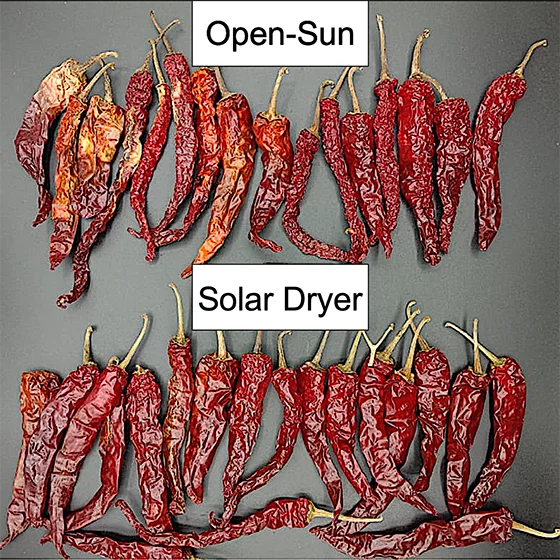
In India, traditional open-air sun drying of chilies takes 2-3 weeks and can result in spoilage from pests, rain, and fungus. Crop losses of at least 10% are common. Unexpected rains, more frequent now due to climate change, can destroy an entire drying chili crop. Open-air drying can also degrade the quality of chilies due to color fade and flavor loss.
To avoid crop losses and improve the quality of dried agricultural produce, a team led by Stanford University developed a solar-powered greenhouse dryer. A thermal management system controls heating, air and water flow, and light intensity–all with low electricity consumption.
An additional benefit of the solar dryers is that the chilies sell for 14-22% more than open-sun dried chilies, increasing the incomes of chili farmers. To help offset the implementation costs, the greenhouses can be used to grow seedlings during the off-season. Farmers report that greenhouse seedlings yield higher crops than seedlings sown in the field. Learn more about solar greenhouse dryers.
Reducing food waste: Matching food production, purchasing, and serving to only what is needed is the most effective way to prevent food waste. When prevention isn’t possible and surplus food exists, the next best option is to redirect it to people who need it. If that’s not possible, you can use excess food as animal feed, compost it, or turn it into a biogas in an anaerobic digester to generate electricity or heat.
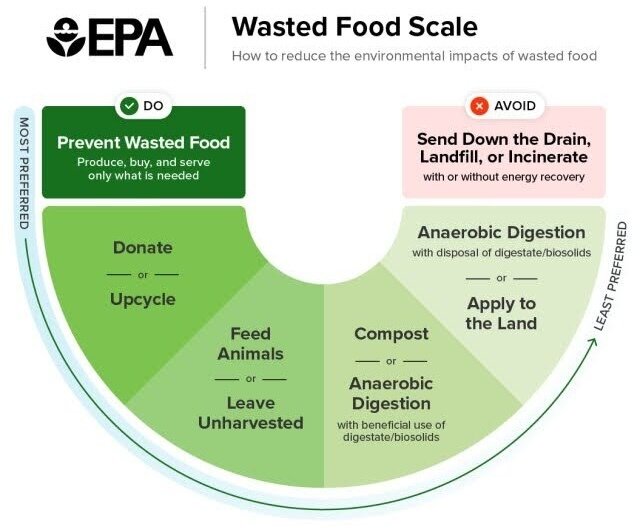
Individual actions can make a big difference. Review our Decarbonize Your Food page for steps you can take to reduce food waste.
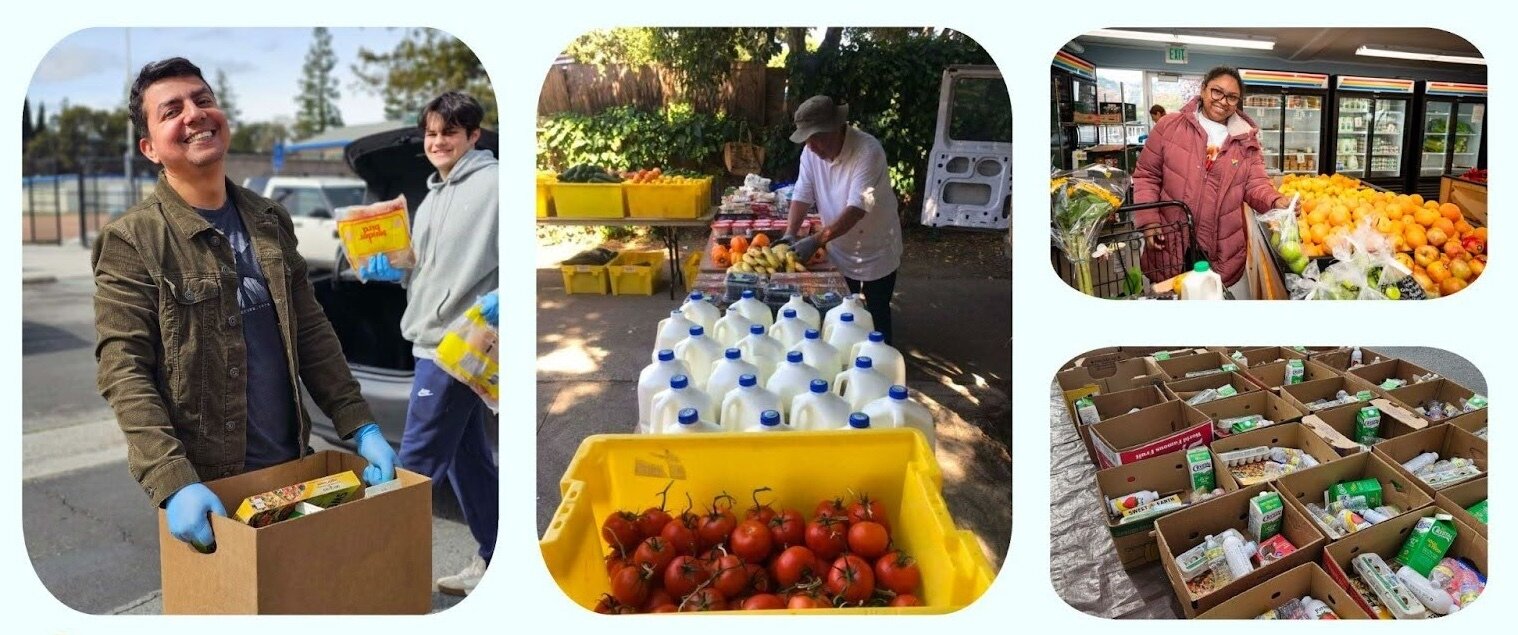
San Mateo County’s Edible Food Recovery Program
San Mateo County’s Edible Food Recovery Program in the San Francisco Bay Area works with grocery stores, hospitals, schools, and corporate cafeterias to collect and distribute excess edible food that would otherwise be discarded. Under California’s Senate Bill 1383, large food-generating businesses are required to donate surplus edible food to food recovery organizations. Since 2022, the program has supported the donation of 16.6 million meals in San Mateo County.
In the news
News: A recent report by the Harvard Law School Food Law and Policy Clinic, the Global FoodBanking Network, and the Global Methane Hub evaluated policies aimed at reducing food waste in South Korea, France, and Peru. Despite differences in policy design, all three countries have achieved some level of success in reducing food waste or increasing food donations.
- South Korea implemented mandatory composting in 2013 and banned food waste disposal in landfills in 2025, with large penalties for improper disposal of food waste. By 2014, they were sending 96% of their food waste to recycling.
- France phased in mandatory composting starting in 2012 and required supermarkets to stop destroying surplus food and partner with food recovery organizations in 2016. Enforcement actions include fines and potential imprisonment. A government survey found that 80 percent of entities were in compliance.
- Peru was the first country outside of Europe to enact a food donation requirement. Supermarkets are required to donate surplus food instead of discarding it. The law includes tax incentives but no enforcement penalties. According to available data, food donations tripled in the year following policy implementation. However, food waste overall continues to grow.
Review the study report.
Context: Reducing food waste is hard, but policies can help. Only 30 countries attending COP30 (2025) committed to reducing food wastage in their Nationally Determined Contributions. The study of food waste reduction policies in South Korea, France, and Peru provides data and examples for other countries to learn from. Specific policy designs can vary, but the study report recommends that they:
- Take a tiered and phased-in approach
- Follow the food waste hierarchy
- Employ a whole government strategy
- Provide sustained support for shifting needs
Education and awareness are essential to success regardless of the policy design.
Fun Fact
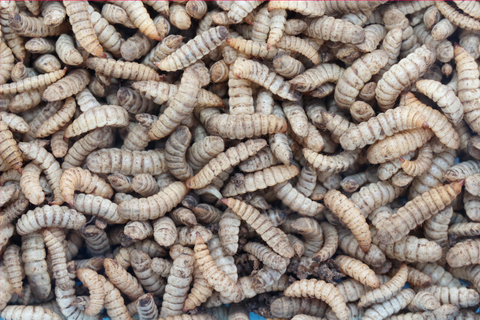
Ten billion maggots recycle food waste at the world’s biggest bug farm!
Innovafeed, an agricultural start up in France, wants to build “a circular, waste-free food chain that replicates the natural role of the insect.” Black soldier fly larvae have evolved to be immune to the usual consequences of consuming rotting organic material and are able to consume food waste to become a source of protein for animal and plant nutrition. Read more about Innovafeed.
Want to test your knowledge of energy and food wastage?
Take our quiz
Understand Energy team contributors: Dr. Diana Gragg, Bria Schraeder, Sharon Poore, and Shirley Chang
The data in this issue are current as of November 2025.


