
Understand Natural Gas

Greetings! Our featured topic in this February edition of Stanford University’s Understand Energy Learning Hub newsletter is Natural Gas. If you like what you see, please share with your friends and family and encourage them to subscribe.
What you need to know
Significance: Natural gas is the most versatile and fastest-growing fossil fuel. Its principal uses are heat (e.g., water and space heating, cooking, industrial heat) and electricity production. Natural gas accounts for almost 25% of the world’s primary energy use and is used to generate just under a quarter of the world’s electricity. The U.S. is the biggest consumer and producer of natural gas.
What is natural gas? Natural gas is mainly methane (CH4), with small amounts of natural gas liquids (NGLs), carbon dioxide (CO2), and water vapor. Like coal and oil, natural gas is a hydrocarbon we burn to convert its chemical energy into heat. Key terms and definitions:
- Sweet gas = low sulfur (H2S) content. Sour gas = high sulfur (H2S) content.
- Associated gas = found with significant oil production. Non-associated gas = not found with significant oil production.
- Natural gas liquids (NGLs) = longer chain hydrocarbons like ethane, propane, and butane that are sometimes present in the natural gas.
- Wet gas = found with NGLs and contains <90% methane. Dry gas = contains >90% methane. NGLs can increase the value of natural gas resources.
- Porosity = the volumetric share of pore space in a rock. Permeability = the ease with which fluids and gases are able to move through the rock’s interconnected pores. Both are important factors for productive oil and gas wells.
- Conventional reservoirs = naturally high permeability. Unconventional reservoirs = low permeability.
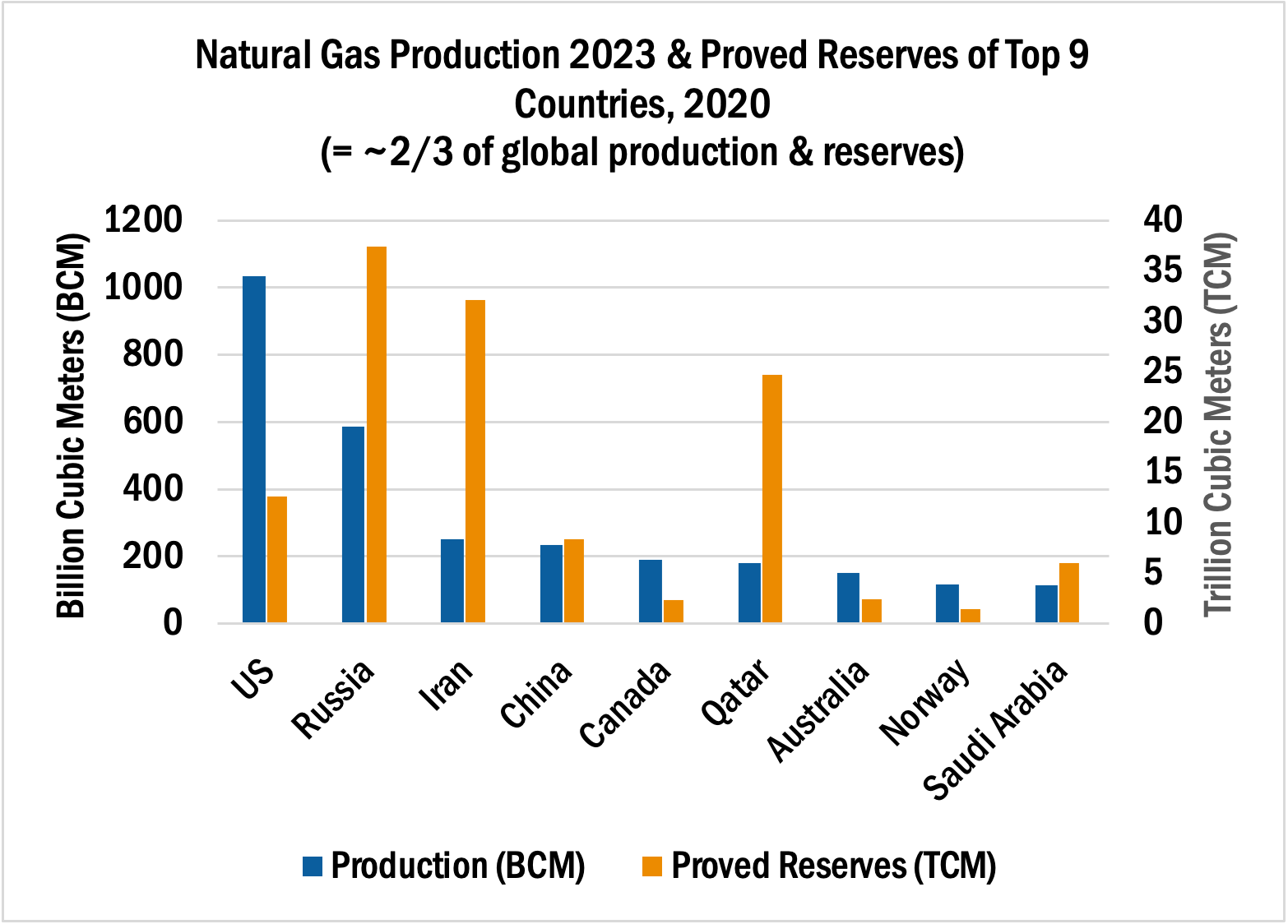
Where is natural gas? The world has an abundant supply of natural gas. Like oil, it is not evenly distributed around the globe. Russia, Iran, and Qatar all have enormous proved natural gas reserves. The U.S. has fewer proved reserves but is the number one natural gas producer and leading exporter.
Horizontal drilling and hydraulic fracturing sparked the U.S. shale gas boom in the early 2000s by allowing natural gas to be economically extracted from unconventional reservoirs like the source rock (where it is formed) and other tight formations. Previously, we were only able to produce natural gas from conventional reservoirs with naturally high permeability and porosity. Hydraulic fracturing creates artificial permeability in rocks for the natural gas to flow through. It can be controversial because of water use and other environmental impacts. The U.S. is the only country using horizontal drilling and hydraulic fracturing at scale for oil and gas production. Almost 90% of U.S. natural gas production is from unconventional reservoirs.Learn more on our Drilling, Completing, and Producing from Oil and Natural Gas Wells page.
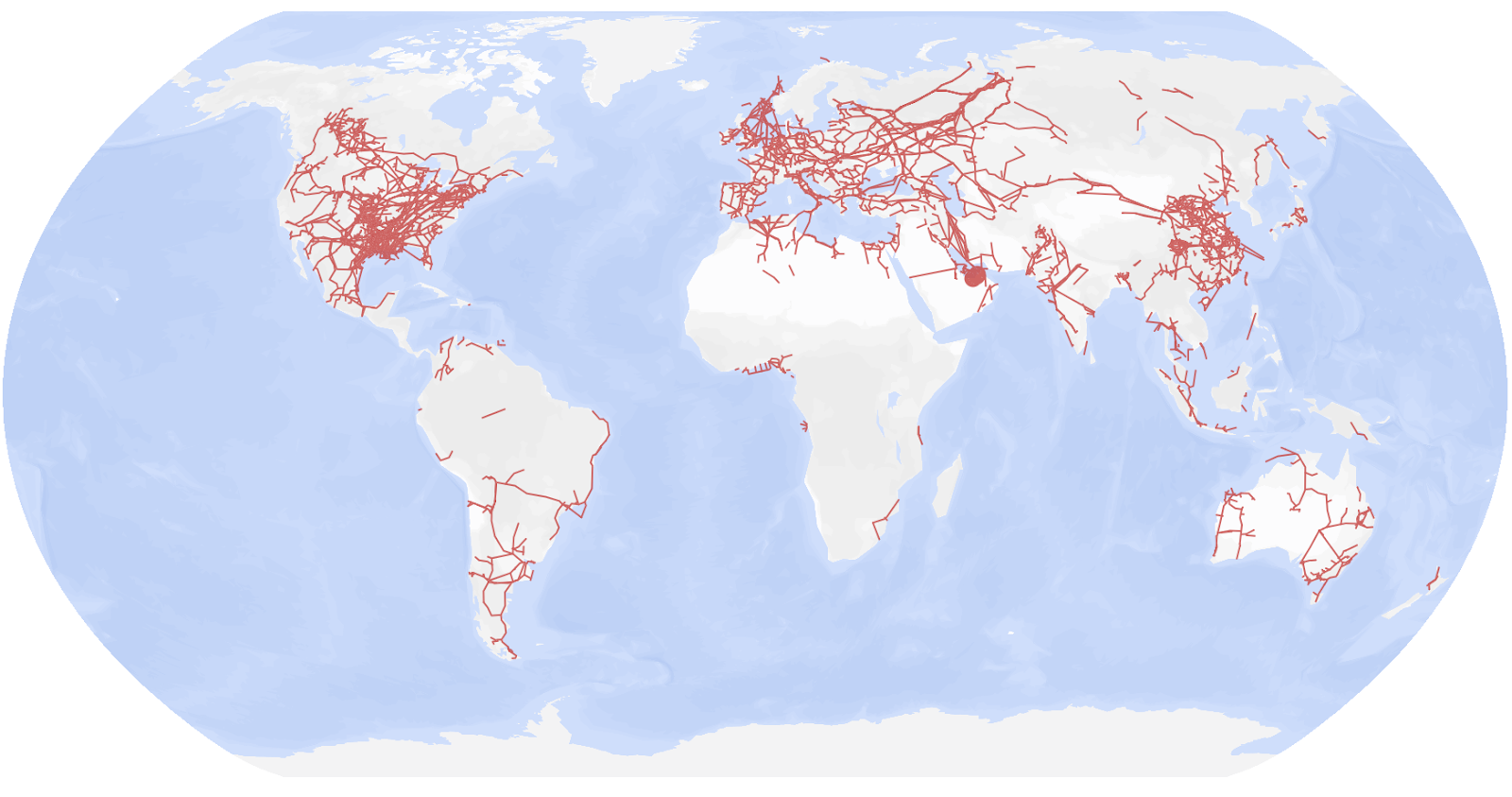
How do we transport natural gas? Because of its low volumetric energy density, the majority of natural gas is moved via pipeline (86% worldwide, ~100% in the U.S.).
Operating Natural Gas Pipelines Worldwide
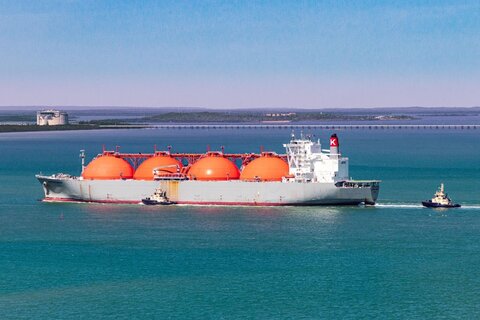
For overseas transport, natural gas is liquefied to increase its energy density and then shipped via tanker. The amount of liquefied natural gas (LNG) being shipped has been growing to support increasing demand in markets like Europe and Asia. For example, U.S. exports to Europe increased significantly following Russia’s invasion of Ukraine. The conversion from gas to LNG is energy intensive–as much as 15% of the natural gas is used to power the liquefaction process.
Environmental impacts
Air pollution: Natural gas is the cleanest-burning fossil fuel, emitting fewer air pollutants when burned than coal or oil to produce an equal amount of energy. Because it's a gas, separating out harmful contaminants like sulfur, mercury, and lead is relatively easy, and burning natural gas doesn’t produce much particulate matter.
Climate: Natural gas systems contribute over 20% of the world’s greenhouse gas emissions from energy. Although natural gas is the least carbon-intensive fossil fuel, meaning we get fewer CO2 emissions per unit of energy produced, it still produces CO2 when combusted. More importantly, natural gas (methane) is itself a very potent greenhouse gas when leaked to the atmosphere uncombusted.
Methane leakage poses a significant challenge for the natural gas energy system and for climate change. Natural gas and oil systems can leak methane into the atmosphere at every stage, from production and processing to storage and use. If methane leakage is over ~3%, it can offset the benefits of natural gas being cleaner burning than coal. Much of the methane leakage from natural gas systems can be avoided with good policy and oversight. We are also getting better at detecting methane–recent advances in satellites, flyovers, drones, and sensors are allowing for better information and more accountability.
Current and future trends
Natural gas demand is continuing to grow as the world transitions to clean energy. In the U.S., natural gas is replacing coal and nuclear. It’s cheaper, more flexible, and has no solid waste. Natural gas can also complement renewables like wind and solar by providing grid stability.
The future role of natural gas in a decarbonized energy system is less clear. The environmental community is divided. Some organizations (e.g., EDF, NRDC, and Worldwatch) endorse the continued use of natural gas as a bridge fuel while we develop better renewable technologies, as long as we manage leaks and produce it in a safe manner. Others (e.g., Sierra Club) believe the continued use of natural gas will delay clean energy, and that methane leakage negates its carbon benefits.
In the news
News: President Donald Trump issued an order for the U.S. to resume processing permit applications for new LNG export terminals, reversing a pause put in place by the Biden administration in early 2024. The pause was intended to give the Department of Energy time to evaluate the economic, environmental, and security impacts of LNG exports. Read this article about the freeze on LNG export terminal applications being lifted for more information.
Context: Permits are required for U.S. companies to build new LNG export terminals. Even with the pause on new permit applications, the U.S. was on track to more than double LNG export capacity by 2028 with already approved projects.
DOE study findings released in December 2024 showed that expanding LNG exports will increase the domestic prices of both natural gas and electricity and have significant climate and public health impacts.
Fun Fact
Natural gas has no odor. In order to help detect gas leaks, utilities have been adding a rotten egg-smelling odorant (usually mercaptan) in very small concentrations since the 1930s. Mercaptan is the odor given off by corpses and dead animal carcasses, which means that it attracts vultures. The presence of vultures can alert natural gas operators to gas leaks.
Want to test your knowledge of natural gas?
Take our quiz
The data in this issue are current as of February 2025. For the most current data, visit our Natural Gas Fast Facts.


