
Understand Electricity
Happy November! In this edition of Stanford University’s Understand Energy Learning Hub newsletter, we're covering electricity generation and transmission.
What you need to know
Significance: Electricity is an energy currency used to deliver energy services like hot water, lighting, power for our tech devices, and refrigeration. Its high quality, versatility, and relative efficiency make it an essential component of modern economic activity and improved quality of life, but over 750 million people in the world still do not have access.
How does it work? Electricity is the coordinated movement of electrons, which are tiny charged particles found in atoms. This movement constitutes electrical current. The flow of electrical power is similar to the flow of water through a pipe. It has three important properties:
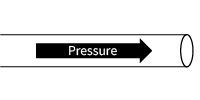
Voltage is like the pressure that pushes water through the pipe. The higher the pressure, the greater the flow. The difference in voltage from one end of a circuit to the other induces the flow of electrons. Voltage (V) is measured in volts.
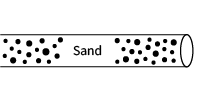
Resistance is like sand in the pipe that slows down the water flow. The less sand in the pipe, the greater the flow. Materials with low resistance (e.g., copper) are good electrical conductors. Resistance (R) is measured in ohms.
- Current is the rate at which charge flows through a given area depending on the voltage and resistance. Current (I) is measured in amps.
Voltage (V) = Current (I) x Resistance (R)
How do we generate electricity? Electricity is a secondary energy resource that doesn’t naturally exist in a usable form. That means we have to make it using primary energy resources like coal, natural gas, nuclear, wind, and solar. About 40% of our global primary energy use goes to producing electricity. The three main ways we generate electricity are:
- Heat engine (~73% of world electricity generation): Thermal power plants use energy resources like coal, natural gas, nuclear, geothermal, and solar thermal to boil water, producing steam. The steam rotates a turbine that turns a generator to produce electricity
- Direct kinetic (~22% of world electricity generation): Directly harnessing the kinetic energy of resources like wind, hydro, and the ocean to turn a turbine that rotates a generator to produce electricity
- Solar PV (~5% of world electricity generation): Converting photons (light) directly into electricity through photovoltaics (PV), also known as solar panels
Unfortunately, thermal power plants, our primary method for generating electricity, are highly inefficient. They lose an average of 55-70% of resource energy as waste heat.
How does an Electric Generator Work? Heat engines (thermal power plants) and direct kinetic methods both use electric generators to produce electricity.
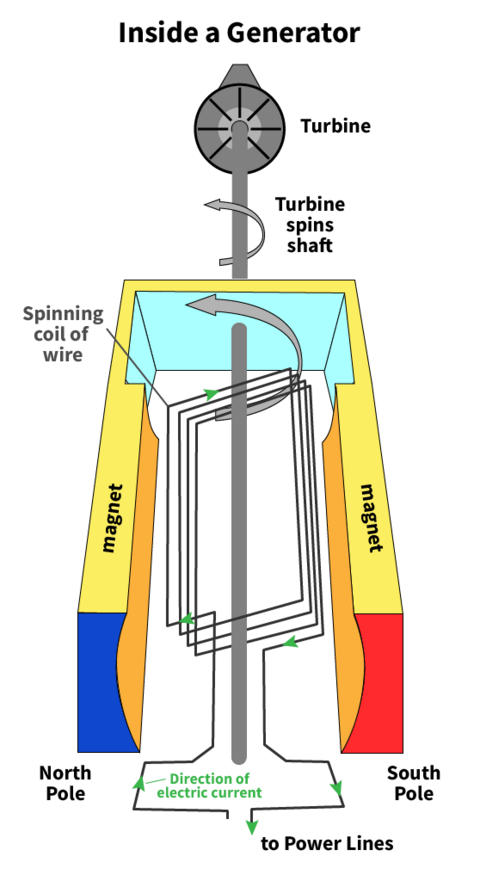
Steam, combustion gases, flowing water, or wind are used to spin turbine blades that rotate a generator, usually a large electromagnet surrounded by coils of copper wire. A wire moving in a magnetic field has a voltage difference induced across it, producing an electric current when connected to a circuit. By nature, electric generators produce alternating current (AC) as the wire rotates in and out of the magnetic field. Watch this excerpt about generators from our electricity generation lecture to learn more. Visit our Electricity Generation page for additional information.
Alternating Current (AC) vs Direct Current (DC): There are two types of electricity, AC and DC. The chart below highlights some of their key differences and how they are used.
| Property | AC | DC |
|---|---|---|
| Produced by | Generators (coils of wire rotating within a magnetic field) | Solar PV panels, batteries, fuel cells (things with fixed positive and negative terminals) |
| Current and Voltage | Oscillating (every 180 degrees of rotation gives you a change of current and voltage) | Constant (current is always flowing through the circuit in the same direction) |
| Frequency | The speed with which the current alternates directions. Frequency is measured in Hertz (Hz) | n/a |
| Example Usage | Power grids (AC is transmitted to our homes and businesses); most electric motors and compressors (e.g., refrigerators and air conditioners) | Battery devices like cell phones and computers. That’s why their chargers have a block with an inverter (converts AC to DC) and a transformer (reduces voltage) |
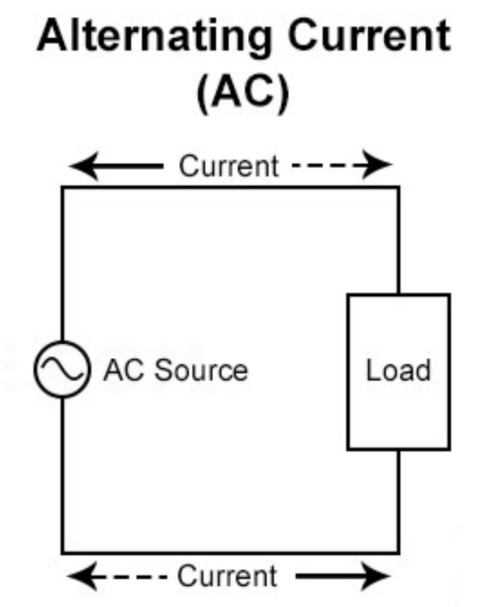
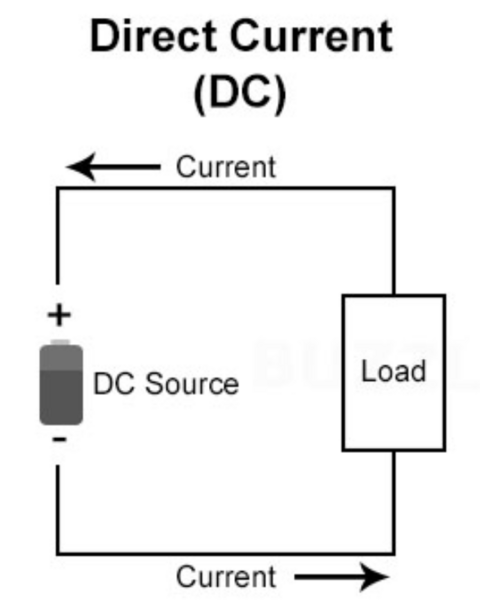
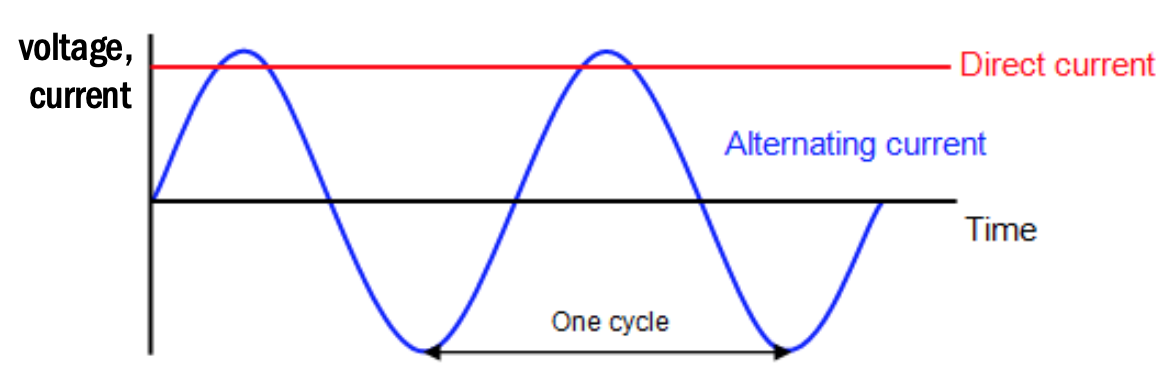
How is electricity transmitted? In the U.S. and most other countries, electricity is delivered to consumers via an electric power grid. AC won the battle with DC for power grids back in the late 1800s because it is easier and more efficient to step up AC to higher voltages. Higher voltages are necessary for transmission over long distances to minimize the amount of energy lost as heat during transmission. The U.S. grid runs on AC at an average frequency of 60 Hz, while most of Europe runs on AC at an average frequency of 50 Hz. That’s why we sometimes have to use adaptors when visiting other countries.
Electric generators at every power plant must deliver electricity to the grid at the desired frequency. That means the grid must balance supply and demand for electricity at all times because too much supply increases frequency and too much demand decreases frequency. So, for example, when you start a load of laundry, the grid operator has to supply more electricity in real-time. If the frequency gets too high or too low, the generators shut down in order to protect themselves from being damaged, resulting in a blackout. Grid operators have a number of tools to balance the grid (e.g., demand response, supply reserves, and energy storage).
How the U.S. Grid Works
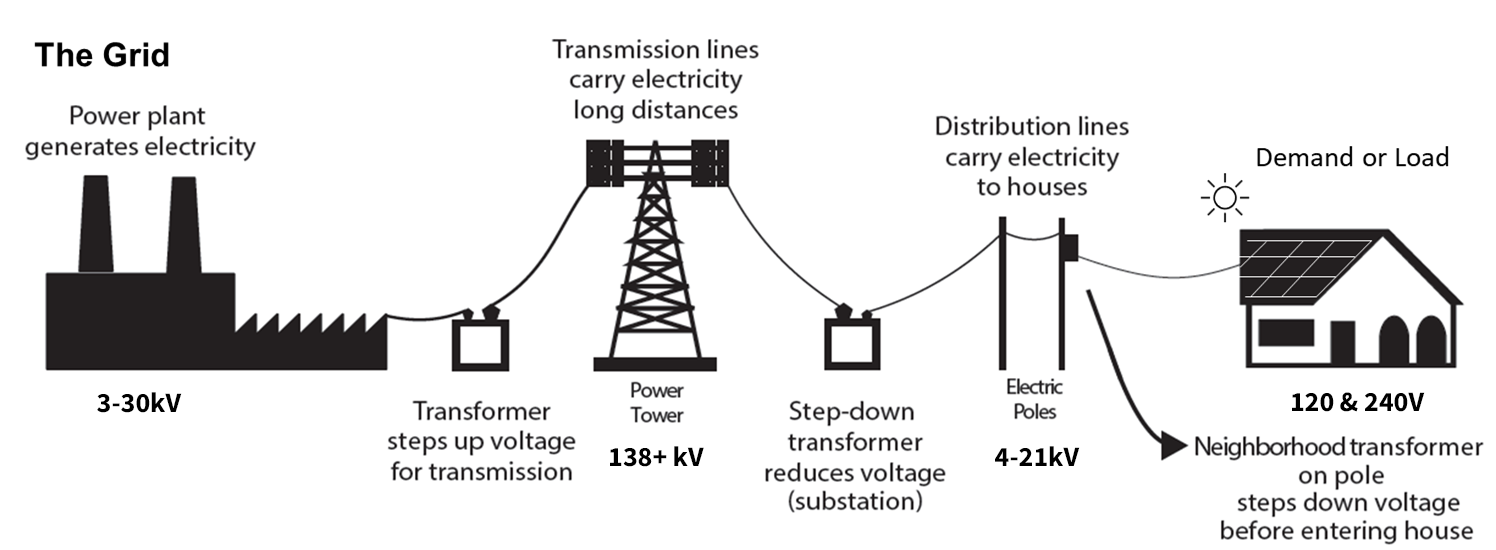
The diagram above shows how the grid delivers electricity from the power plant to our homes and businesses. Amazingly, all of this happens in a tiny fraction of a second! Watch this video to learn more about how electricity gets to you.
Neighborhood electricity distribution: If you’ve ever wondered what all the wires on your neighborhood power poles do, this picture may help!
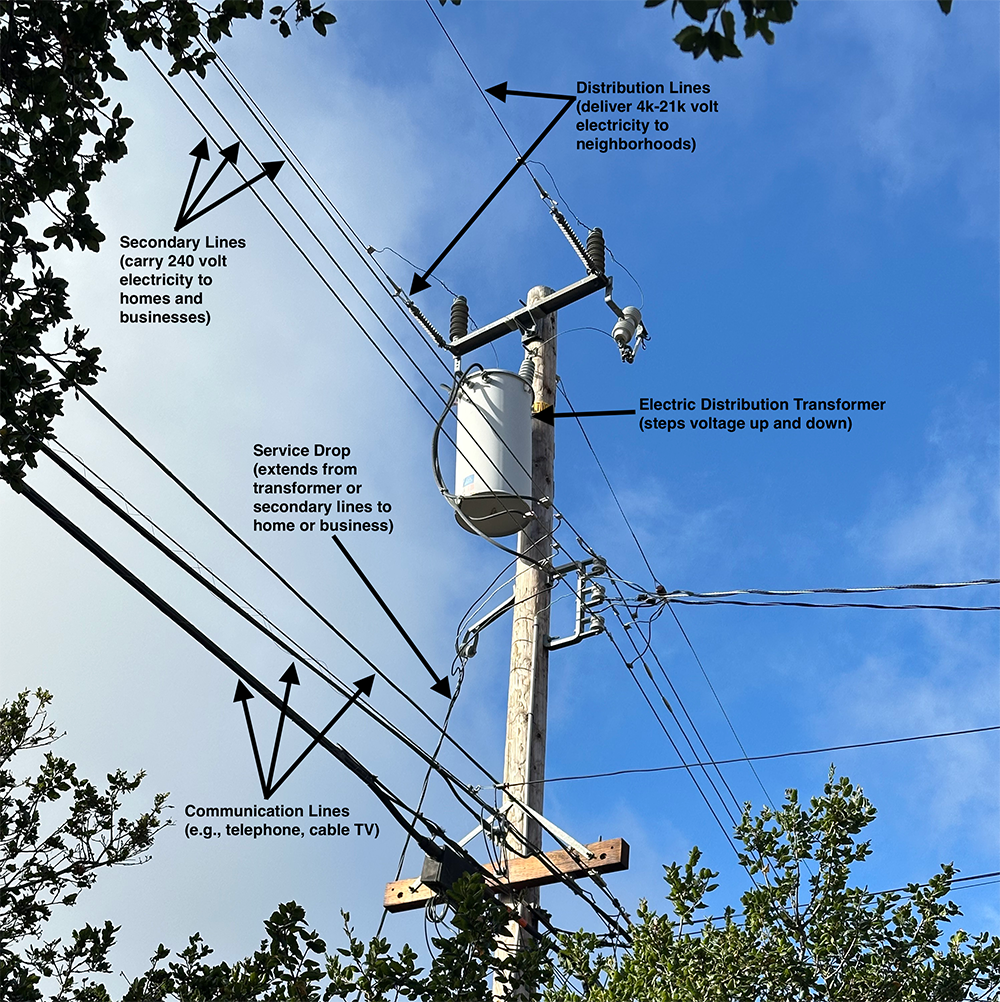
If you’d like to learn more about the grid, check out our The Grid: Electricity Transmission, Industry, and Markets page.
Future trends
Electricity will continue to become less carbon-intensive. Today, electricity generation is responsible for a third of global greenhouse gas emissions. That’s because 60% of the world’s electricity is currently generated from fossil fuels. The good news is that greenhouse gas emissions from electricity can be reduced by replacing fossil fuels with non-carbon emitting energy resources like solar PV, wind, and nuclear, and this transition is well underway. In 1973, 75% of the world’s electricity was generated from fossil fuels. Visit our A Decarbonized Electric Power Sector page for additional information.
Electricity demand is expected to grow significantly over the coming decades. Growth will be driven by expanding electricity access, electrification of buildings and transportation, and growth in data centers and AI use.
In the News
News: Massive power outages in Cuba during the second half of October left millions of people without power for days affecting the water supply, food availability, and heating, cooling, and lighting services. The outages occurred after Cuba’s largest thermoelectric power plant failed. Local authorities blamed the blackouts on deteriorating infrastructure, fuel shortages, rising demand, trade embargoes, and sanctions. Read this article to learn more about the Cuba power grid collapses.

Context: This event highlights the importance of reliable electricity access for providing critical services like water, food refrigeration, HVAC, and lighting. Islands often have high electricity costs because they rely on imported oil to run their thermal power plants. Cuba is no different. The island produces about half of the oil it needs and has to purchase the rest on the international market, which can be difficult and costly. Potential solutions for Cuba include significant investments in infrastructure upgrades, expansion of domestic electricity generation resource options (e.g., wind and solar), and implementation of energy efficiency measures.
Fun Fact
Electricity is what causes our hearts to beat. A special electrical system inside the heart called the cardiac conduction system controls the rate and rhythm of our heartbeats. The average voltage produced by a human heart is 50-75 millivolts (mV).
Want to test your knowledge of electricity?
Take our quizzes on electricity generation and the grid.
The data in this issue are current as of November 2024. For the most current data, visit our Fast Facts on Electricity Generation and The Grid.


