
Understand Coal

Happy December! This edition of Stanford University’s Understand Energy Learning Hub Energy Spotlight covers coal. If you like what you see, please share widely and encourage others to subscribe. You can also check out all of our past issues!
What you need to know
Significance: Coal is the second-largest source of energy in the world (behind oil) and the most-used fuel for electricity generation. Its principal use is electricity, followed by industrial uses like steel manufacturing. Coal provided 28% of the world’s primary energy and 34% of the world’s electricity in 2024. China is by far the largest producer, consumer, and importer of coal.
World coal consumption (1965-2024)
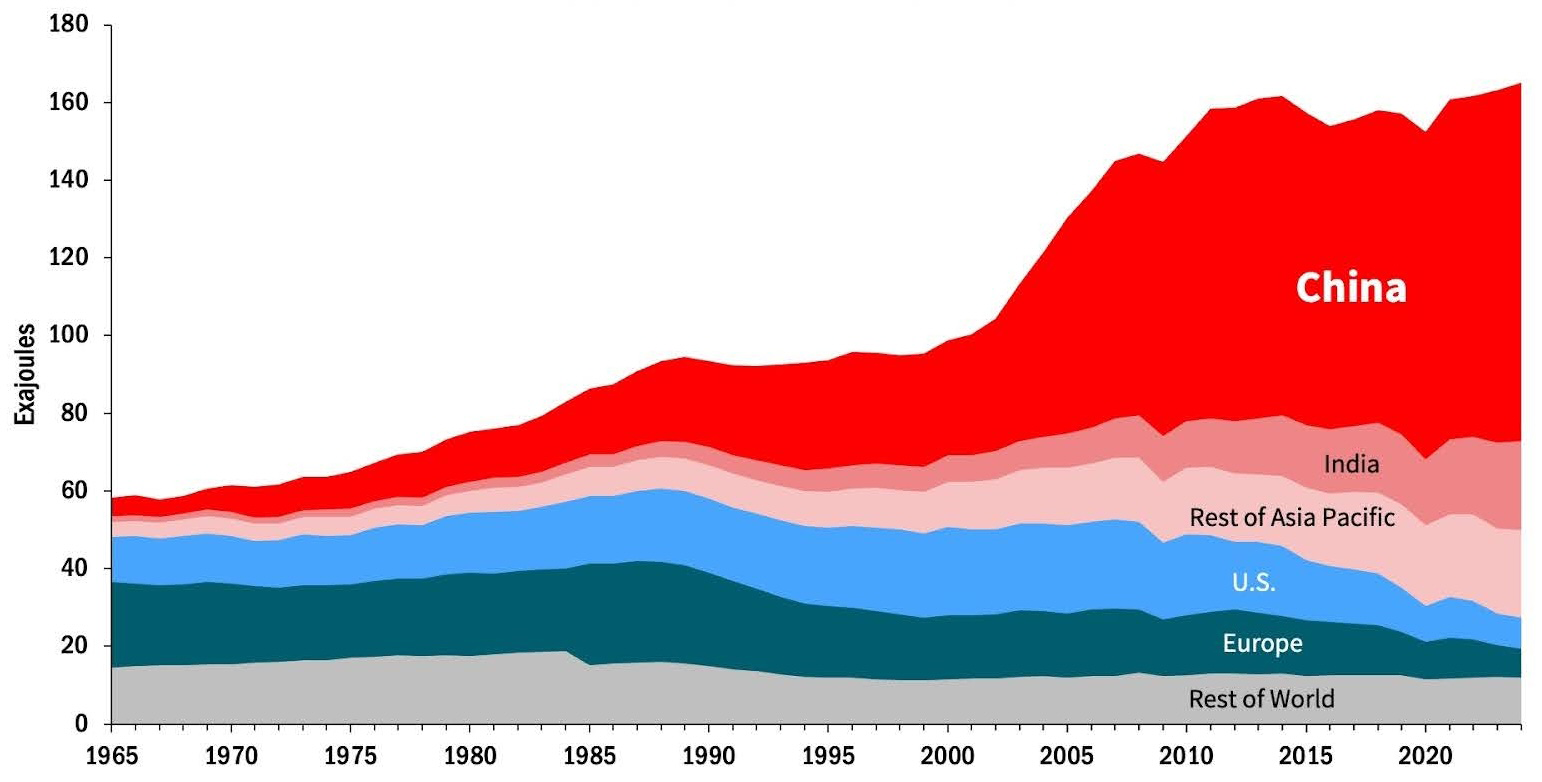
Coal is the most carbon-intensive and dirtiest fossil fuel. It was responsible for 42% of the world’s energy-related greenhouse gas (GHG) emissions in 2022 and has been the most significant contributor to global warming since the Industrial Revolution. Coal is also a major contributor to air pollution, water and land degradation, and serious health impacts in many communities.
What is coal? Coal is a solid hydrocarbon that we burn to convert its chemical energy into heat. It’s the most chemically complex fossil fuel resource. Coal deposits were formed from decomposing woody plant material (along with anything else that accumulated in swamps like heavy metals, sulfur, and radioactive materials) hundreds of millions of years ago. These accumulations were buried and subjected to time, temperature, and pressure, forming coal. Coal is extremely energy dense–it takes twenty meters of woody plant material to produce a one-meter-thick coal seam.
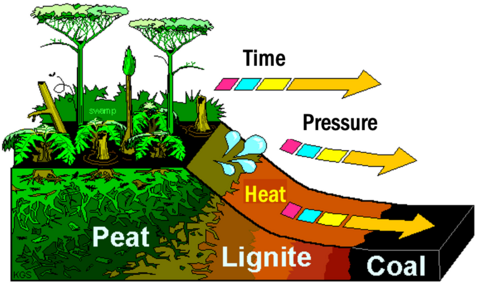
Coal is categorized into four ranks based on its energy density:
- Lignite (“brown coal”): 5,000-7,500 Btu/lb
- Sub-bituminous: 8,000-10,000 Btu/lb
- Bituminous (most abundant): 11,000-15,000 Btu/lb
- Anthracite (“hard coal” or “black coal”): 14,000 Btu/lb
Lignite, sub-bituminous, and bituminous are used primarily for electricity production. Anthracite is used for heating (buildings and industry).
Where is coal? The world has an abundant supply of coal. Coal is more evenly distributed around the globe than oil or natural gas.
Coal proved reserves and production by country
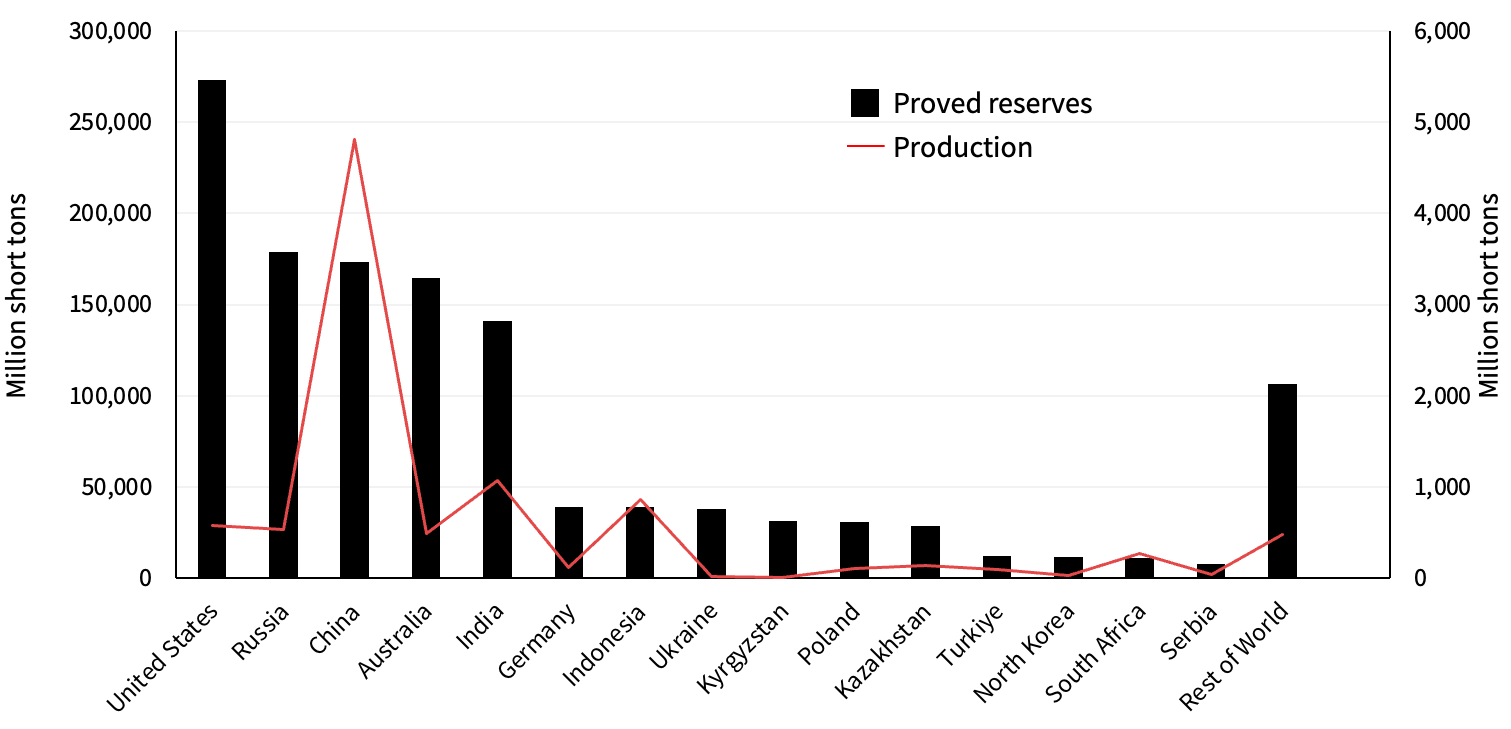
China produces 51% of the world’s coal despite only having 13% of proved coal reserves. The U.S. produces only 6% even though it has the most proved coal reserves (21%).
How does it work?
Stages in the coal energy system

How is coal mined (upstream)? The two main coal mining methods are underground and surface:
- Underground mining (60% of global production) extracts coal through tunnels and shafts when coal seams are deep below the surface (typically 200+ feet). Types of underground mining include the room and pillar method and the longwall method. The typical coal recovery rate is 50%.
- Surface mining (40% of global production) removes soil and rock layers (also known as overburden) to access coal seams near the surface (typically less than 200 feet deep). It includes strip mining, mountaintop removal, and open-pit mining using large excavators and draglines. The typical coal recovery rate is 80%.
Wyoming dominates U.S. coal production (41%) using large-scale surface mining. West Virginia is next with 15% and uses a mixture of mountaintop removal and underground mining.
Health and safety impacts of mining (upstream): Surface mining is generally considered safer for miners than underground mining, but both have health and safety risks. Impacts on miners include respiratory diseases (e.g., black lung disease, chronic obstructive pulmonary disease, cancer) and injuries and fatalities involving heavy machinery, mine collapses, and explosions.
Proper ventilation, dust control, gas management, training, and personal protective equipment can help mitigate the risks. For example, in the U.S., coal mining fatalities have dropped significantly (from 3.3 per 1,000 miners in 1900 to 0.15 per 1,000 miners in 2024), largely due to technology improvements, mechanization, and increased safety regulations.
“Canary in a coal mine”
The saying "canary in a coal mine" originates from the early 1900s when canaries were used as an early warning system in coal mines in some countries. Canaries are highly sensitive to toxic gases like carbon monoxide and methane, which can accumulate around coal seams. If a canary became sick or died, miners knew to evacuate. Today, electronic sensors have replaced canaries.
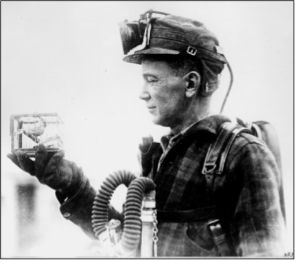
The U.S. allowed child labor for coal mining until the Fair Labor Standards Act banned the practice in 1938. In some parts of the world, child labor is still used for coal mining, often in areas of extreme poverty.
Environmental impacts of mining (upstream): Coal mining has significant environmental impacts:
- Methane, a potent GHG, is released from coal seams, accounting for about 25% of methane emissions from the energy sector.
- Toxic heavy metals and other pollutants can be released into groundwater and other waterways.
- Underground mining carries the risk of surface subsidence, when the land sinks or collapses after coal is removed.
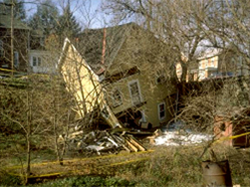
- Surface mining causes significant land disturbance and habitat destruction.
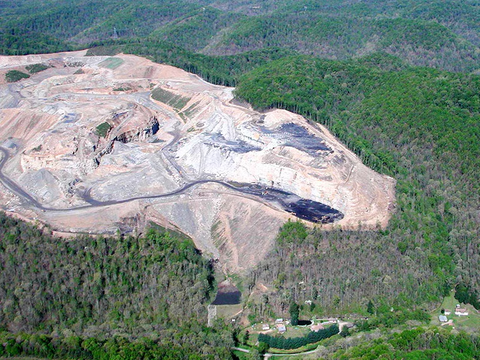
Mountaintop removal
Mountaintop removal, a type of surface mining, uses explosives to take off the tops of mountains and provide access to coal seams. The debris is put into valleys that often contain streams, contaminating the water. Proponents of mountaintop removal argue it is safer and more efficient than other mining methods, but the lasting impacts on land and watersheds make it highly controversial. Over 500 mountains have been permanently lost in the Appalachian region due to mountaintop removal coal mining.
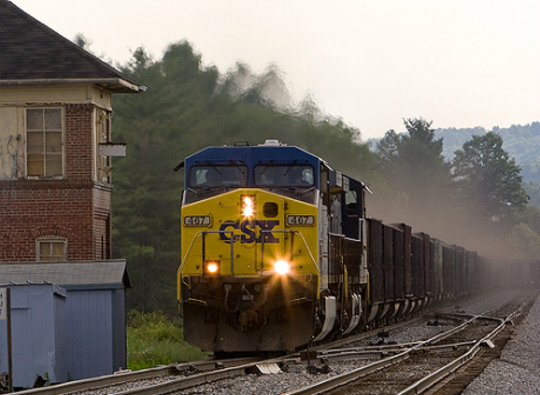
How is coal transported (midstream)? Coal is typically transported via rail, barge, ship, and truck. Within the U.S., 73% of coal is transported via rail, representing the railway system’s largest cargo. Internationally, Indonesia and Australia are the two leading coal exporters (30% and 25%, respectively). The top three coal importers are China (32%), India (15%), and Japan (12%).
Environmental impacts (midstream): Coal train cars are typically open (uncovered), resulting in the release of coal dust that contributes to air and water pollution. A 2024 health impact assessment of the San Francisco Bay Area found that chronic fine particulate matter (PM2.5) exposure from passing coal trains increases risks of premature death, hospitalizations for cardiovascular and respiratory diseases, asthma, and work loss, and that these effects disproportionately impact communities of color, low-income communities, the elderly, and children. Mitigation options (like rail car covers) are simple yet are rarely used due to cost and lack of regulation.
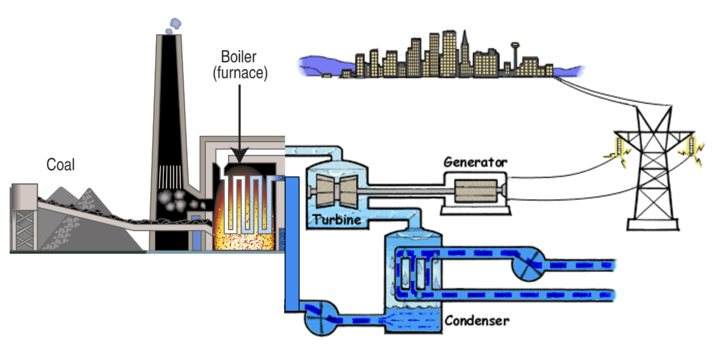
How do we use coal (downstream)? Coal is primarily used to produce electricity in thermal power plants (over two-thirds of global coal use). Coal-fired power plants burn coal to produce heat, boil water, create steam, and drive turbines and generators to produce electricity. Coal power plants are extremely inefficient, losing about two-thirds of the coal’s energy as waste heat. Coal is a baseload resource and is not typically used to load-follow because coal plants take a long time to ramp up and down.
Coal-fired power plant
Environmental impacts (downstream): Burning coal has numerous significant environmental impacts, including:
- Emitting more GHGs than oil or natural gas per unit of energy produced.
- Releasing far more air pollutants (PM2.5, sulfur dioxide, nitrogen oxides, and toxic heavy metals like arsenic, lead, and mercury) than natural gas or oil per unit of energy produced. These air pollutants can cause acid rain, contribute to ozone formation, cause cardiovascular and respiratory illnesses, pose risks to brain development and developing fetuses, and contribute to premature mortality. Scrubbers are an effective way to remove contaminants like sulfur and mercury from the exhaust streams of coal power plants before they are released into the environment.
- Using water for cooling, leading to water consumption or thermal pollution.
- Producing a massive amount of toxic waste in the form of coal ash, the residue left after burning coal (1 ton of ash for every 8 tons of coal burned). In the U.S., coal power plants have generated ~7 billion tons of coal ash since 1950. Coal ash can be disposed of in ponds (lined or unlined) and landfills. Without proper management of disposal, toxins from coal ash can leach into the surrounding environment and contaminate water supplies.
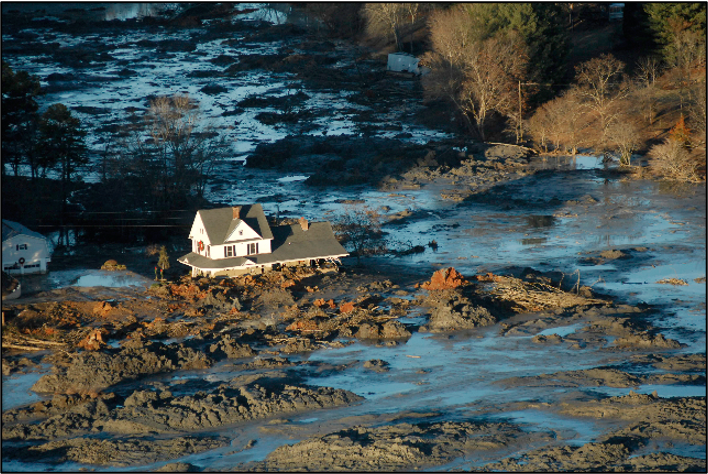
Tennessee coal ash spill
In 2008 in Kingston, Tennessee, a coal ash storage pond collapsed and released 1 billion gallons of ash slurry (enough to fill 1,600 Olympic-sized pools) across 300 acres, burying homes and contaminating land and water. The disaster cost over $1.2 billion to clean up and prompted the U.S. Environmental Protection Agency to issue the first national coal ash regulations in 2015, the Disposal of Coal Combustion Residuals from Electric Utilities rule. These regulations required power plant operators like Tennessee Valley Authority to line coal ash ponds, monitor groundwater, and clean up contamination from leaking sites.
In 2025, the Trump administration delayed enforcement deadlines for reporting contamination (now 2027) and beginning cleanup (now 2029). Today, 94% of U.S. coal ash ponds are still unlined.
Coal ash can be repurposed and used in products like concrete, roofing, and wallboard as a replacement for traditional materials. For instance, coal fly ash (the lightest kind of coal ash) can be added to concrete, making it stronger, more durable, and less carbon-intensive. Although 72% of the coal ash produced in the U.S. during 2024 was repurposed, legacy coal ash remains a huge challenge.
More recently, people are investigating the potential to mine coal ash for rare earth minerals that can be used in batteries and other clean energy technologies.
Economics of coal
New coal power plants are more expensive to build than new utility-scale wind and solar or combined-cycle natural gas power plants in the U.S. Additionally, coal’s high social and environmental costs (also called externalities) are not fully factored into the cost of electricity. One Harvard-led study in 2011 found that the life cycle effects of coal were costing the U.S. public one-third to one-half of a trillion dollars annually.
Current trends
Global coal consumption doubled over the past three decades and reached record levels in 2024, largely due to increasing demand in the growing economies of China, India, and Southeast Asian countries. However, China is expected to hit peak coal by 2030.
Coal demand has been falling in the U.S. since 2007 and in Europe since the late 1980s. Prior to 2007, coal provided over 50% of U.S. electricity. In 2024, it provided only 15%. This 64% decline in consumption was largely due to cheaper natural gas, wind, and solar.
U.S. Electricity Generation (TWh)

The decline in U.S. coal demand has led to the closure of about two-thirds of U.S. coal mines since 2008. Many U.S. coal companies have declared bankruptcy, with some using bankruptcy to evade congressionally imposed retiree and environmental liabilities. Between 2012 and 2017, four of the largest coal companies discharged $5.2 billion in retiree and environmental obligations. Although coal mining is a relatively small portion of the overall U.S. job market, employing about 44,000 coal miners, it is the primary type of employment in many communities. As a result, closing coal mines has an outsized impact on these communities.
The Trump administration has put new policies in place aimed at revitalizing coal, including $625 million to “reinvigorate and expand America’s coal industry.” At this time, no new coal-fired power plants are planned, but some power plant retirements have been delayed.
“Clean coal”
“Clean coal” refers to coal power plants that use carbon capture and storage (CCS) technology to reduce CO₂ emissions. However, CCS does not address other harmful impacts of coal, such as toxic coal ash, air pollution, land degradation, and coal mine methane emissions. Adding CCS to a coal power plant increases costs. A BloombergNEF report found a 56% increase in the levelized cost of energy when CCS is added to coal plants. Global deployment of CCS for coal power plants is extremely limited.
In the news
News: Developers are building a 1GW battery storage project on the site of a former coal mine at Coalburn in South Lanarkshire, UK. This project is planned to be fully operational by the end of 2027 and will store enough electricity to power three million homes. It will be one of the largest battery energy storage facilities in Europe.
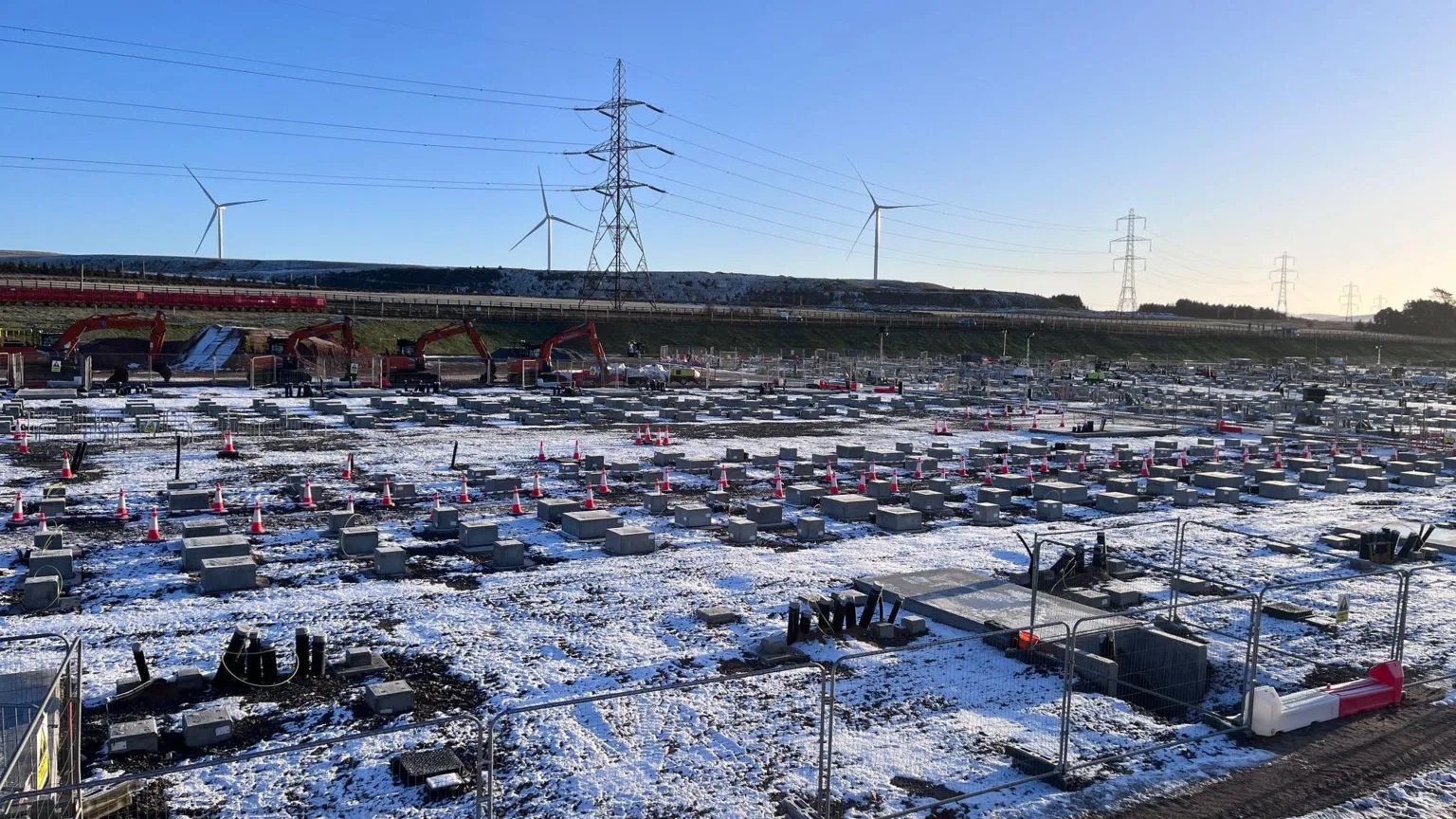
Context: As coal mines shut down, a few are being repurposed for energy storage as part of the clean energy transition. The Coalburn battery energy storage facility is just one example. Other examples include the potential to use coal mines for gravity storage and pumped-hydro. However, these projects won’t necessarily provide long-term jobs to replace the lost coal mining jobs. Efforts by local communities to provide other job opportunities can include attracting new employers and providing training to miners for other industries.
Fun Fact
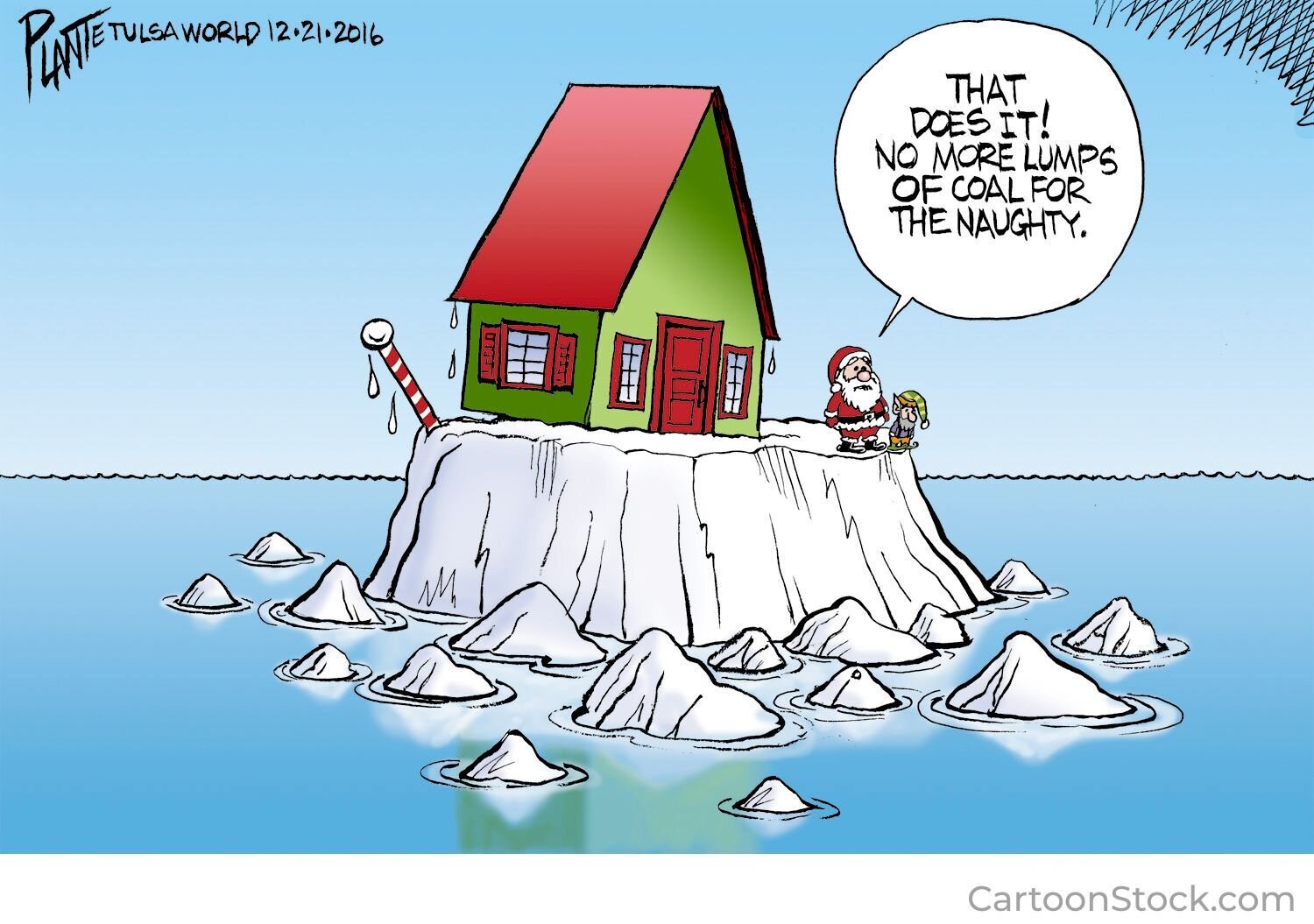
Have you ever wondered why Santa Claus gives coal to naughty children?
The tradition dates back to the 19th and early 20th centuries, when coal was commonly burned in fireplaces to heat homes. Since Santa enters through the chimney and places gifts in stockings, it was easy—and convenient—to leave behind a lump of coal for naughty children who hadn’t earned any presents.
Want to test your knowledge of coal?
Take our quiz.
Understand Energy team contributors: Dr. Diana Gragg, Bria Schraeder, Sharon Poore, and Shirley Chang
The data in this issue are current as of December 2025. For the most current data, visit our Coal Fast Facts.


