
Understand Energy Efficiency
Welcome to summer! This edition of Stanford University’s Understand Energy Learning Hub Energy Spotlight features energy efficiency, the largest, most sustainable energy resource in the world. If you like what you see, please share widely and encourage others to subscribe. You can also check out all of our past issues!
What you need to know
Significance: Did you know that two-thirds of total U.S. demand for energy services since 1950 has been met by energy efficiency? That’s more than any other energy resource! “It’s the largest, cheapest, safest, cleanest way to address the [climate] crisis,” according to energy efficiency guru, Amory Lovins.
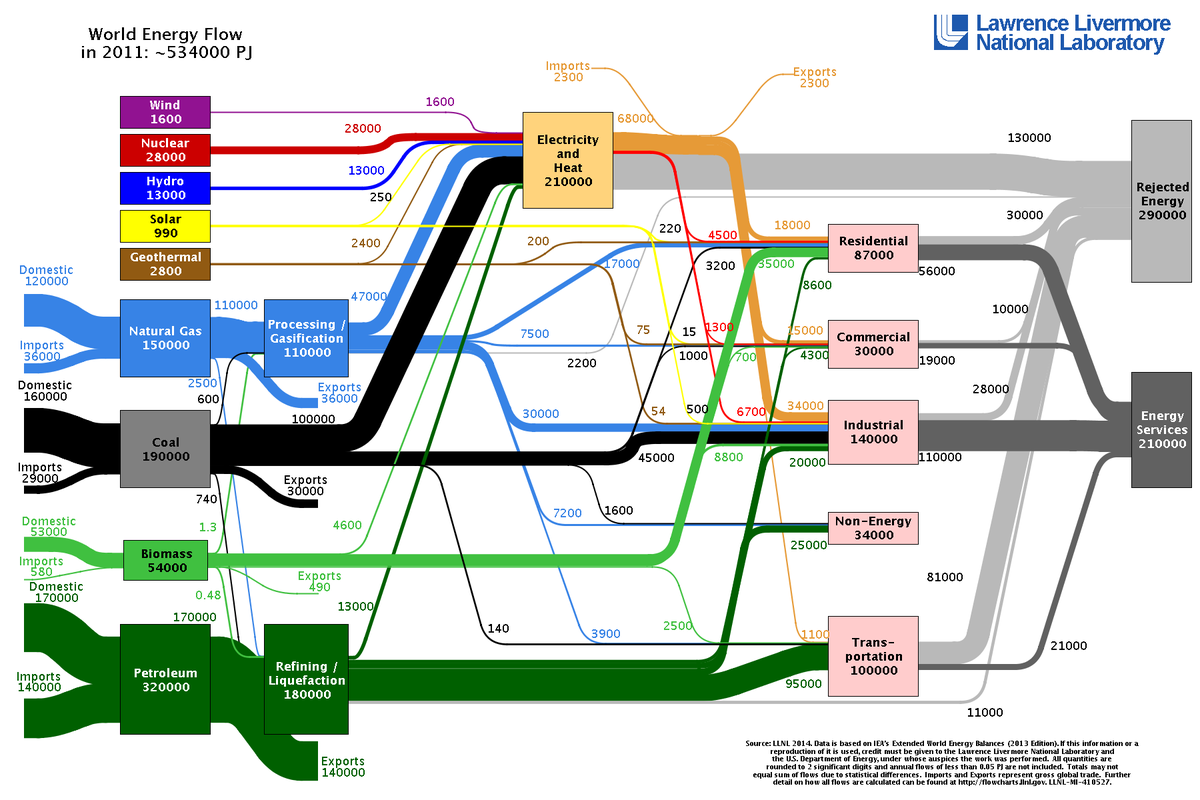
The opportunity for energy efficiency is massive. The world's energy system is only about 40% efficient, meaning that almost 60% of energy inputs are wasted (the rejected energy in light grey below). The U.S. energy system is even less efficient, wasting almost 70% of energy inputs.
World energy system overview
What is energy efficiency? Energy efficiency is providing the same or better service using less energy. Energy services include things like cold drinks, hot showers, lighting, phone charging, and transportation–things that humans want and need.
Energy efficiency is often confused with energy conservation. Energy conservation is saving energy by using less of a service, like taking a shorter shower, drinking a lukewarm beverage, or lowering the temperature setting on your thermostat in the winter. Upgrading to a more efficient furnace while keeping the temperature setting the same is an example of energy efficiency.
Energy efficiency is a resource that can meet energy demand just like other energy resources such as coal, natural gas, nuclear, and solar. For example, providing lighting with a more efficient bulb saves electricity (negawatts). Unlike generated electricity, negawatts emit no greenhouse gases (GHGs) and require no power plants. In fact, energy efficiency is often the least expensive and most effective way to meet demand for energy services while reducing climate and environmental impacts.
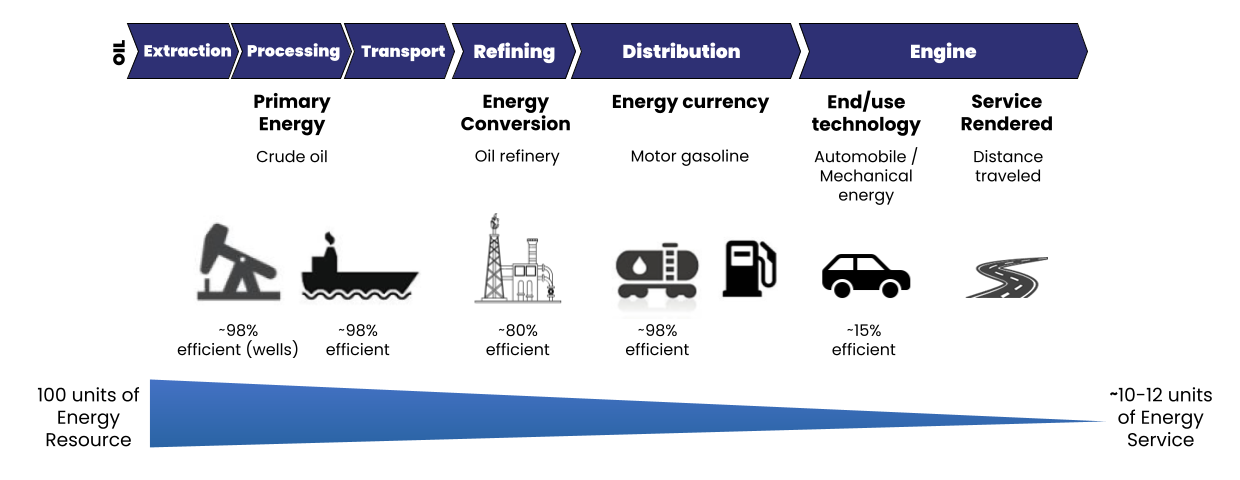
How does it work? Energy efficiency opportunities exist at all points in energy systems, from supply side (energy resource) to demand side (energy service). In the example below, energy is lost at every stage, from producing oil all the way to driving your car, resulting in only about 10% productive energy. The least efficient piece of this energy system is your gasoline-powered car (demand side). For every dollar you spend on gasoline, less than one penny moves you and just 10 to 20 cents moves the car. The rest is wasted!
Oil-fueled transportation systems are highly inefficient
Implementation
Integrative design is a methodology that can be used to achieve radical energy efficiency. The approach, pioneered by Amory Lovins, starts with looking at the service you want (lighting, comfort, etc.) and includes rethinking the whole energy system to provide that service in a way that uses significantly less energy. Lovins encourages you to expand the problem and look at it with “beginner’s mind.”
Using integrative design principles to optimize whole systems, rather than improving individual components in isolation, can result in much larger savings and sometimes even reduces up-front costs. For example, spending more on thick insulation and good windows can reduce up-front costs by eliminating the need for central heating and/or air conditioning. Read more in this article about the Oregon Health & Science University Center for Health & Healing.
If you were trying to improve efficiency in the oil-fueled transportation system, the practice of integrative design wouldn’t focus just on individual components like improving the efficiency of the car or the refinery. It would start with defining the services needed (e.g., working, groceries, getting your child home from school) and eventually identify more efficient ways to provide those services, like walkable communities, combining errands, remote work, carpooling, and public transit. Check out our new Integrative Design for Radical Energy Efficiency Learning Hub to learn more.
Demand-side opportunities for energy efficiency are enormous. For example, the use of daylighting and LED light bulbs has already significantly reduced energy demand for lighting. Electrification of our buildings and transportation systems is another key strategy. Electrifying our services improves energy efficiency and allows us to continue reducing greenhouse gas emissions as we increase the use of zero carbon resources (e.g., renewables, nuclear) on the grid.
Below are a few examples of energy efficiency. For additional examples, refer to our energy efficiency fast facts.
Example 1: Pipe layouts that reduce friction
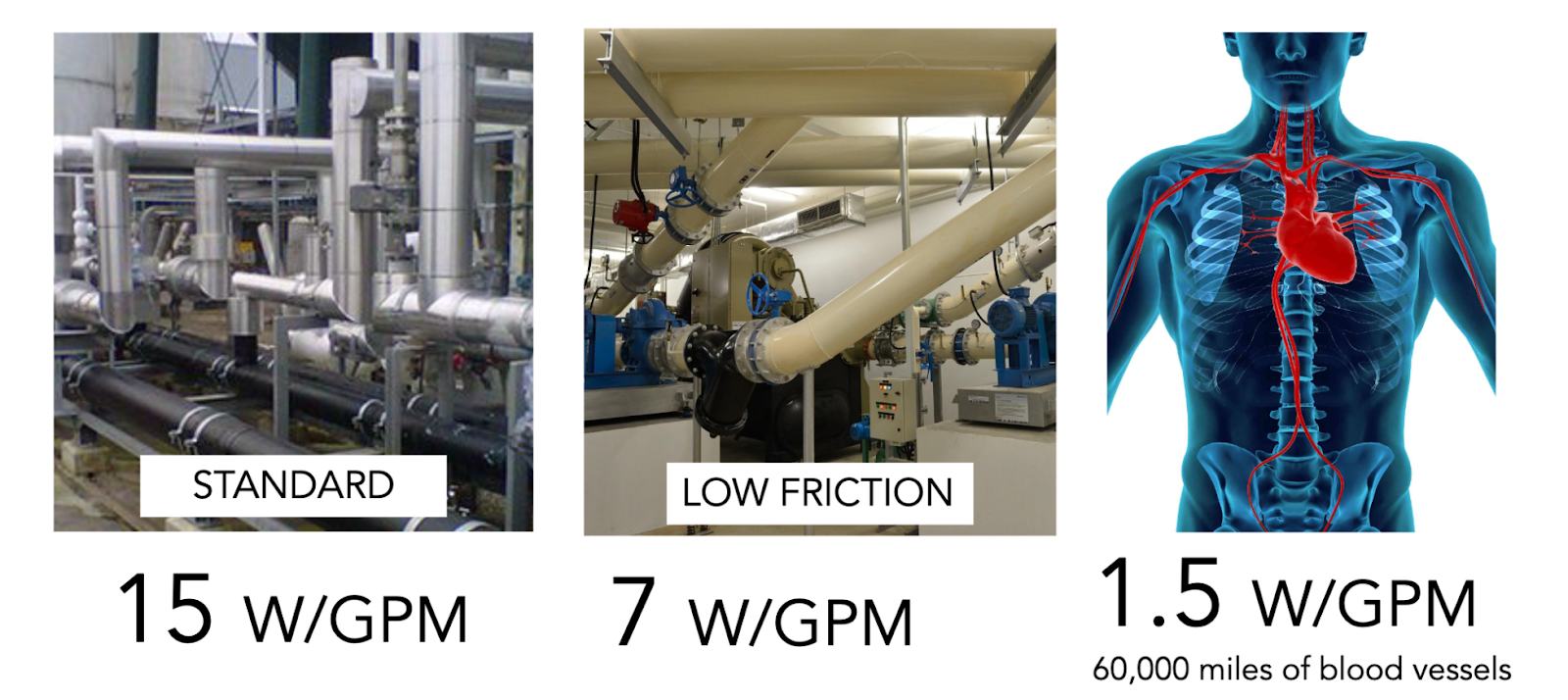
In industry and buildings, moving fluids (e.g., water) with pumps and pipes is a big source of energy demand. Traditional designs have pipes at right angles, creating additional friction. This means bigger pumps and more electricity are required to maintain flow rates. By designing pipe layouts without right angles as shown in the low friction example above, we can have smaller or fewer pumps and use less electricity for the same flow rates. It's a great example of integrative design. Even very efficient pipe layouts aren’t as efficient as the human body. Nature is often the best designer! Read more about biomimicry.
Example 2: Heat pumps are 300-400% efficient
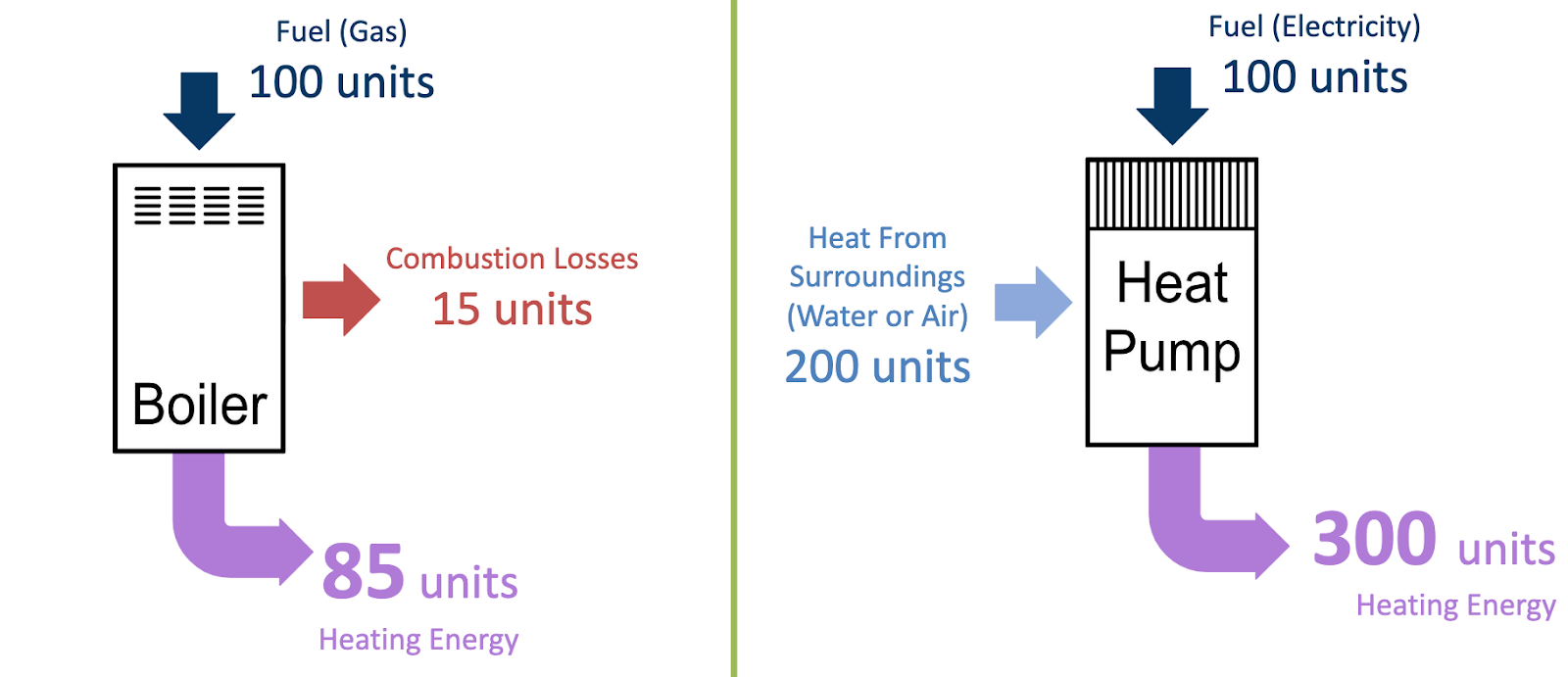
Heat pumps are a key tool for providing more energy efficient space heating, water heating, and other heating services. They move heat rather than creating it, making them over 3 times more efficient than gas furnaces. Heat pumps can also be powered by carbon free electricity, further helping to decarbonize our residential and commercial buildings. Learn more about how heat pumps work.
Example 3: EVs are much more efficient
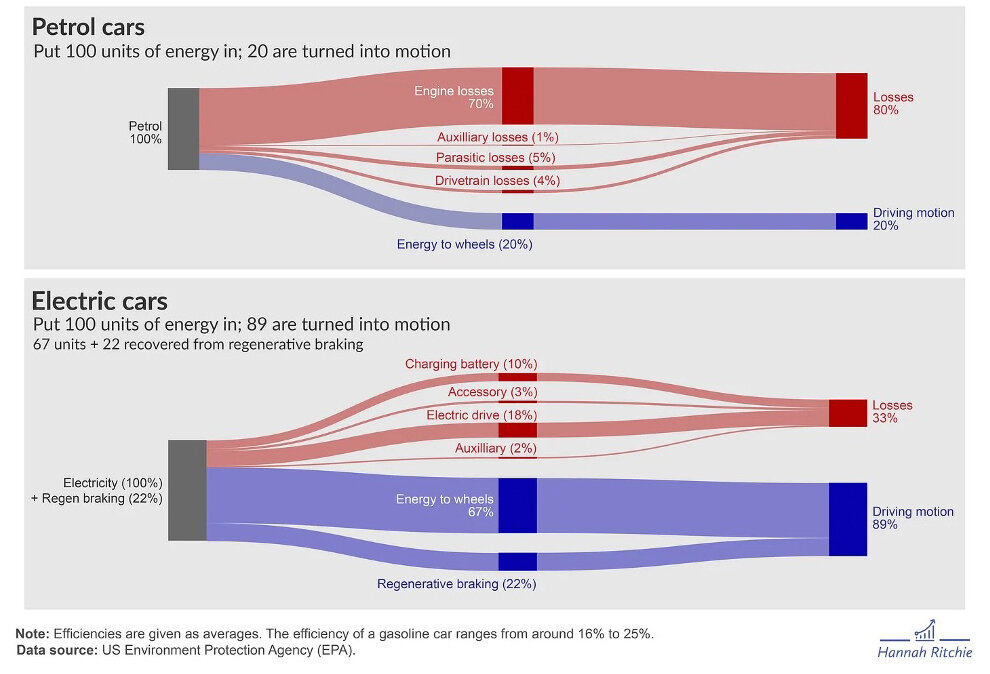
EVs are 3 to 4 times more energy efficient than conventional gasoline-powered vehicles. They also use regenerative braking, which in addition to saving energy, dramatically reduces how often you have to change your brake pads. Additional benefits of EVs include reduced maintenance requirements (no oil changes!) and fuel that will get cleaner over time as we decarbonize the electricity grid.
Barriers
Despite its vast potential, energy efficiency faces significant challenges. One barrier is an economic one: efficiency must be paid for upfront (i.e., capital expenditure), while the savings accrue over time (e.g., lower electricity bills). Energy users may be reluctant or unable to make these investments, particularly if they are uncertain the investments will be worth it.
This economic barrier can be further exacerbated when there are split incentives. For example, if an apartment building owner pays for replacing old windows with more insulating double-pane windows, the tenants benefit from the lower utility bills. Sometimes split incentives even happen within the same company! A project team might be incentivized to design a new building or industrial process with minimal capital expenditure, while the operations team’s budget pays the energy bills. In both cases, efficiency opportunities often go unrealized even when overall costs would be lower.
In the traditional utility model, the utility makes money by selling electricity. The more they sell, the more money they make. The utility has no motivation to help you use less electricity. Some states have implemented decoupling to address this barrier.
Another fundamental barrier is a lack of awareness and education on what and how big the energy efficiency opportunity is. Some states and utilities provide training and education for builders, contractors, and consumers to introduce new energy efficient technologies and showcase the success of energy efficient designs.
Policy
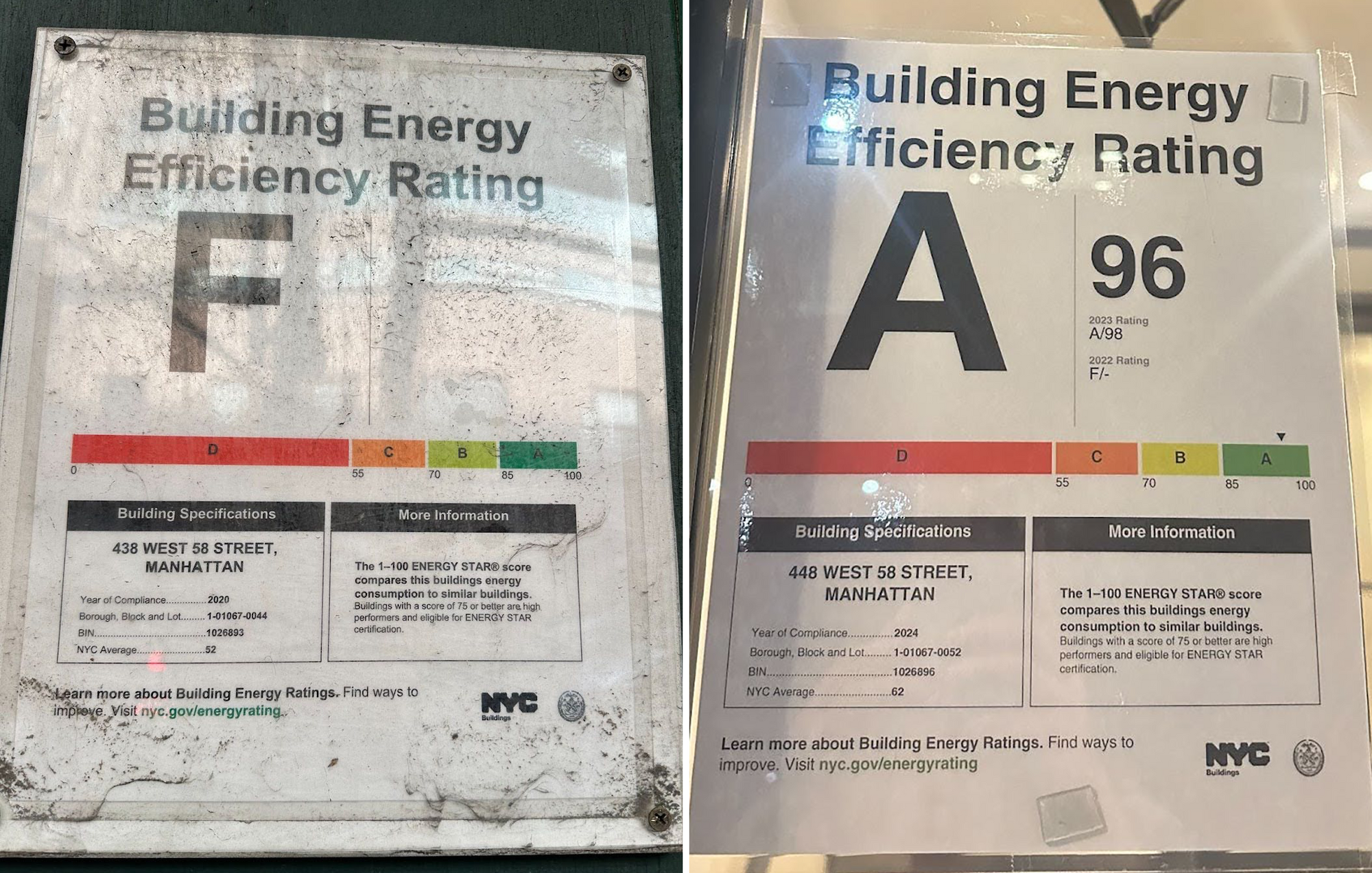
Policy measures can help overcome energy efficiency implementation barriers. Effective policy instruments include mandated efficiency standards (e.g., building codes), financial incentives (e.g., tax credits, cash rebates), educational and consumer awareness programs (e.g., New York City's energy grades pictured below), and access to capital for low-income households (e.g., green banks, on-bill financing).
Refrigerators are often held up as an appliance efficiency success story. California implemented the first mandated energy efficiency appliance standards for refrigerators in 1973, and California and the U.S. have continued to build on them since. As a result, today’s typical new refrigerator uses one-quarter of the energy while offering 20 percent more storage capacity and selling at half the retail cost.
U.S. federal energy efficiency standards for appliances and equipment were implemented in 1987 and have saved homes and businesses nearly $2 trillion on utility bills.
U.S. ENERGY STAR® Program

ENERGY STAR is a voluntary certification and labeling program established in 1992. ENERGY STAR verifies that appliances, electronics, and other products meet minimum efficiency standards set by the U.S. Environmental Protection Agency (EPA). Products that meet those standards can display the ENERGY STAR logo on their packaging. More than 80,000 products have earned ENERGY STAR certification. ENERGY STAR also provides information to consumers about the energy use and cost of using the product, allowing consumers to accurately compare different models and make informed decisions.
ENERGY STAR is the single most trusted environmental label in the U.S., recognized by nearly 90% of American households.
ENERGY STAR and its partners have saved 5 trillion kWh of electricity, avoided more than $500 billion in energy costs, and prevented 4 billion metric tons of GHG emissions. Use ENERGY STAR’s Flip Your Fridge calculator to find out how much you could save by upgrading your refrigerator to a recent ENERGY STAR model.
ENERGY STAR’s future under the Trump administration is uncertain. The administration’s proposed FY 2026 budget eliminates funding for the EPA's Atmospheric Protection Program, under which ENERGY STAR operates.
Environmental impacts
Energy efficiency is the cleanest energy resource. “Negawatts” emit no GHGs or other pollutants and don’t require mining or land use. Some energy-efficient technologies have lifecycle environmental impacts, but those are generally much lower than the impacts of fossil fuel or other resource use.
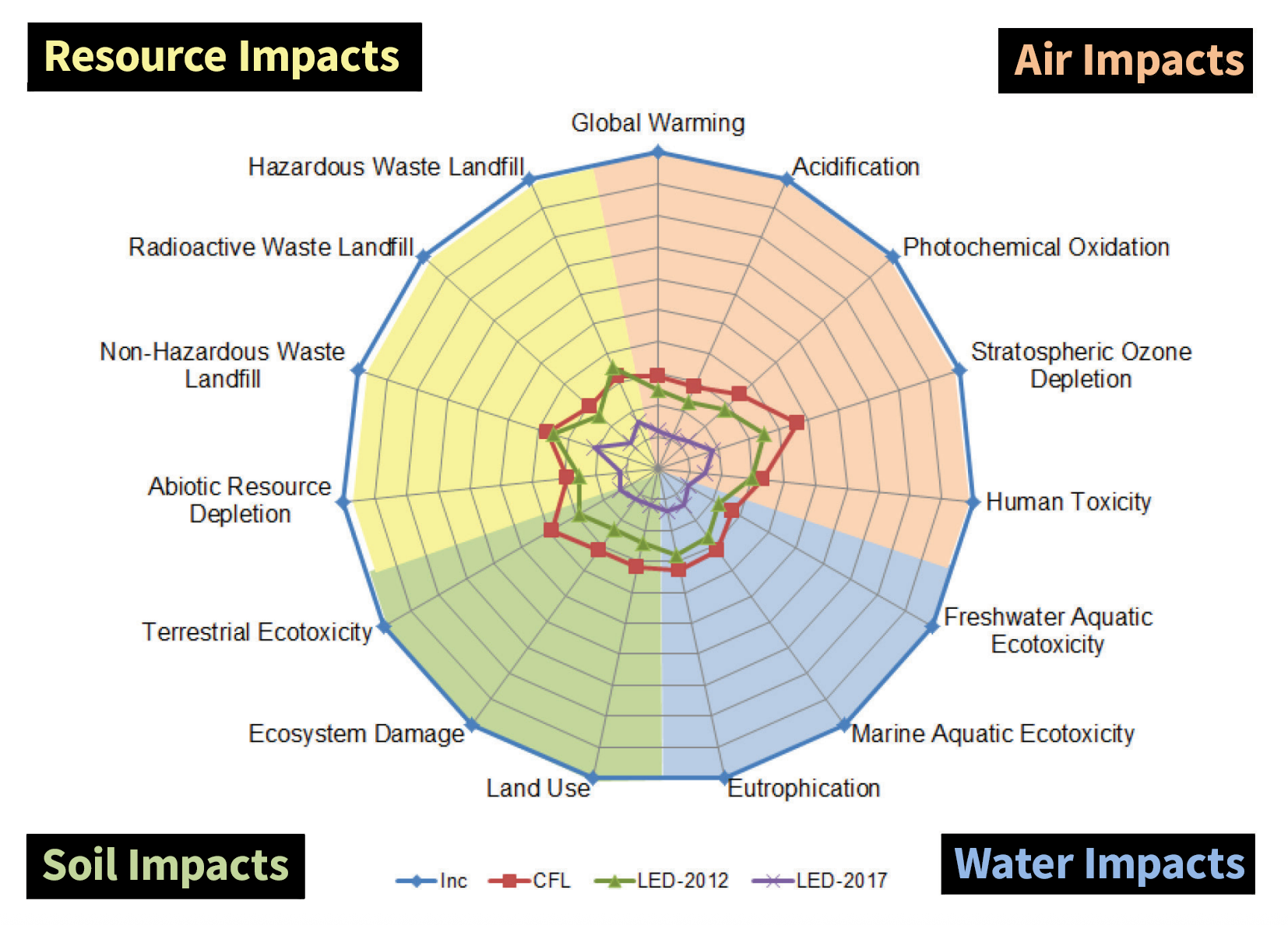
Technology improvements are reducing the negative impacts. For example, the diagram below shows how environmental impacts from light bulbs have decreased as we've progressed from incandescent light bulbs (blue line around edge, the largest impacts) to compact fluorescent bulbs (CFLs, outer red line near center) to light emitting diodes (LEDs, green and purple lines closest to center).
Lifecycle assessment impacts of light bulb technologies
Current and future trends
Energy efficiency is the gateway to clean, abundant energy for all. Access to energy services is tightly tied to the UN’s Human Development Index (HDI) that measures a country’s overall progress in longevity, education, and standard of living. Energy efficiency allows us to provide more energy services to more people while facilitating decarbonization.
Electrification of our buildings and transportation systems is increasing and is expected to continue to grow. One of five cars sold worldwide in 2023 was an EV, and about half of the energy services in residential buildings are now provided by electricity. In the U.S., heat pumps outsold gas furnaces in 2022 and 2023. Europe saw dramatic growth in the sales of heat pumps following the Russian invasion of Ukraine as countries focused on reducing dependence on Russian natural gas.
Many experts predict that the increasing use of AI will massively increase electricity demand, requiring grid expansion and more power plants. The application of energy efficiency strategies like integrative design has the potential to minimize AI’s impacts on electricity demand. AI also has the potential to reduce energy use through optimization.
In the news
News: Energiesprong (a Dutch word for “energy jump”) recently upgraded 63 homes built in the 1960s in Nottingham, England to 2050 standards. The focus was on delivering well-insulated, low-maintenance, near net-zero operational energy homes that are attractive, comfortable, and affordable. The retrofits were performed in 12 days while the occupants were still living in the homes. The cost of the work was designed to be equal to the expected savings in energy and maintenance over a 30-year period. The project is outcome-based, offering guarantees for both landlords and tenants. Read more about the Nottingham retrofits.
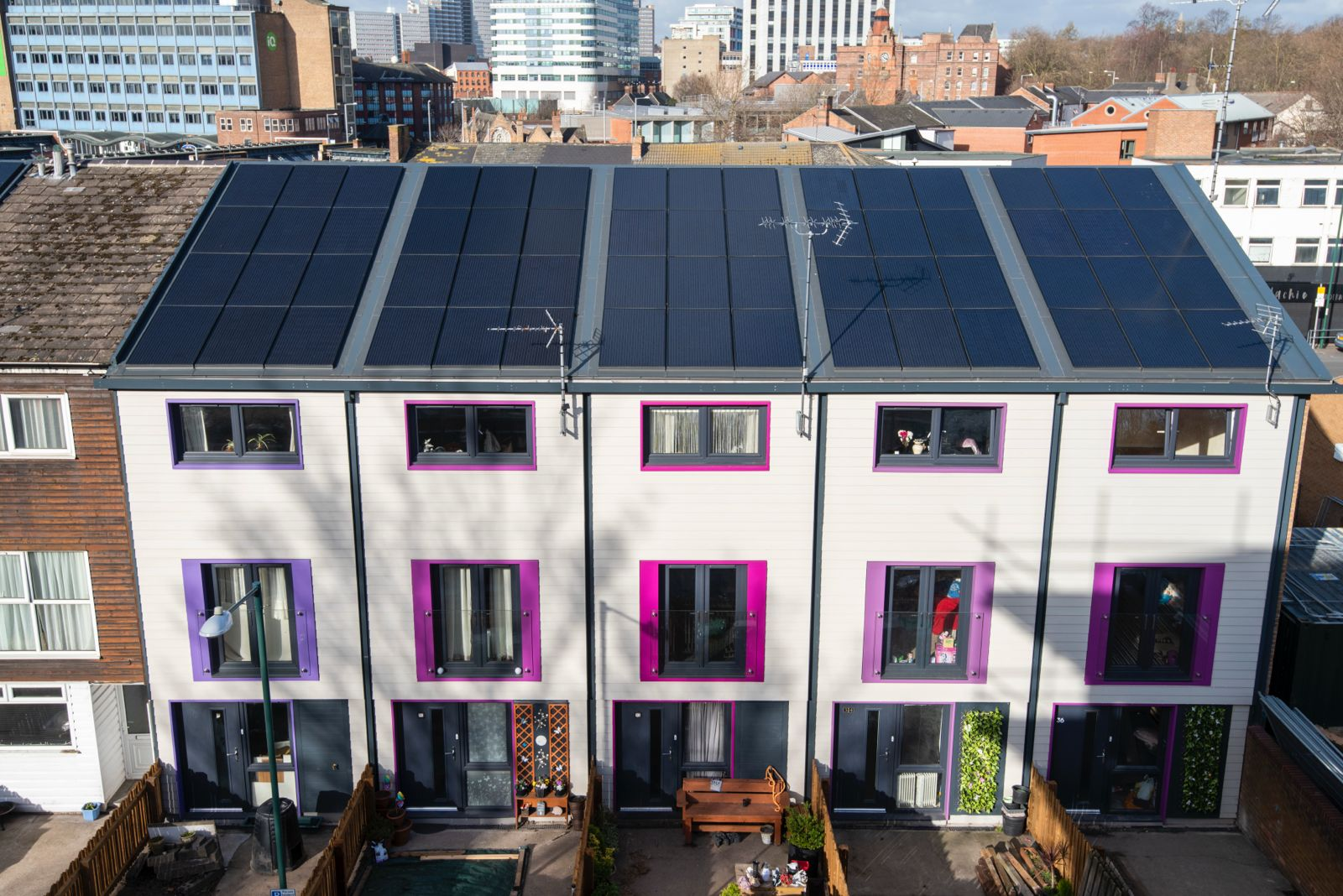
Context: Tens of millions of homes across North America and Europe need to be retrofitted with energy efficiency upgrades over the next couple of decades, a monumental and expensive task using traditional methods. Energiesprong takes advantage of prefabrication and assembly line production to reduce costs and project length. It has developed into a public-private model that can be replicated and scaled in developed nations seeking to decarbonize.
Fun Fact
Japan’s Shinkansen bullet trains are modeled after a bird’s beak!
The trains used to cause sonic booms when exiting tunnels, disturbing nearby residents. Engineers solved this problem by redesigning the train’s nose after the kingfisher, a bird that dives into water at high speed without making a splash due to its long, narrow beak. The new nose dramatically reduced noise, improved aerodynamics, and increased speed and energy efficiency by ~15%.

Want to test your knowledge of energy efficiency?
Take our quiz
The data in this issue are current as of June 2025. For the most current data, visit our Energy Efficiency Fast Facts.


