
Understand Nuclear Fission
This edition of Stanford University’s Understand Energy Learning Hub Energy Spotlight is about commercial fission, a complicated and often controversial carbon-free energy resource. If you like what you see, please share widely and encourage others to subscribe. You can also check out all of our past issues!
What you need to know
Significance: Nuclear energy accounts for 9% of the world’s electricity generation and provides over 20% of the world's carbon-free electricity. In the United States, nuclear provides 18% of overall electricity generation and nearly 45% of carbon-free electricity. The U.S. has the most nuclear reactors—almost double that of any other country—and generates about 30% of global nuclear electricity.
While the U.S. produces the most nuclear electricity, France has the highest penetration, with nuclear providing more than two-thirds of its electricity generation. Slovakia, Ukraine, and Hungary also rely heavily on nuclear energy, getting about half of their electricity from it. Prior to the Fukushima accident in 2011, nuclear energy provided almost 30% of Japan’s electricity. It now provides just 8%.
What is nuclear energy? Nuclear reactions harness the power of the atom to produce large amounts of energy in the form of heat. Nuclear energy comes in two broad categories:
- Nuclear fission occurs when a large atom is split into smaller atoms, producing lots of heat and radiation.
- Nuclear fusion occurs when two nuclei combine to form a single nucleus, releasing massive amounts of heat.
The roots of nuclear energy come from defense research on the atomic bomb in the 1940s. Atomic bombs use fission. Hydrogen bombs use a combination of fission and fusion to make them more powerful.
All commercial nuclear power plants today use fission. Fusion is still in the research phase for energy production.
How does fission energy work? Most nuclear power plants today are fueled by uranium, an extremely energy dense fuel. By volume, uranium is 33,000 times more energy dense than oil, 43,000 times more energy dense than coal, and 37,000,000 times more energy dense than natural gas.
Uranium occurs naturally in two forms: U-235 and U-238.
- U-235 is fissile, meaning that it's capable of capturing a slow neutron, splitting apart, and releasing lots of energy and more neutrons, causing a chain reaction.
- U-238 is fertile. It’s capable of becoming fissile but takes a two-step process. It captures a neutron and goes through some radioactive decay to become fissile.
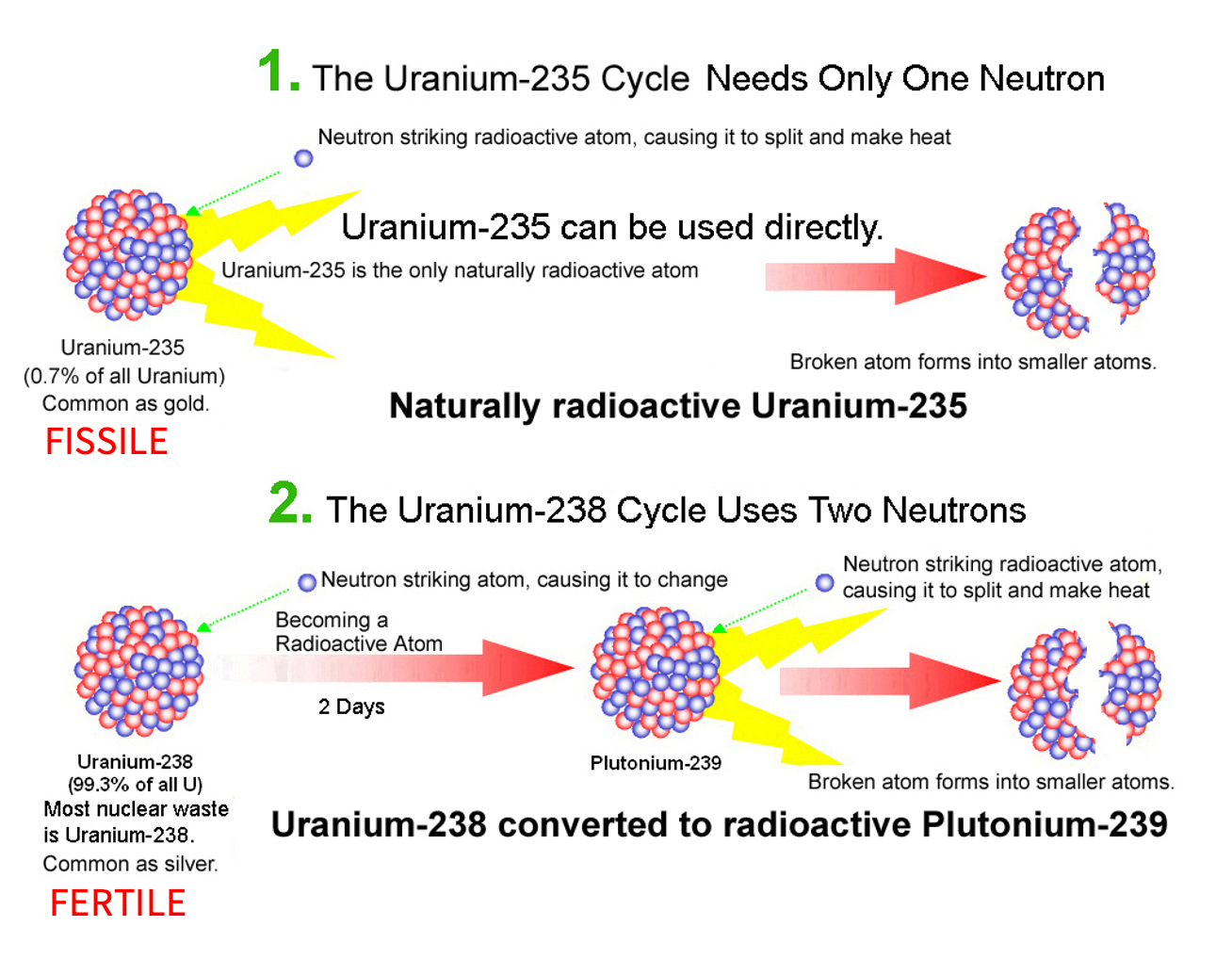
Nuclear power plants must use a moderator (typically water) to slow down the released neutrons so they can be captured by the fissile fuel.
How is uranium mined? Uranium ore is mined using two primary methods:
- Conventional – surface open-pit or underground mines (similar to coal)
- In situ leach (ISL) – inject acidic or basic solution into the ground, dissolve/rust the uranium, and pump the uranium solution back up (similar to drilling for oil). ISL is less land intensive and the most commonly used method (56%)
Kazakhstan is the largest producer of uranium (43%), followed by Canada (15%). About 95% of the uranium used in the U.S. is imported.
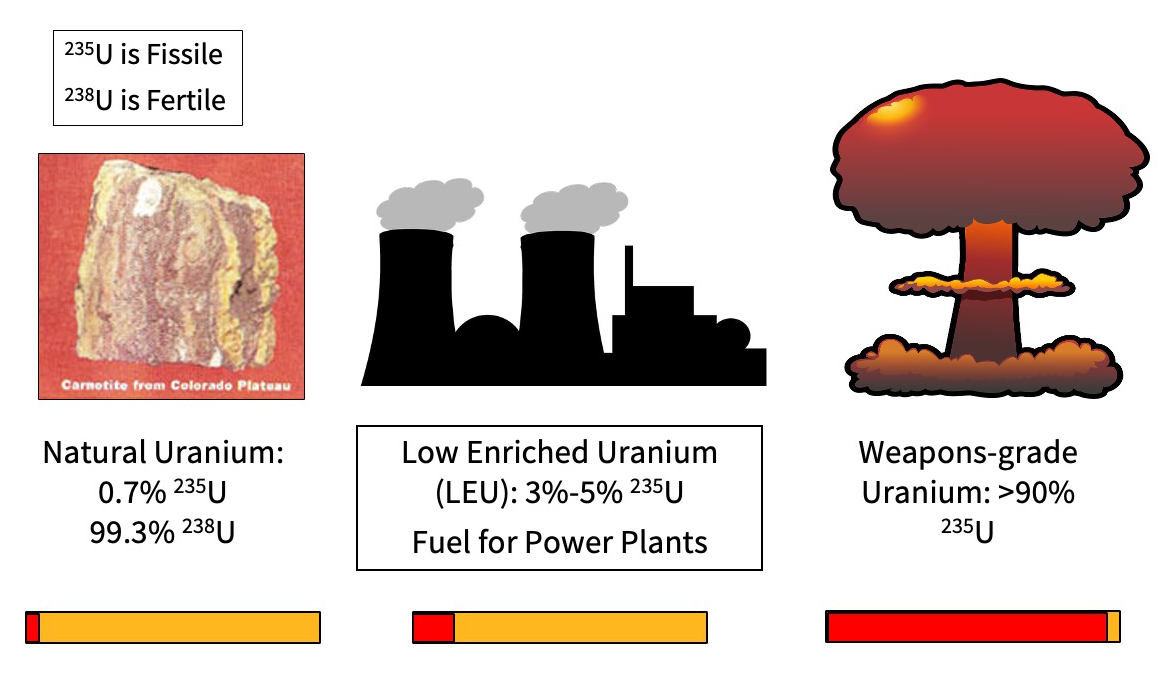
Mined uranium must be enriched before it can be used in most nuclear power plants. Natural uranium has only 0.7% U-235. The other 99.3% is U-238. Most nuclear power plants require 3-5% U-235, which is called low enriched uranium (LEU). Weapons-grade uranium is typically enriched to >90% U-235.
How and where is uranium enriched? U-235 and U-238 have different molecular weights, which allows them to be separated in a centrifuge when in a gaseous state and recombined in the desired U-235 concentration. Russia currently has the world’s largest uranium enrichment capacity (43%).
How is uranium made into fuel? LEU is made into fuel pellets about the size of a pencil eraser that are stacked on top of each other to form a fuel rod about 4 meters tall. At this stage, the uranium is still only mildly radioactive and can be handled with minimal protection. Fuel rods are then grouped together to make a fuel rod assembly. Specifications vary, but large reactors typically have 150-250 fuel assemblies, each containing 200-300 fuel rods. Fuel assemblies need to be replaced when the fuel can no longer maintain a chain reaction. About a third of the fuel in a reactor is changed every 12-18 months.
How does a nuclear power plant work? Nuclear power plants are thermal power plants. The fission reactions create A LOT of heat, which is used to boil water, make steam, turn a turbine and generator, and produce electricity. Nuclear fission occurs inside a containment vessel called a nuclear reactor. Control rods that absorb neutrons are used to stop the nuclear fission reaction for maintenance or in an emergency. Many nuclear power plants have multiple reactors. The most common nuclear power plant type (68%) is the Pressurized Water Reactor (PWR), pictured below.
Image source: U.S. NRC.
Nuclear power plants tend to be very large (1-2 GW) and provide baseload power. In the U.S., the capacity factor for nuclear power plants is 92%, the highest of any energy resource on the grid. For comparison, coal power plants have a 43% capacity factor and combined-cycle natural gas plants have a 60% capacity factor. Part of the reason for the high capacity factor is that nuclear power plants are inflexible and really hard to turn on and off. Once they’re on, they are kept on and running at full capacity. This means that other resources (e.g., natural gas, batteries) have to flex up and down to balance electricity supply and demand on the grid.
Big Hourglass-Shaped Cooling Towers Aren’t Just for Nuclear Power Plants
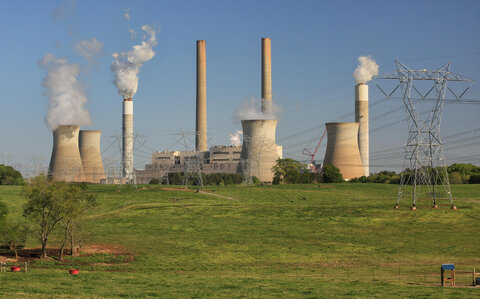
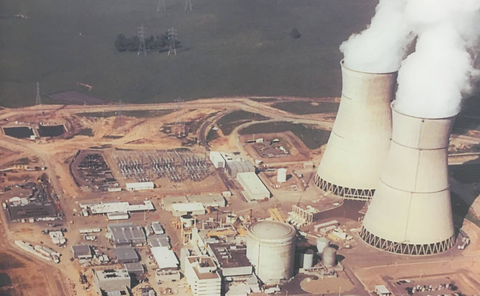
Many people associate large cooling towers like the ones pictured below with nuclear power plants. In fact, this type of cooling tower can provide cooling to any type of very large thermal power plant (e.g., coal, natural gas, nuclear).
If you’ve ever wondered what’s coming out of those cooling towers, it’s just water vapor from the evaporative cooling process.
Safety features of nuclear power plants: Nuclear power plants are just like other thermal power plants, but much more complicated because of increased security, safety, and redundancy requirements. The U.S. Nuclear Regulatory Commission licenses nuclear power plants for an initial period of 40 years. Licenses can then be renewed for up to 20 years at a time after a thorough safety review. Safety features include:
- Several layers of protection for the reactors (typically steel and thick concrete) that can withstand significant impacts and natural events such as earthquakes, keeping radioactivity contained
- Control rods that reside above the fuel assemblies and can be dropped into place using only gravity to stop the reaction even in a power outage
- More back-up systems than other power plants to provide multiple redundancies
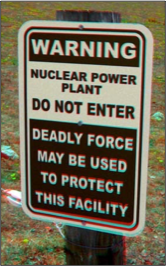
- Many layers of security, including armed guards, to protect the highly radioactive materials from terrorism
With these safety features, the risk of nuclear accidents is very low. However, the consequences of such an accident could be catastrophic.
Three Nuclear Power Plant Accidents Had Profound Impacts on the Industry
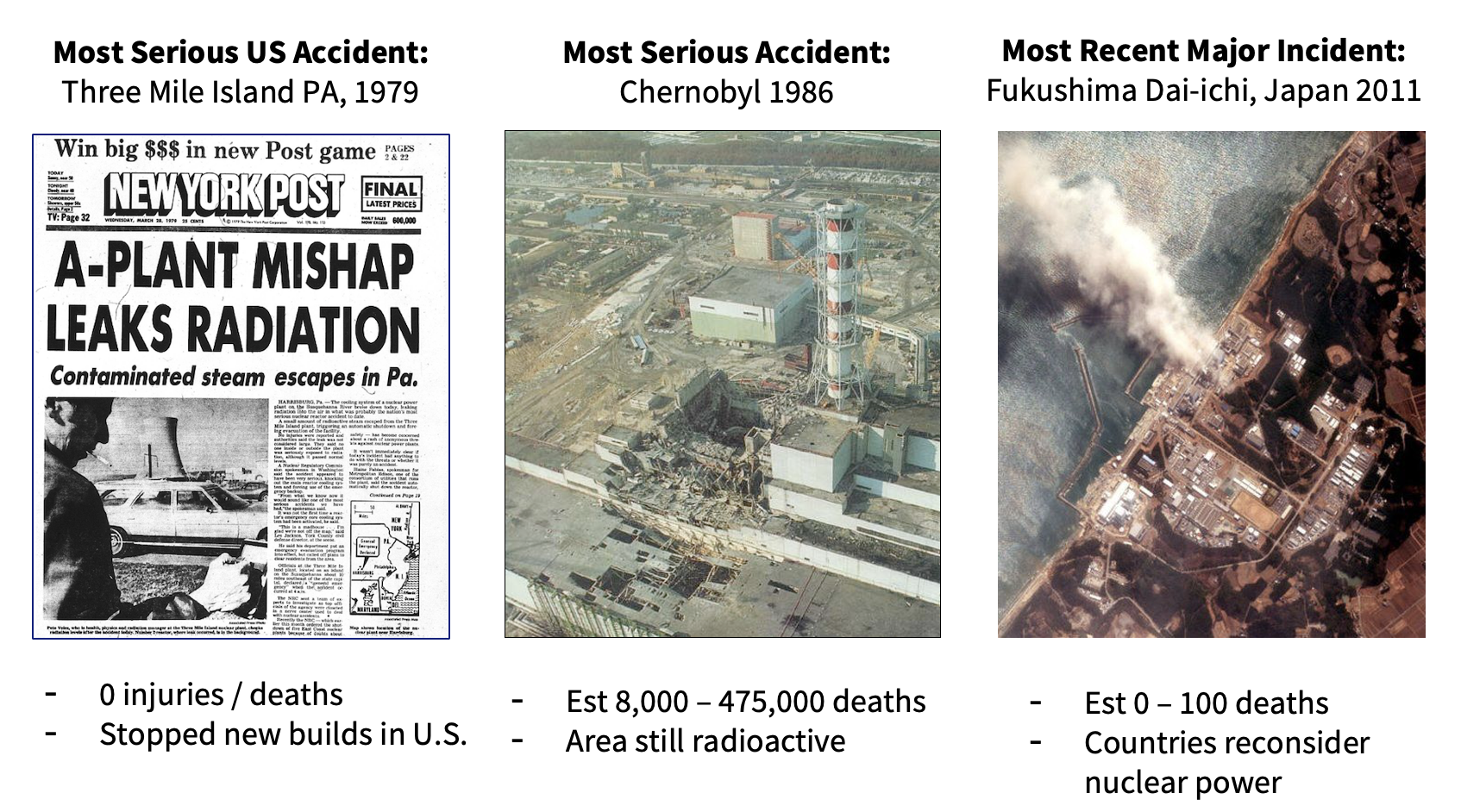
Read more about the implications of these nuclear accidents in our Fast Facts.
Nuclear waste: Upon removal from the reactor core, spent fuel is hot and radioactive. It contains ~1% long-lived highly radioactive waste (half life = 100,000 years), ~3% waste that is less radioactive (half life = 300 years), and ~96% uranium oxide (half life = 3-5 years). The world has over 400,000 tonnes of spent nuclear fuel and is generating ~11,000 tonnes each year. The U.S. has produced about 90,000 tonnes of spent fuel since the 1950s (roughly enough to fill 22 Olympic-sized swimming pools) and generates ~2,000 tonnes annually.
All spent fuel is transferred to cooling pools at the reactor site, where it is kept for at least 5-10 years. The water allows heat to dissipate and some radioactive elements to decay, while providing an effective shield from radiation.
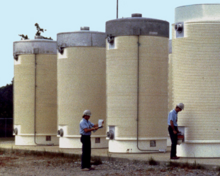
High-level radioactive waste must be stored away from humans for hundreds of thousands of years, but no permanent storage solutions currently exist. As a result, U.S. cooling pools have filled up, and we've had to create an interim solution. Spent fuel that has been cooling for 10+ years is removed from the pools and placed in dry casks for longer-term on-site storage. The U.S. Nuclear Regulatory Commission licenses or certifies dry casks for up to 40 years, with possible renewals of up to 40 years based on safety inspection findings. Learn more in this video about how spent nuclear fuel is stored in dry casks.
Some countries are investigating geologic storage as a long-term solution. Finland is expected to open the world's first geologic storage site in 2025/2026. The U.S. Nuclear Waste Policy Act of 1982 directed the DOE to consider Yucca Mountain in Nevada as the primary site for geologic storage. However, after three decades and $15 billion, Congress defunded the project in 2011 due to technological challenges and strong public opposition from Nevada and other states that the nuclear waste would travel through to reach Yucca Mountain.
Nuclear waste reprocessing: Spent nuclear fuel can be reprocessed to extract fissile materials for recycling and reduce the volume of radioactive waste. Many European countries, Russia, China, and Japan have policies to reprocess their nuclear waste, but other countries, including the U.S. and Canada, do not reprocess their nuclear waste due to concerns around proliferation.
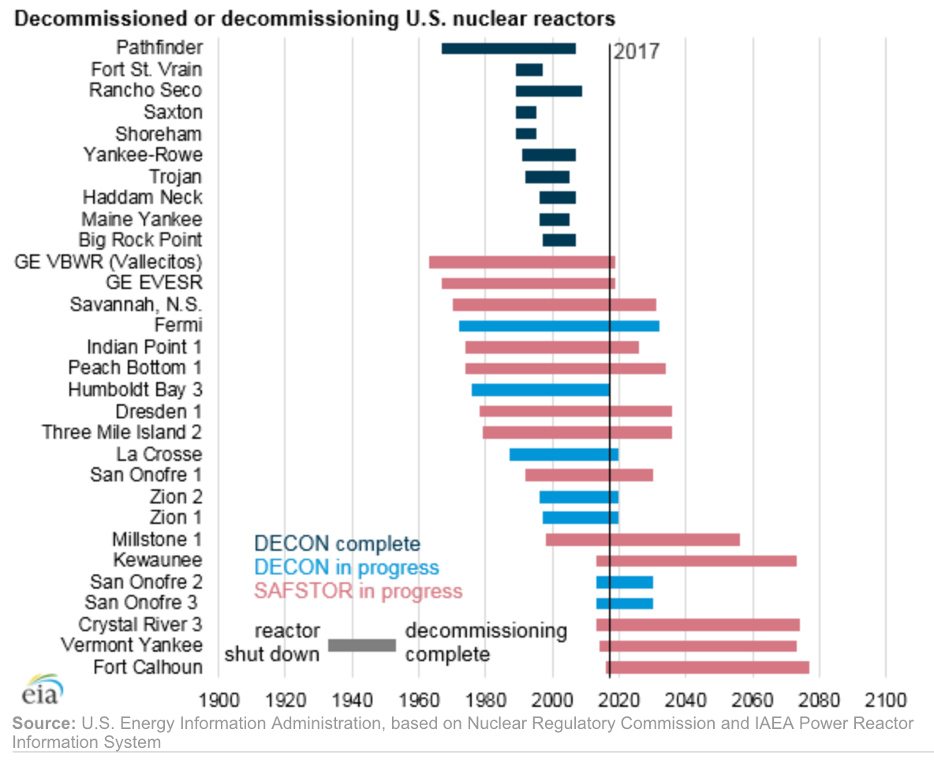
Decommissioning: A nuclear power plant must be decommissioned when it is permanently shut down. The U.S. has two decommissioning methods: DECON and SAFSTOR. DECON (short for decontamination) is faster and involves removing all radioactive material from the power plant. The spent fuel remains on site in pools or casks, waiting for a long-term storage solution. SAFSTOR (short for safe storage) takes longer because it has a 50-year waiting period while medium- and low-level radioactive material is allowed to cool and become less radioactive before it's removed.
Decommissioning is expensive. For example, Connecticut Yankee Nuclear Power Plant used DECON from 1997-2007 at a cost of $893 million. The Kewaunee Power Plant in Wisconsin shut down in 2013 and is using the SAFSTOR method. Costs are anticipated to be $1 billion, and work will be completed in 2073. U.S. regulations require a nuclear power plant licensee to establish or obtain a financial mechanism that ensures sufficient money will be available to pay for the eventual decommissioning of the facility.
Decommissioning Takes a Long Time (up to 60 yrs) and a Lot of Money
Challenges/Barriers
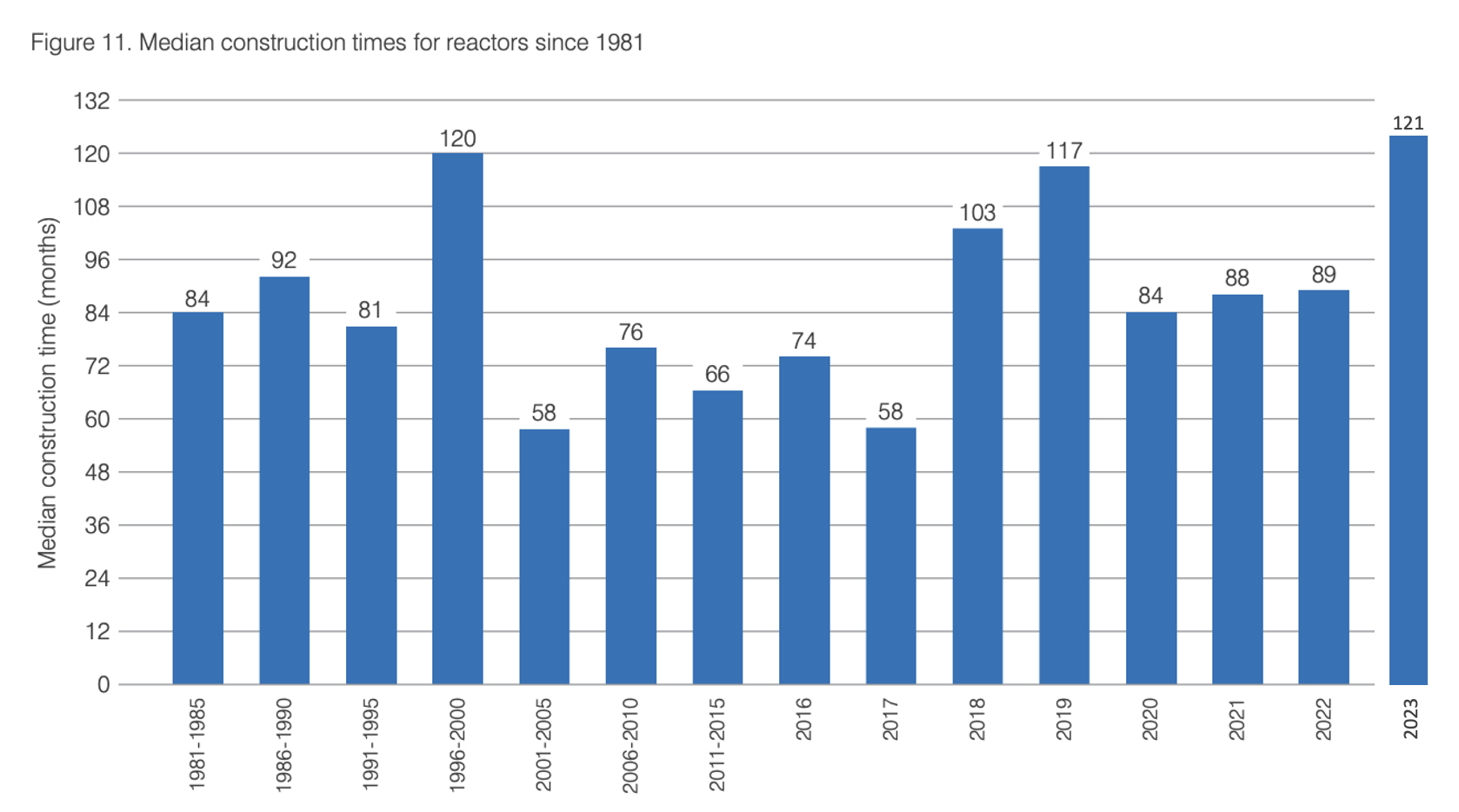
High upfront capital costs and long permitting and building times are major hurdles for the nuclear industry globally, with an average of 7-10 years just for construction. Wind and solar projects can be completed in 3-5 years, including planning, permitting, and construction.
Building New Nuclear Worldwide: Construction takes 7-10 years, plus additional years for planning / permitting
Other significant challenges for nuclear include long-term disposal of radioactive material, insurance, security, operating costs, and public opposition.
Environmental impacts
Nuclear energy is a zero-carbon resource that emits no air pollution. However, long-lived radioactive waste is a big challenge that has yet to be solved. Additionally, orphaned and abandoned uranium mines have the potential to contaminate local water supplies. The U.S. EPA reports that most of about 4,000 uranium mines are abandoned, and many of them are on Native American land. The U.S. government started clean-up initiatives for some of these sites in the late 1970s, and those efforts are ongoing.
Current and future trends
The U.S. has been shutting down nuclear power plants because they'e old, expensive to operate and maintain, and, in some cases, opposed by the local communities. Nineteen reactors have been retired in the last 30 years. Almost all of the U.S.'s nuclear reactors came online prior to 1990, and many would require expensive plant upgrades to renew their operating licenses. Nuclear power plants struggle to compete in wholesale markets with natural gas, wind, and solar.
Germany has also been closing nuclear power plants. It shut down all 17 of its operating nuclear reactors between 2011 and 2023 due to public fear and opposition following the 2011 Fukushima accident. Before Fukushima, Germany got 25% of its electricity from nuclear energy.
In contrast, other parts of the world–notably China, the Middle East, and Asia broadly–are building new nuclear power plants to meet growing electricity demand. These countries overcome many of the cost and construction barriers because nuclear power plants are built, owned, and operated by the central government. China accounted for over a third of new nuclear additions between 2019 and 2024 and is expected to pass the U.S. in nuclear capacity by 2030.
In the U.S., retired nuclear power plant restarts and, recently, new nuclear plant builds, are being considered to meet growing electricity demand. Some large tech companies, like Microsoft and Amazon Web Services, are making deals with operating and retired nuclear power plants for 24/7 power for their data centers.
Small modular reactors (SMRs), which are smaller scale (300 MW or less), and advanced nuclear reactors are not yet commercial but are garnering lots of interest and investment. Read more about SMRs in our Fast Facts.
In the news
News: Due to a scorching heat wave in Europe in early July 2025, some of the nuclear power plants in France and Switzerland were forced to shut down or reduce electricity production.
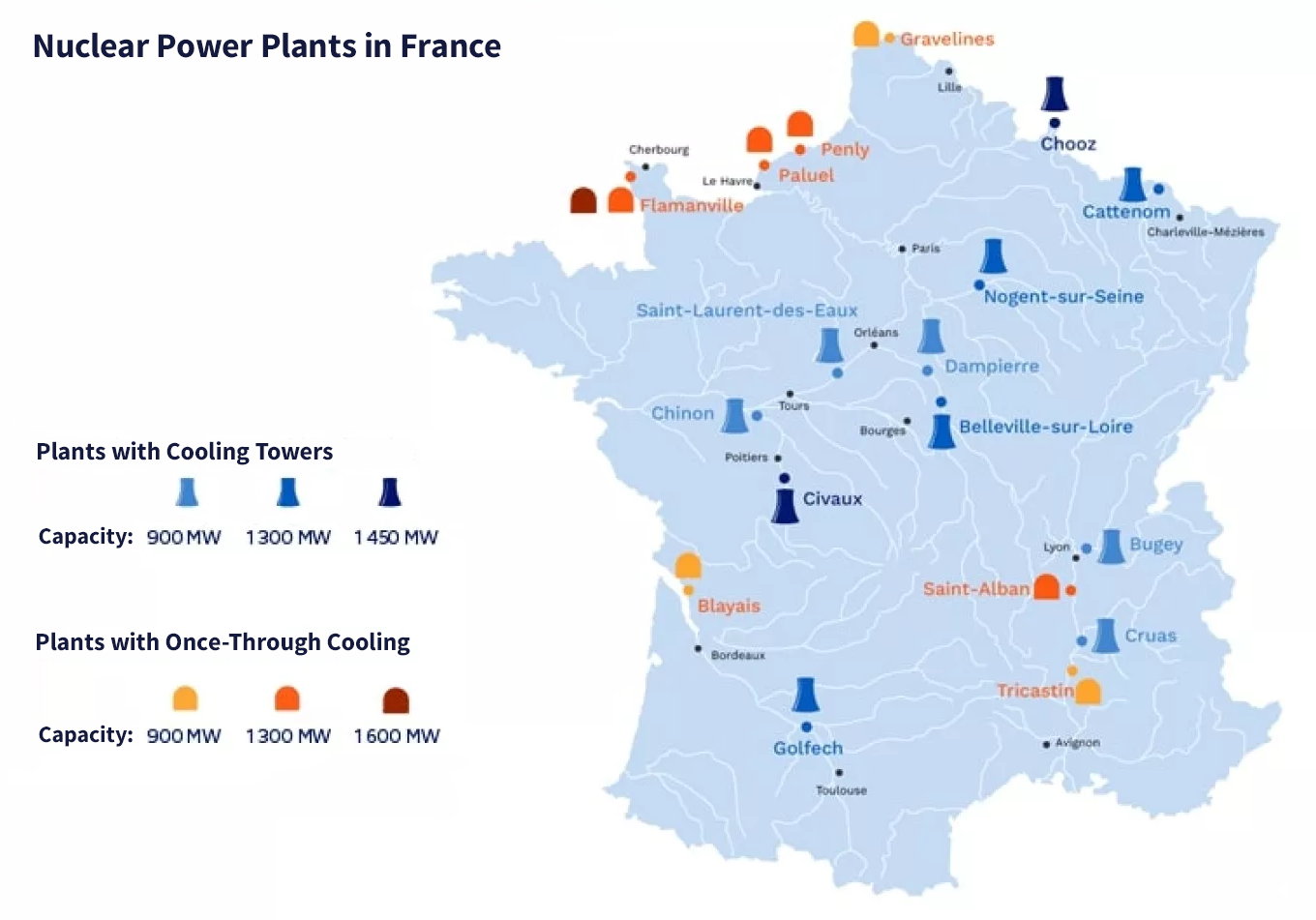
Image source: EDF - URD 2024
Context: Nuclear power plants are thermal power plants. As heat engines, thermal power plants require a source for cooling. The two main ways to provide cooling are with a cooling tower (evaporative cooling) or with once-through cooling. In both cases, water is typically drawn from the environment (e.g., lake, river, ocean). In a cooling tower, the water is used to replenish water lost through evaporation. In once-through cooling, the water is used directly for cooling and then returned to its natural source, typically about 20°F hotter than when it was withdrawn, resulting in thermal pollution that can negatively impact ecosystems.
When the source water is warmer (e.g., due to a heat wave), it can’t provide as much cooling, forcing a reduction in electricity production from the power plant. In addition, for once-through cooling, the negative impacts from thermal pollution would be even greater when the natural water source is already experiencing heat stress. As extreme heat becomes more frequent and more intense with climate change, we are likely to see more and more thermal power plants (including nuclear) needing to shut down or reduce production.
Fun Fact
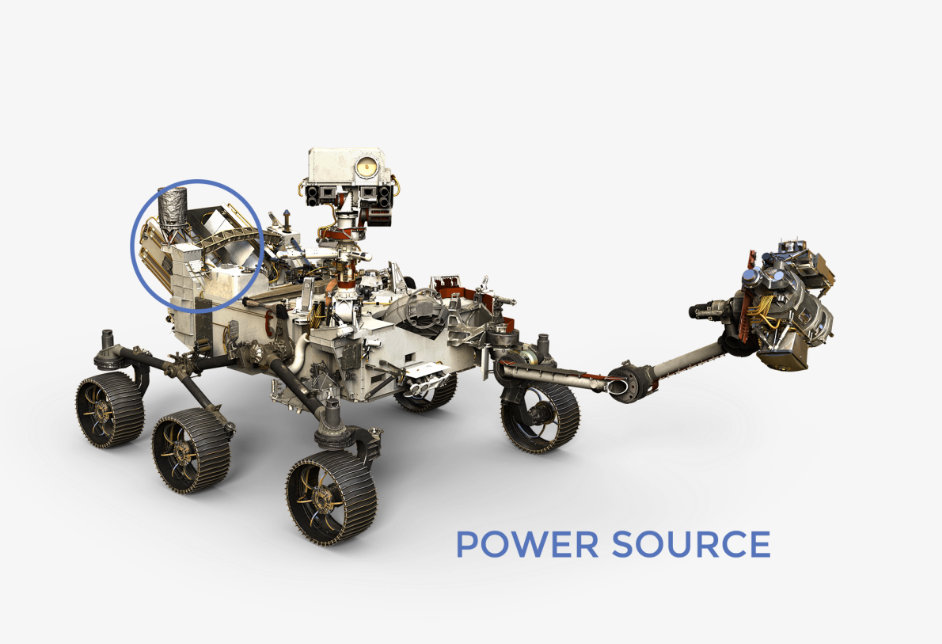
Did you know that nuclear energy is powering exploration of Mars?
NASA’s Mars rover, Perseverance, is “fueled” by nuclear decay. The power source, a Multi-Mission Radioisotope Thermoelectric Generator (MMRTG), converts heat from the natural radioactive decay of plutonium into electricity to charge the rover’s primary two batteries. The heat also keeps the rover’s tools and systems at the correct operating temperatures. (Mars' temperature dips to -130°F at night!) The MMRTG has a 14-year operational lifetime. Read more about Perseverance.
Want to test your knowledge of nuclear fission?
Take our quiz
The data in this issue are current as of July 2025. For the most current data, visit our Fission Fast Facts.


