
Understand Lithium-ion Batteries

October greetings! This edition of Stanford University’s Understand Energy Learning Hub Energy Spotlight explores lithium-ion batteries. Last month’s issue on energy storage provides useful context, so be sure to check it out if you missed it. If you like what you see, please share widely and encourage others to subscribe. You can also check out all of our past issues!
What you need to know
Significance: Lithium-ion batteries are the fastest-growing energy storage technology in the world. Almost all electric vehicle (EV) and grid storage batteries are lithium-ion.
Lithium-ion batteries can support transportation and grid decarbonization, reduce air pollution, and improve grid reliability. However, they also have supply chain risks, along with social and environmental impacts (e.g., mineral mining and processing) that need to be managed.
How are they used? The largest market by far for lithium-ion batteries is EVs (>70% of deployment), followed by grid storage (>15%) and portable electronics like phones and laptops (<5%). EVs and grid storage are also driving the rapid growth – portable electronics accounted for almost half of lithium-ion battery deployment in 2015 and for less than 5% in 2024.
Where are they used? China dominates global lithium-ion battery deployment. On the transportation side, the country accounts for 59% of the world’s EV car stock, 88% of EV truck stock, 87% of EV bus stock, and 25% of EV van stock.
For grid energy storage applications, China accounts for almost half of global battery systems capacity.
Why lithium-ion batteries? Advantages of lithium-ion batteries for transportation and portable electronics include:
- High energy density by weight and volume relative to other battery chemistries, which is especially important when you are carrying your energy around with you.
- Ability to charge relatively quickly, maintain their charge over long periods of time, and have relatively good cycle durability (i.e., low losses of capacity even after many charge/discharge cycles).
Lithium-ion batteries also have several attributes that make them well-suited for grid energy storage, such as:
- Modularity that allows them to be installed at any scale, from kWhs for behind-the-meter commercial and residential installations to GWhs for large scale in-front-of-the-meter utility installations.
- Can be installed anywhere on the grid from transmission substations to residential homes, unlike some other storage methods (e.g., pumped hydro).
- Ability to ramp up quickly to support grid demand, making them an excellent tool for supporting grid decarbonization and reliability.
- Can provide uninterrupted back-up power to homes and businesses during power outages.
Lithium-ion battery prices dropped dramatically (by 87%) between 2013 and 2025. According to BloombergNEF, prices are expected to continue to decrease due to a number of factors, including solid-state electrolytes, new cathode materials, and new cell manufacturing processes.
Lithium-ion battery safety: Thermal runaway is when lithium-ion batteries experience a rapid, self-sustaining reaction that generates a lot of heat and can in some cases cause fires. Layers of built-in safety guards (e.g., thermal barriers, active cooling systems, and smart charging) can manage this risk. For example, increased safety standards and improved battery designs and project layouts have reduced the risk of fire for grid batteries dramatically over the past decade.
Why are there different types? The chemistries of lithium-ion batteries can be "tweaked" to optimize them for the requirements and economics of different end uses. For example, energy density and charge time are important for EVs, whereas a grid storage system might prioritize long cycle life. Lithium-ion battery chemistries can also be modified to reduce the amount of certain material components for social, environmental, or geopolitical reasons. The two leading lithium-ion battery chemistries are nickel-based chemistries, such as NMC (nickel-manganese-cobalt) and NCA (nickel-cobalt-aluminum), and LFP (lithium-iron-phosphate).
Key differences between leading lithium-ion battery chemistries
| Nickel-based | LFP | |
|---|---|---|
| Energy density | Higher | Lower |
| Cost | Higher | Lower (no nickel or cobalt) |
| Degradation tolerance to fast charging | Lower | Higher |
| Typical charging level recommendations for battery health | 80% | 100% |
| Thermal runaway risk | Higher | Lower |
Nickel-based lithium-ion batteries are the dominant EV chemistry in the U.S. and EU, while LFP chemistry dominates in China EVs.
LFP chemistries dominate grid energy storage growth (80% of new grid energy storage in 2023) for both in-front-of-the-meter and behind-the-meter systems globally.
How are they manufactured? Lithium-ion battery production involves multiple steps including mining and refining the necessary minerals, manufacturing the components and cells, and putting them into their final configuration for the designated end use.
Key steps in the lithium-ion battery production process

Where are they manufactured? China dominates the lithium-ion supply chain in refining of materials, manufacturing of battery components, and manufacturing of battery cells.
China’s dominance of supply and manufacturing of lithium-ion batteries has raised geopolitical concerns for many countries, including the U.S.
Energy injustice in Democratic Republic of the Congo (DRC) cobalt mining
In 2024, battery applications accounted for over 75% of cobalt demand and 94% of cobalt demand growth. The widely used nickel-based lithium-ion battery chemistries NMC and NCA contain cobalt. Nearly 70% of the world’s cobalt is mined in the DRC.
However, only 5% of the cobalt mines in the DRC are owned by DRC companies. The remaining 95% are owned by Europe and China.
This means that the DRC bears significant social and humanitarian burdens from cobalt mining, while the vast majority of the financial wealth generated leaves the country. And with less than 25% of the DRC population having access to electricity, DRC citizens are generally not benefiting from the devices that cobalt is being used to support (e.g., personal electronics, EVs).
Cobalt mining in the DRC has been linked to numerous human rights violations, including extensive modern-day slavery, child labor, and human trafficking. A report by the U.S. Department of Labor found labor conditions for cobalt mine workers in the DRC “abominable” and concluded that there is a “monumental need to address labor conditions among nearly all cobalt miners” working there. Cobalt mining activity in the DRC has also led to several negative environmental impacts, including the deforesting of vast areas and air and water pollution.
Second-life batteries and recycling: EV batteries typically last 15 to 20 years or more. When they reach their “end of life” due to reduced capacity, EV batteries can still be useful for stationary grid storage, giving them a “second life.” Some companies are already using second-life batteries to provide grid storage for AI data centers. As sales of EVs continue to increase, more second-life batteries will become available, providing a more environmentally-friendly and potentially lower-cost energy storage option for the grid than new batteries.

Lithium-ion battery recycling can recover over 95% of the key metals contained in a battery. Those metals can then be used to make new batteries. Recycling can provide a cheaper, more socially and environmentally friendly source for raw materials, especially as demand for batteries continues to grow. Domestic battery recycling also reduces supply chain risk by keeping already imported materials in the country.
Future trends
According to the IEA, lithium-ion batteries will dominate the global battery market into the 2030s as their costs continue to decline, their chemistries evolve, and demand for EVs and energy storage keeps increasing. Diversifying global supply chains will take time, capital, policy commitment, and sufficiently large and predictable markets. Battery recycling capacity will continue to grow as part of a reliable materials supply chain.
In the news
News: Some companies are adding lithium-ion batteries to electric appliances, allowing consumers to electrify while avoiding costly upgrades. For example, the high power needs of electric induction stoves typically require a 240-volt outlet and sometimes require electrical service upgrades that can cost a homeowner thousands of dollars. An induction stove with a battery only requires a standard 120-volt outlet.
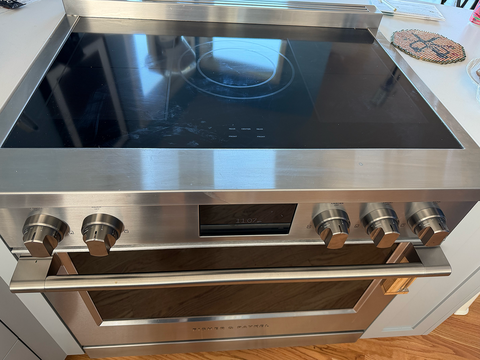
Context: Electrifying appliances has numerous benefits including lower operating costs and energy bills, reduced indoor air pollution, and fewer GHG emissions. Natural gas stoves pose significant risks to human health due to the release of toxic chemicals during combustion. In addition, the main component of natural gas is methane (a potent GHG) which can leak into the air even when the stove is off.
Induction stoves emit no air pollutants, are 2 to 3 times more energy efficient, preheat faster, and cost less to operate, but they are also typically more expensive to purchase and install. Induction stoves with batteries are even more expensive, but eliminating the need for a 240-volt outlet and electrical service upgrades can make them cost competitive and, in some cases, even cheaper than installing an induction stove with no battery. An added benefit is that the battery allows the stove to be used during a power outage!
Fun Fact
Lithium is the lightest metal on Earth!
Lithium is element number 3 on the periodic table. Its low atomic weight and low density (it floats on water!) allow batteries to store more energy for their weight relative to heavier metals.

Guest contributors: Dash Beavers, Adam Kirby, Henry Kwok, Sean Yepez
Understand Energy team contributors: Dr. Diana Gragg, Sharon Poore, Bria Schraeder, and Shirley Chang
The data in this issue are current as of October 2026.


